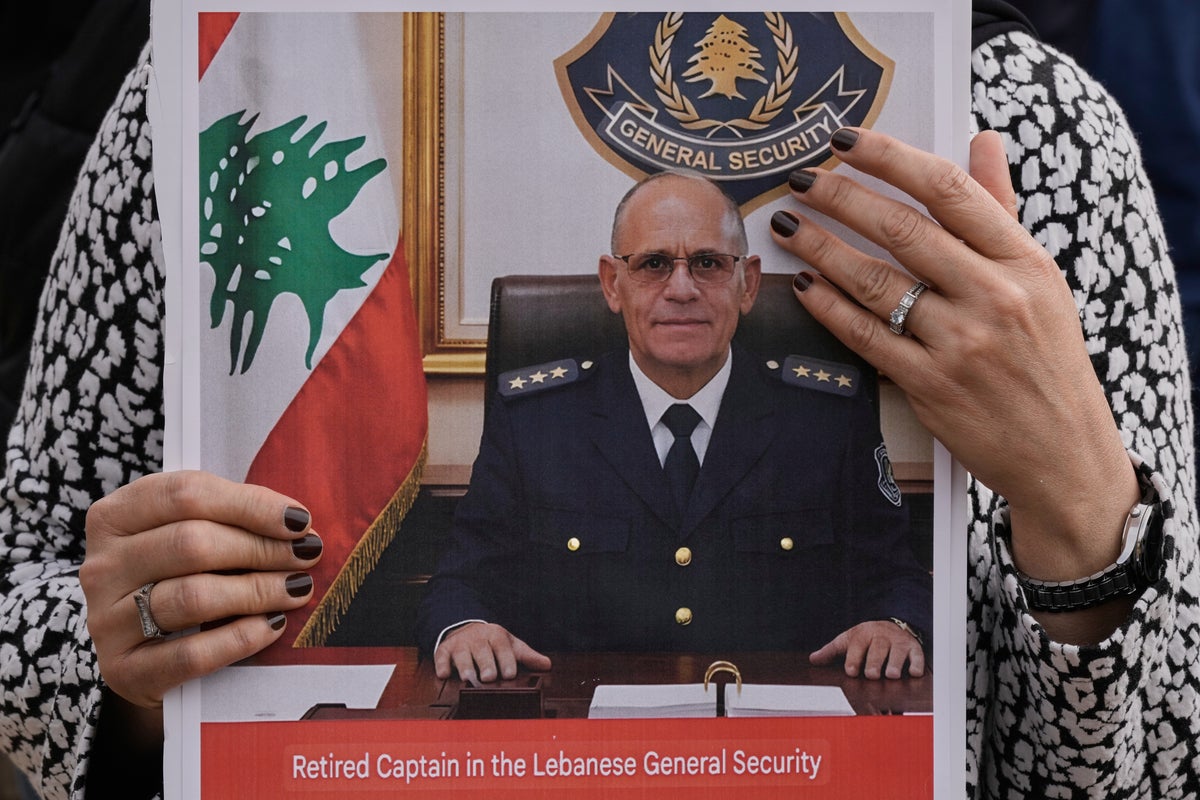
The tea was still warm when the silence began.
In the sun-drenched quiet of a retirement that should have been predictable, Mansour Reghad stepped out of his front door. He wasn’t a man of mystery. He was a grandfather. He was a former security officer with a penchant for routine and a face etched with the weary kindness of someone who had seen too much and wanted, finally, to see very little at all. He didn't take his passport. He didn't pack a bag. He simply ceased to exist in the physical world, leaving behind a family that now lives in the hollowed-out space where a human being used to be.
When a person vanishes, the world usually offers a reason. A car accident. A sudden illness. A desperate flight from debt. But for the Reghad family, the lack of a reason became the most terrifying evidence of all. They don't believe he wandered off. They believe he was harvested.
The Mechanics of a Disappearance
Imagine for a moment that your life is a series of digital and physical breadcrumbs. You swipe a card at the grocery store. Your phone pings a tower near the park. Your face is caught, for a fleeting microsecond, by a doorbell camera three houses down. We live in an era where it is functionally impossible to be invisible.
Yet, Mansour went dark.
This wasn't the fumbled exit of a man losing his way. His family describes a surgical removal. They point toward a neighbor they never fully trusted, a shadowy presence they believe acted as a spotter. They point toward the geopolitical machinery of the Middle East, specifically the reach of Israeli intelligence services. To the casual observer, this sounds like the plot of a paperback thriller found in an airport terminal. To those living in the crosshairs of international friction, it is a Tuesday.
The suspicion isn't born of paranoia; it’s born of history. For decades, the region has been a chessboard where humans are the pawns, moved or removed to send messages that are never written down. When a former security official—even a retired one—disappears without a trace in a region simmering with proxy wars and covert operations, the silence isn't empty. It’s heavy. It’s loud.
The Weight of the Invisible Stake
What is the value of a retired officer? To the state, he might be a vault of old secrets. To an enemy, he might be a source of leverage. But to his daughter, he is the man who taught her how to navigate the world, now lost in a world that refuses to navigate him back to her.
The stakes in these disappearances are rarely about the individual. They are about the "human signal." Taking a person isn't just about what they know; it's about what their absence does to the community left behind. It creates a vacuum of fear. It suggests that no one, regardless of how quietly they live their golden years, is truly out of reach.
Consider the logistical nightmare of a "covert abduction." It requires a level of sophistication that most criminal elements simply don't possess. You need "clean" vehicles. You need "blind spots" in local surveillance. You need a way to move a human body across borders or into secure locations without triggering a single alarm. This is the "invisible keyword" of the intelligence world: plausible deniability. If there is no body, there is no crime. If there is no crime, there is no international incident.
There is only a family, standing in a kitchen, looking at a half-empty cup of tea.
The Anatomy of Grief Without a Grave
Grief is usually a journey toward a destination called acceptance. You bury the dead. You visit the stone. You cry until the tears run dry, and then you begin the slow, agonizing process of remembering.
But when someone is disappeared, the clock stops.
The Reghad family is trapped in a state of perpetual "now." They cannot mourn because he might be alive. They cannot hope because the reality of his situation is likely grim. It is a psychological purgatory. Every phone call from an unknown number is a heartbeat skipped. Every knock on the door is a ghost.
They have spent their savings on private investigators who hit brick walls. They have petitioned governments that offer "thoughts and prayers" but no satellite data. They are fighting an enemy that doesn't have a face, only a reputation.
We often talk about "security" as a macro concept—border walls, cyber-defense, military spending. We forget that for the individual, security is the belief that you can go for a walk and come home. When that belief is shattered, the foundation of a society cracks.
The Ghost in the Machine
Let’s look at the logic. If the Israeli security apparatus—the Mossad or Shin Bet—wanted someone, would they do it this way? Historical precedent suggests that when they want to make a statement, they make it. When they want to extract information quietly, they are the best in the business.
The "dry facts" of the case are sparse. No ransom note. No political demands. Just a void. This suggests one of two things: either Mansour Reghad was a man of much greater importance than his "retired" status implied, or he was caught in a case of mistaken identity that the perpetrators are now too deep into to rectify.
In the world of intelligence, a mistake isn't a reason to apologize. It’s a reason to double down on the silence.
The family’s conviction that this was an Israeli abduction isn't just a guess; it's a deduction based on the "who else could?" factor. In their eyes, only one entity has the motive, the means, and the cold-blooded efficiency to make a man vanish from a populated area in broad daylight without leaving a single fingerprint.
The Cost of Living in the Grey
This isn't just a story about one man. It’s a story about the fragility of the "civilian" label. We like to think there are rules to the game. We think that once you hang up the uniform, you are back in the "safe zone."
Mansour’s disappearance suggests the safe zone is an illusion.
It forces us to confront the reality that we are all, to some extent, data points in a larger struggle. Our histories follow us. Our associations are archived. And in certain corners of the globe, your past is a debt that can be called in at any moment, regardless of how many years of quiet retirement you’ve put between yourself and the "office."
The Reghad family continues to speak to the press, to post on social media, to scream into the void. They know that the moment they stop, the shadow wins. They are trying to keep Mansour’s name from becoming a mere statistic in a human rights report.
But as the months turn into years, the narrative becomes harder to maintain. The world moves on. New wars start. Newer disappearances capture the headlines. The tea in that kitchen is long gone, the cup washed and put away, but the chair remains empty.
Silence.
It isn't just the absence of noise. It is a presence. It sits at the dinner table. It sleeps in the spare bedroom. It watches the front door, waiting for a click of a key that never comes. The man who walked into a shadow didn't just leave his family behind; he left a warning for the rest of us.
The world is much smaller than we think, and the reach of those who operate in the dark is much longer than we dare to admit.