The Static Before the Storm
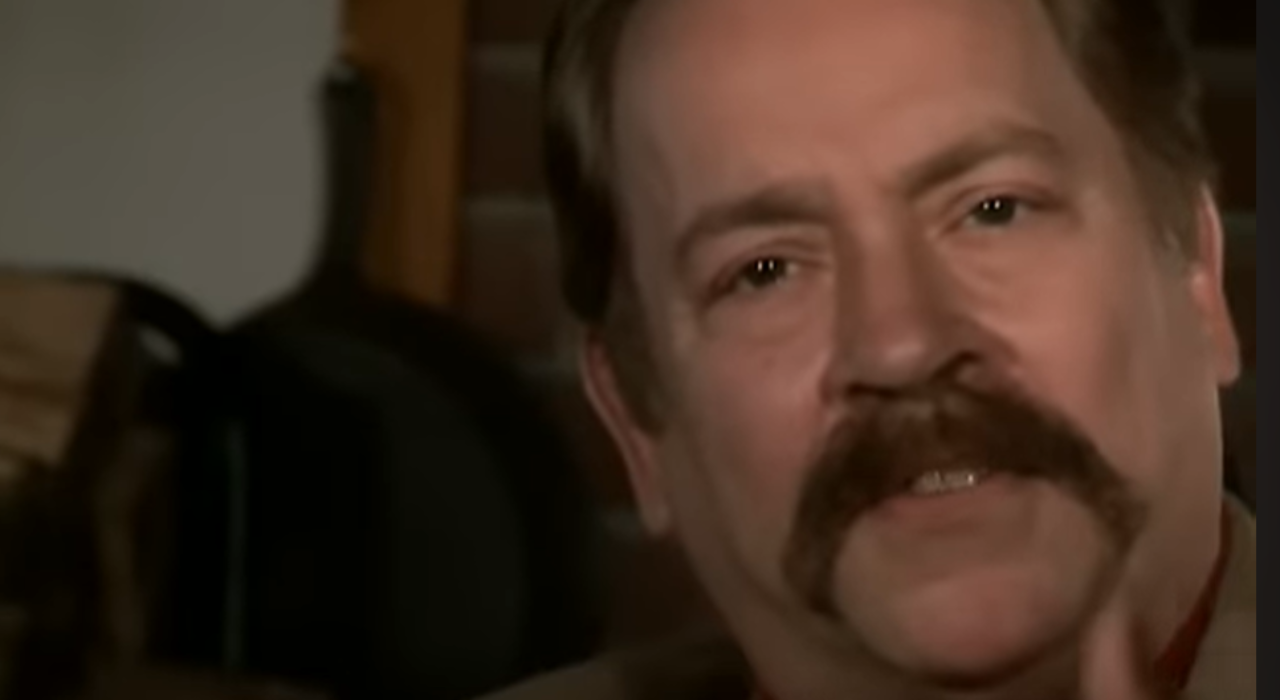
The dream always started with the same oppressive silence. David Booth was an ordinary man living an ordinary life in Cincinnati in 1979. He wasn’t a mystic. He wasn't looking for a sign from the heavens. He was a management analyst, a man trained in logic, spreadsheets, and the predictable flow of corporate data.
Then the visions began.
For ten consecutive nights, Booth fell into a sleep that felt less like rest and more like a forced viewing of a tragedy yet to happen. He would see a large, silver jet—an American Airlines craft—struggling to gain altitude. He saw it bank steeply, the wings tilting at an impossible, sickening angle. Then came the fire. A roar of jet fuel and metal that swallowed the horizon.
He woke up every morning drenched in sweat, the smell of burning rubber and kerosene lingering in his nostrils long after the sun came up. It wasn’t just a nightmare. Nightmares are jagged and nonsensical. This was a blueprint. It was a high-definition broadcast of a future that hadn't arrived.
The Burden of Knowing
Imagine sitting at your kitchen table, clutching a lukewarm cup of coffee, while the memory of 273 screams echoes in your mind. Booth was terrified. He wasn't afraid for his own life; he was afraid of the weight of the information he held. If you see a car heading for a cliff, you yell. But what do you do when the cliff is a week away and the car is a multi-million dollar piece of aviation machinery?
He did the only thing a logical man could do when faced with the illogical. He called the authorities.
He reached out to the Federal Aviation Administration (FAA) and American Airlines. He didn't lead with talk of ghosts or crystal balls. He spoke with the desperation of a witness who had already seen the crime. He described the plane. He described the American Airlines livery. He specifically mentioned a three-engine jet—a DC-10—and the way it rolled onto its back before hitting the ground.
The officials listened. In an era before the hyper-skepticism of the internet age, there was a brief, flickering moment of genuine concern. They checked their schedules. They looked for mechanical red flags. But how do you ground a fleet based on the REM cycle of a man in Ohio? You don't. You can't. The gears of commerce and physics are too heavy to be moved by a premonition.
May 25, 1979: The Clock Runs Out
The tenth night was the worst. The vision was clearer, louder, and more violent than the ones before. When Booth woke up on the morning of May 25, the air felt heavy. The premonitions stopped that day. The silence that followed wasn't a relief; it was the holding of a breath.
At Chicago’s O’Hare International Airport, Flight 191 was taxiing toward Runway 31L. It was Memorial Day weekend. The cabin was packed with people heading to Los Angeles—parents, children, business travelers, and a group of literature professors. It was a routine Friday afternoon.
As the DC-10 roared down the runway, traveling at 172 knots, the unthinkable happened. The number one engine, located on the left wing, didn't just fail. It tore itself away from the mounting. It flipped over the top of the wing and crashed onto the runway behind the plane.
This was the exact moment physics turned into a nightmare.
When the engine ripped away, it severed the hydraulic lines. The slats on the left wing—the devices that provide lift at slow speeds—retracted. The right wing still had its slats extended. The plane became a victim of its own symmetry. One wing wanted to fly; the other wanted to fall.
The pilots, Captain Walter Lux and First Officer James Dillard, had no way of knowing the engine was gone. From the cockpit, it looked like a simple engine failure. They followed the standard procedure: they slowed the plane down to maintain a safe climbing speed. But because the hydraulics were gone, slowing down caused the left wing to stall.
The aircraft began to tilt. It banked further and further to the left, exactly as David Booth had seen in his sleep for ten nights.
The Twenty-Three Second Descent
From the moment of takeoff to the moment of impact, only thirty-one seconds elapsed. For twenty-three of those seconds, the passengers and crew knew they were falling.
Witnesses on the ground watched in horror as the massive silver bird turned almost completely vertical. Its left wing pointed toward the earth like a finger. It cleared a nearby trailer park by mere feet before slamming into an open field near a decommissioned hangar.
The impact was so violent that the debris wasn't recognizable as an airplane. It was a crater of ash and shattered dreams. 271 people on board and two on the ground were gone in an instant. It remains the deadliest aviation accident to occur on U.S. soil.
Back in Cincinnati, David Booth heard the news. He didn't feel vindicated. He didn't feel like a prophet. He felt a soul-crushing grief that would haunt him for the rest of his life. He had tried to shout into the wind, but the wind was deaf.
The Physics of a Prophecy
We like to believe the world is governed by strict, unbreakable laws. Gravity. Inertia. Thermodynamics. These are the pillars that allow us to build skyscrapers and fly across oceans. But stories like David Booth’s suggest there is a layer of reality we haven't mapped yet—a sort of "temporal static" that some people can tune into.
Critics and skeptics often point to the law of large numbers. With billions of people dreaming every night, someone is bound to dream of a plane crash on the eve of a disaster. It’s a statistical inevitability.
But Booth’s details were too specific. The airline. The engine configuration. The exact manner of the roll. The FAA investigators who spoke to him before the crash were left shaken. They couldn't explain how a man with no aviation background could describe the aerodynamic failure of a DC-10 with such haunting precision.
The aftermath of Flight 191 changed everything. It led to a massive overhaul in how engines were maintained and how pilots were trained to handle asymmetrical stalls. We learned that a single bolt, if improperly handled during a maintenance check, could bring down a giant. We learned that the "pylon" holding the engine to the wing was a point of catastrophic vulnerability.
Yet, we never learned how to handle the David Booths of the world.
The Scars Left Behind
There is a hidden cost to knowing the future. We often envy the idea of foresight, imagining we would use it to win the lottery or avoid heartbreak. We forget the trauma of being a helpless spectator to a tragedy that hasn't happened yet.
Booth retreated from the public eye. He wasn't interested in fame or the paranormal circuit. He was a man who had been forced to watch a movie ten times, only to find himself sitting in the front row for the premiere, unable to stop the film from rolling.
The story of Flight 191 is usually told through the lens of mechanical failure and FAA reports. We talk about the 10-inch pylon bolts and the hydraulic fluid. We look at the black box data and the wreckage maps. But the human element is where the true gravity lies.
It lies in the 273 lives lost. It lies in the families who waited at LAX for a flight that would never land. And it lies in a man in Cincinnati who closed his eyes and saw it all coming, screaming into a telephone at a world that wasn't ready to believe him.
Sometimes, the most terrifying thing isn't the unknown. It’s the known.
The next time you’re at an airport, watching the silver shapes rise and fall against the sky, you might find yourself looking at the wings a little more closely. You might wonder about the invisible threads that connect us to the events of tomorrow. And you might hope that if the world ever decides to send a warning, it chooses someone with the power to make us listen.
The smoke has long since cleared from that field in Des Plaines, Illinois. The DC-10 is a relic of another era. But the echoes of those ten nights remain, a reminder that the boundary between what we see and what is about to happen is thinner than we dare to imagine.