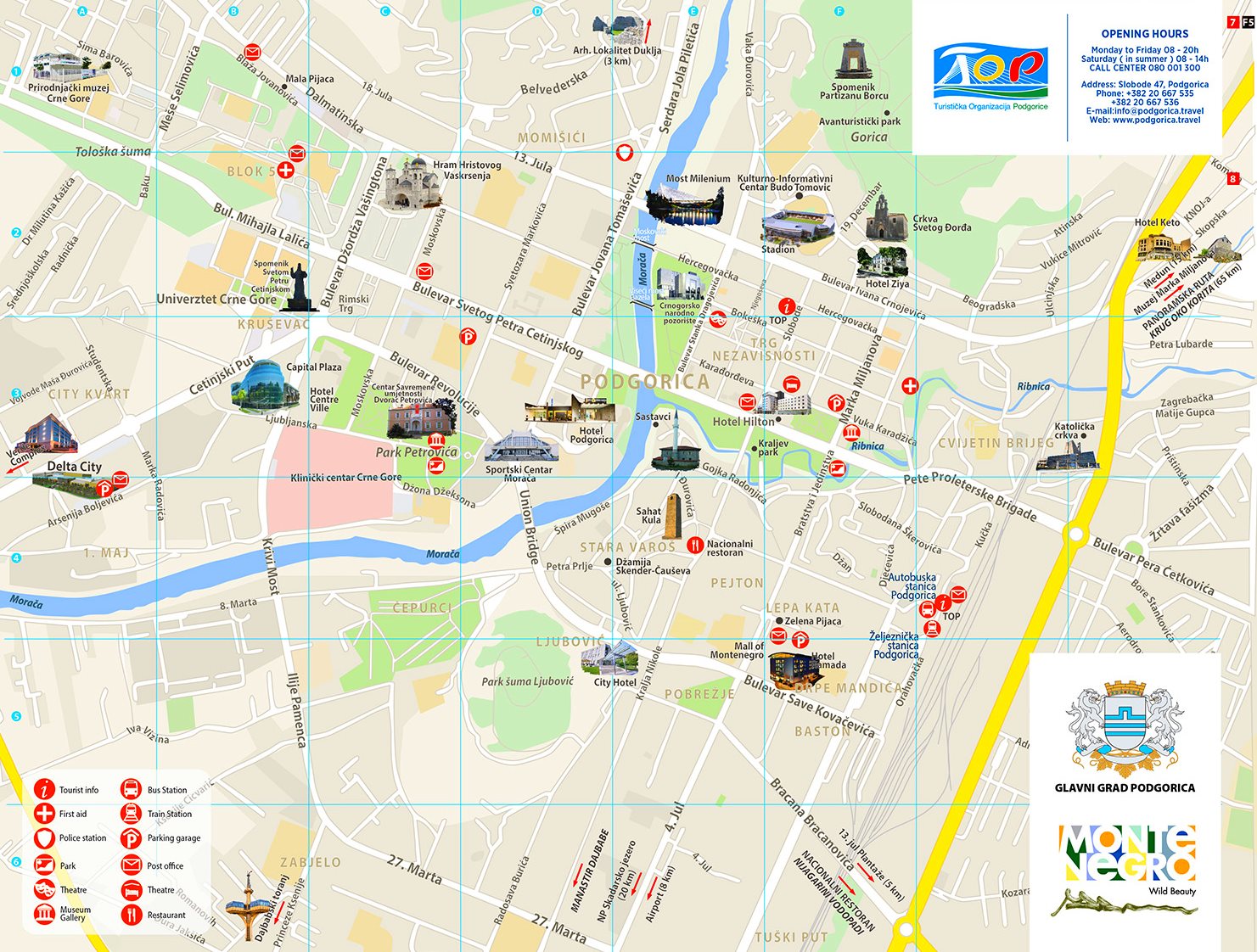
In a small, sun-drenched café tucked into a corner of Podgorica, the steam from a cup of Turkish coffee carries more than just the scent of dark-roasted beans. It carries the weight of thirty years of waiting. Marko, a man whose silver hair mirrors the jagged limestone peaks of the Dinaric Alps surrounding his city, stirs his sugar slowly. He remembers when his country was part of a larger whole, then a smaller union, and finally, a lonely, beautiful independent state. For him, the news filtering out of Brussels this week isn't about legal frameworks or legislative alignment. It is about a key turning in a lock that has been stuck since 2006.
The European Union has signaled it will finally begin drafting the accession treaty for Montenegro.
On paper, this is a bureaucratic milestone. It is a series of "benchmarks" and "chapters" being checked off by men and women in charcoal suits. But in the streets of Budva and the mountain passes of Durmitor, it is a psychological shift. For the first time in nearly two decades, the "waiting room" of Europe has a door that is visibly swinging open.
The Weight of the Pen
Drafting a treaty is an act of cartography. You are not just writing laws; you are redrawing the mental map of a continent. When the EU Commission moves to create this document, they are acknowledging that a tiny nation of 600,000 people has successfully rewired its internal hard drive.
To understand why this matters, you have to look at the sheer scale of the transformation required. Imagine being told that every rule in your house—the way you handle your trash, the way you pay your neighbors, the way you protect your garden—must now match the rules of a house three thousand miles away. Montenegro has spent years in this meticulous labor. They have overhauled their judicial systems and wrestled with the shadows of corruption that often haunt young democracies.
The decision to start drafting the treaty means the EU believes the foundation is finally dry. The cement has set.
Consider the mechanics of the "IBAR"—the Interim Benchmark Assessment Report. It sounds like a piece of office equipment. In reality, it was the final hurdle. By meeting these standards on the rule of law, Montenegro proved it wasn't just a picturesque tourist destination for yacht-owning billionaires, but a functional state capable of holding its own in the world’s most complex club. The Commission’s green light is a signal to the other Balkan nations that the path isn't a treadmill; it actually leads somewhere.
A Continent Catching Its Breath
The timing is not accidental. The geopolitics of 2026 are not the geopolitics of 2010. There is a palpable sense of urgency in the air. For a long time, "enlargement fatigue" was the phrase used in the hallways of Paris and Berlin to explain why the Balkans were being kept at arm's length. That fatigue has been replaced by a sharp, cold realization.
If the European Union doesn't fill the space in its own backyard, someone else will.
The influence of outside powers—investors from the East, energy giants from the North—has turned the Balkan peninsula into a high-stakes chessboard. Montenegro is the smallest piece on that board, but it is currently the most mobile. By fast-tracking this treaty, the EU is making a defensive move as much as an inclusive one. They are knitting the Adriatic coast into the European fabric before the threads can be pulled by others.
Marko takes a sip of his coffee. He talks about his daughter, who works in a tech startup in the capital. To her, the treaty means her degree will be recognized in Munich as easily as it is in Podgorica. It means her business won't be strangled by the red tape of being an "outsider." It means she can stop thinking of herself as a resident of a "candidate country" and start thinking of herself as a citizen of a continent.
The Invisible Stakes
There is a danger in seeing this only through the lens of economics. Yes, the Euro is already the de facto currency in Montenegro, despite them not being in the Eurozone—a quirk of history that always makes Brussels slightly uncomfortable. But the true stakes are found in the subtle things.
It is the fisherman in Kotor who will eventually see his waters protected by European environmental standards. It is the student who will have access to the Erasmus program without the dizzying hurdles of visas. It is the journalist who can write about local government with the backing of European press protections.
The treaty is a shield.
The process is still grueling. Drafting the treaty doesn't mean Montenegro joins tomorrow. There are still chapters to close, specifically those regarding the environment and competition. These are not easy fixes. You cannot simply wish away decades of old industrial habits or modernize an entire power grid overnight. The cost of compliance is high. For a small economy, it is a mountain climb that requires every bit of oxygen.
But the psychological victory is already won. For years, the narrative in the Balkans was one of stagnation. People joked that they would join the EU on the same day the sun burned out. That cynicism is a poison; it drives the brightest minds to migrate to London or New York, leaving behind a hollowed-out society. This week, that narrative shifted. The news that the pens are hitting the paper in Brussels provides a reason to stay. It provides a reason to invest.
The View from the Bridge
There is an old bridge in the town of Rijeka Crnojevića, a stone structure that has survived empires. It has seen the Ottomans, the Austro-Hungarians, the communists, and the nationalists. It stands as a reminder that borders in this part of the world have always been fluid, often defined by blood and ink.
The accession treaty represents a different kind of ink.
It is an ink that seeks to erase the "buffer zone" status that has plagued the Balkans for centuries. It seeks to prove that a Mediterranean nation can transition from the scars of the 1990s to the prosperity of the 2020s through sheer, stubborn persistence.
As the drafting begins, the lawyers will argue over fishing quotas and carbon emissions. They will debate the finer points of data privacy and agricultural subsidies. These details are necessary, but they are the prose of the story. The poetry is the fact that the map is changing.
The Adriatic is becoming a European lake.
Back in the café, Marko finishes his coffee. He looks at the headlines on his phone and then out at the street. A group of tourists from Poland is walking by, their backpacks heavy with gear for the mountains. Ten years ago, they were the ones in the waiting room. Now, they are the neighbors.
The silence of the mountains used to feel like isolation. Now, as the treaty begins its long journey from a draft to a signed reality, that silence feels more like a pause. A breath taken before the final sprint. The road from Podgorica to Brussels has never been shorter, and for the first time in a generation, the people walking it can see the destination through the mist.
The map makers are at work. And this time, they are drawing the lines in a way that finally brings the small house into the great hall.