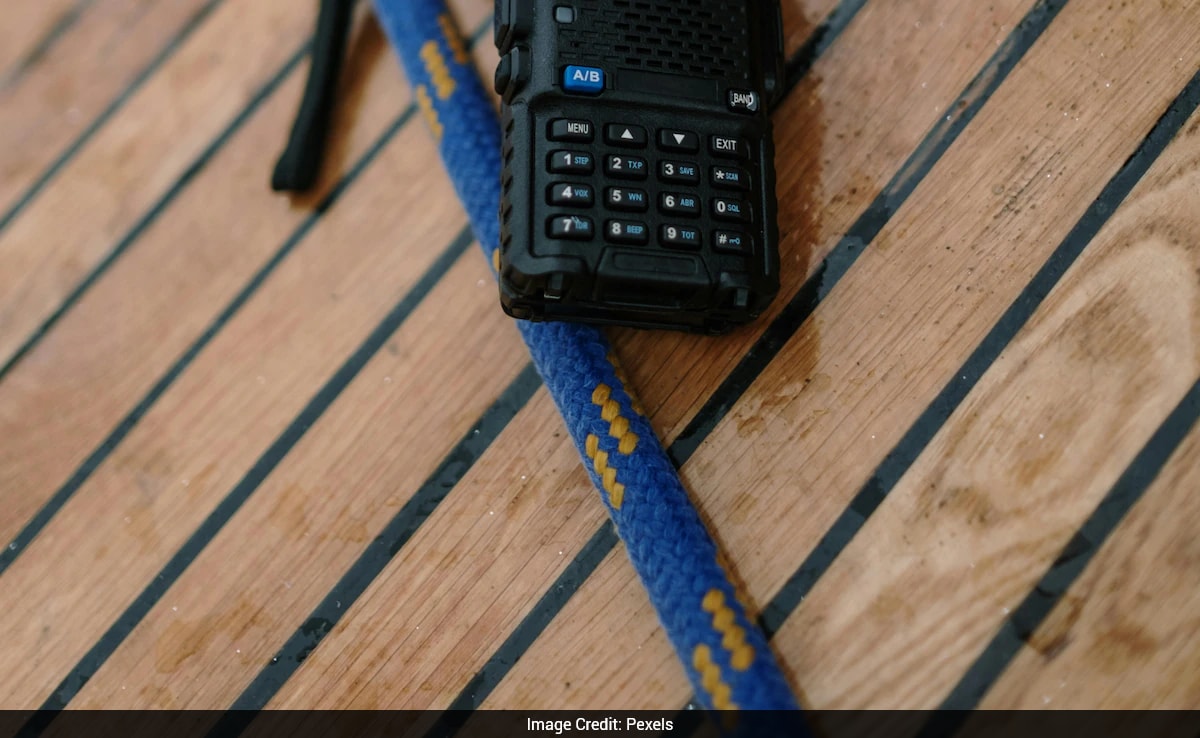
The maritime transit corridors of the Middle East, specifically the Red Sea and the Gulf of Aden, currently represent the most volatile friction points in global supply chains. While state-level actors focus on kinetic defense and electronic warfare, a critical vulnerability exists at the psychological and informational level for merchant mariners. The conversion of standard maritime radio equipment into a "Family Voice Station" by independent operators is not merely a human-interest story; it is a sophisticated, low-cost intervention into the cognitive security of isolated labor forces.
This phenomenon highlights a breakdown in official maritime support systems. When institutional communication fails to mitigate the high-stress environment of a conflict zone, decentralized actors step in to fill the "emotional bandwidth" gap. To understand the efficacy of such a station, one must analyze the technical constraints of maritime communication, the psychological mechanics of isolation, and the structural failure of corporate-led mental health initiatives for seafarers.
The Technical Architecture of Information Scarcity
Merchant vessels are often described as floating digital deserts. While high-bandwidth satellite internet (LEO and GEO) is becoming more common, its distribution is uneven across global fleets. For many sailors on older or lower-budget hulls, communication with the outside world is metered, expensive, or technically restricted.
Standard maritime communication relies on two primary layers:
- GMDSS (Global Maritime Distress and Safety System): A strictly regulated framework designed for safety and navigation. It is functional, cold, and binary. It transmits coordinates, weather warnings, and distress signals. It possesses zero capacity for social or psychological utility.
- Private Satellite Links: These are often controlled by the shipowner. In high-tension zones, these links are frequently throttled or disabled to prevent the leaking of location data or to preserve bandwidth for operational telemetry.
The "Family Voice Station" operates by exploiting the VHF/UHF and Shortwave (HF) spectrums. By utilizing a high-gain antenna and a radio bridge, an operator can capture terrestrial internet data (voice messages from family) and rebroadcast them over frequencies that shipboard radios are already monitoring. This creates a "shadow infrastructure" that bypasses the corporate gatekeeping of connectivity.
The technical genius of this approach lies in its passive reception. A sailor does not need to pay for a data packet to hear a broadcast. They simply need to be within the propagation radius of the transmitter. In the bottleneck of the Bab el-Mandeb Strait or the Suez Canal, this radius covers a significant percentage of the global merchant fleet at any given hour.
The Psychological Cost Function of Maritime Tension
To quantify the value of these broadcasts, we must look at the Cognitive Load Theory as it applies to mariners in conflict zones. A sailor’s performance is a function of their ability to process navigational data while managing internal stress.
The stress in Middle Eastern waters is not static; it is an "anticipatory threat" model. The primary stressors include:
- Asymmetric Threats: The unpredictability of drone or missile strikes creates a state of hyper-vigilance that is unsustainable over long transits.
- Information Blackouts: Lack of contact with family increases "ambiguous loss" anxiety, where the sailor worries about home while the family worries about the ship.
- Isolation Decoupling: The feeling that the global economy considers the crew as an abstracted, replaceable component of the vessel.
When a radio station broadcasts familiar voices or personalized messages, it performs a Stress De-escalation Function. By re-establishing a link to the "shore-side reality," the station lowers the sailor’s cortisol levels, which directly correlates to a reduction in human-error-related accidents. Institutional safety protocols focus on the hull; the family voice station focuses on the operator.
Analyzing the Institutional Vacuum
Why does an individual in China or elsewhere have to build a makeshift station to provide this service? The answer lies in the Inertia of Maritime Law and Corporate Liability.
Shipping companies are hesitant to provide open communication channels for three reasons:
- Security Risk: Open data lines are potential vectors for cyberattacks or location tracking by hostile actors.
- Liability: If a company facilitates a message that causes distress to a sailor (e.g., bad news from home), the company could be held responsible for the sailor's subsequent performance failure.
- Cost-Benefit Myopia: Short-term expenditure on crew welfare is often viewed as a sunk cost rather than an investment in operational resilience.
The "Family Voice Station" acts as a third-party buffer. It assumes the "risk" of emotional connection without the corporate overhead. It demonstrates that the most effective way to manage the morale of a workforce under fire is not through formalized HR portals, but through low-fidelity, high-authenticity audio.
The Mechanism of Voice Over Text
There is a biological imperative behind the use of radio over text-based messaging. The human brain processes auditory cues—specifically the prosody, pitch, and timber of a loved one's voice—through the paralimbic system. This triggers an oxytocin release that text-based communication cannot replicate.
In a high-noise, high-vibration environment like a ship’s engine room or bridge, the "crackle" of a radio broadcast adds a layer of "organic authenticity." It feels immediate. It feels human. For a sailor trapped in a steel box in a hostile sea, this auditory texture is the difference between feeling like a prisoner and feeling like a participant in society.
Structural Limitations and Scalability Issues
While the psychological impact is profound, the "Family Voice Station" model faces three significant bottlenecks that prevent it from becoming a global standard:
- Regulatory Fragility: Most of these broadcasts operate in a legal gray area. International maritime law and local telecommunications regulations are strict regarding unauthorized broadcasts. A station can be shut down as soon as it interferes with "official" channels, even if the interference is accidental.
- The Range-Power Trade-off: HF radio can travel long distances via ionospheric refraction (skywave), but it is subject to solar cycles and atmospheric noise. VHF is line-of-sight. Providing consistent coverage across an entire transit zone requires a network of coordinated stations, which increases the risk of detection and suppression.
- The Verification Problem: As this becomes a known tool, there is a risk of "Psychological Spoofing." Hostile actors could theoretically hijack these frequencies to broadcast demoralizing information or fake news to crews, turning a source of comfort into a weapon of psychological warfare.
The Strategic Shift Toward Cognitive Infrastructure
The emergence of the "Family Voice Station" is a signal to the maritime industry that the current definition of "vessel security" is too narrow. Security is not just Phalanx CIWS systems and armed guards; it is the mental stability of the crew.
Future maritime strategy must incorporate Cognitive Resilience Modules (CRMs). These would be hardened, secure communication links dedicated solely to non-operational, psychological support. Instead of leaving this to the ingenuity of hobbyists, the industry must standardize the "Family Voice" concept.
The strategic play for shipowners and insurers is to decouple "operational data" from "emotional data." By providing a dedicated, encrypted, and monitored channel for family connectivity that is independent of the ship’s primary navigation network, companies can realize a quantifiable return on investment through:
- Retention: Reducing the "churn" of experienced mariners who leave the industry due to the psychological toll of isolation.
- Safety: Lowering the probability of "fatigue-induced" navigational errors.
- Brand Equity: Positioning the firm as a leader in ESG (Environmental, Social, and Governance) metrics, which are increasingly scrutinized by global investors.
The "Family Voice Station" is not a quaint hobby; it is a proof-of-concept for the next generation of maritime labor management. It proves that in the face of high-tech threats, the most effective countermeasure is often a low-tech reminder of what is being defended.
The industry must now decide whether to regulate these decentralized efforts out of existence or to integrate their logic into the foundational architecture of global shipping. The tactical move is to establish shore-based "Morale Relays" in high-risk zones, utilizing existing satellite backhaul to provide free, low-bandwidth voice-memo services to every sailor entering the Red Sea or the Strait of Hormuz. Ignoring the psychological front of maritime conflict is no longer a viable operational stance.


-0a221419-1920w.png)