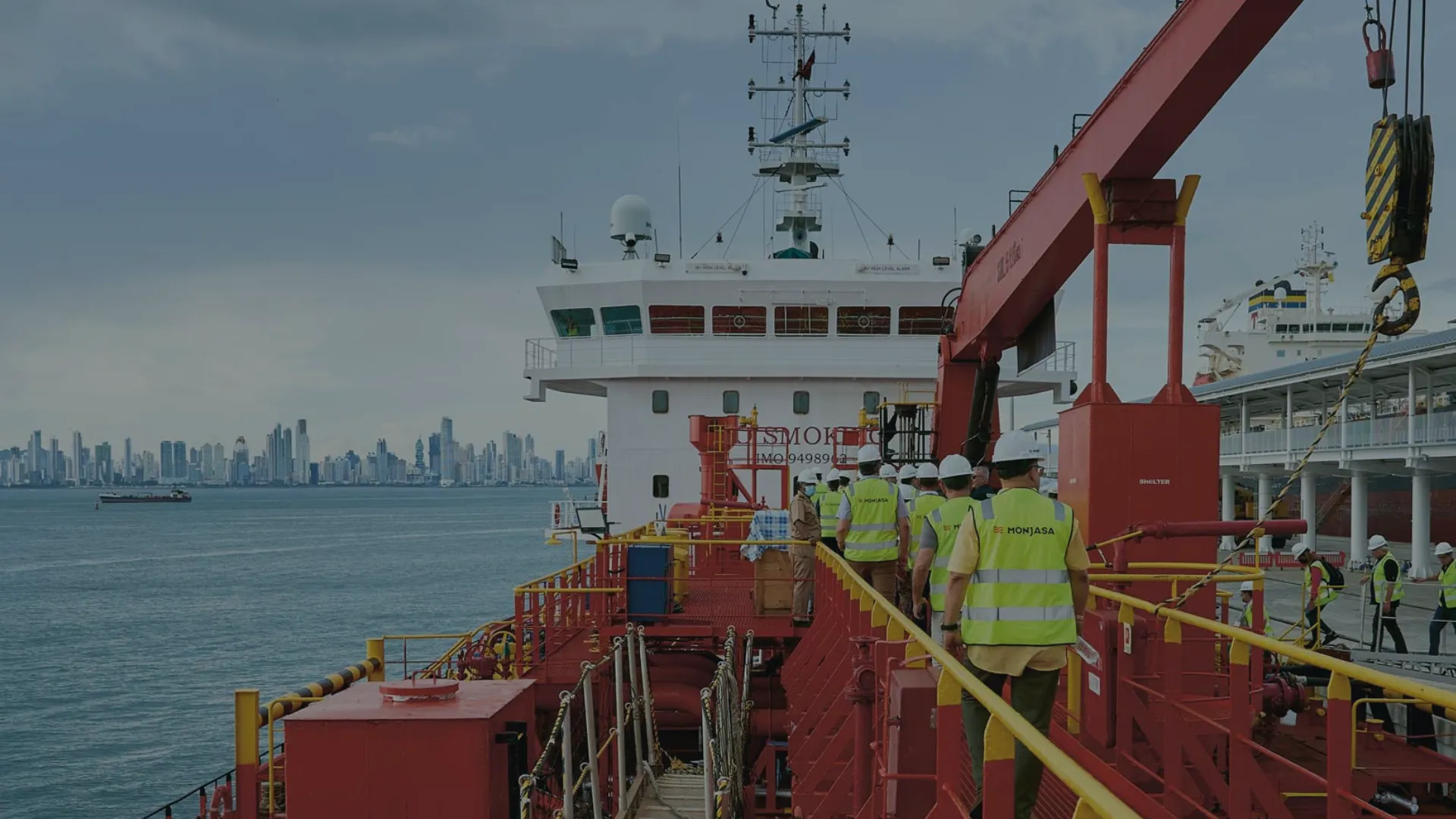
The release of the crew from the Touska, a container ship central to a high-stakes maritime seizure, provides a rare window into the mechanics of "grey-zone" naval warfare and the fragility of global supply chains. This event is not merely a humanitarian resolution; it is a calibrated adjustment of pressure within a broader geopolitical cost function. To understand why this release matters, one must dissect the incident through the lenses of maritime law, logistical vulnerability, and the strategic signaling of non-state and state actors in the Middle East.
The Triad of Maritime Vulnerability
The seizure and subsequent crew release of the Touska illustrate three specific vulnerabilities that define modern shipping in contested waters: For a deeper dive into similar topics, we suggest: this related article.
- Legal Asymmetry: Ships often fly "flags of convenience," such as those of Panama or Liberia, while being owned by entities in one nation and crewed by nationals from several others. This diffusion of identity complicates the legal response. When a ship is seized, the seizing party exploits this fragmentation, betting that the lack of a unified national interest will delay or dilute a retaliatory response.
- Operational Choke Points: The incident occurred within proximity to critical transit corridors. Global trade relies on a "just-in-time" delivery model. Even a 48-hour delay in a single vessel’s transit ripples through port scheduling and inventory management systems, creating an outsized economic impact relative to the physical scale of the seizure.
- Human Capital as Negotiating Friction: The crew serves as the primary variable in the de-escalation phase. By detaining the crew, the seizing entity creates a humanitarian imperative for international intervention. By releasing them while potentially retaining the vessel or its cargo, they transition from a "hostage" narrative to a "legal dispute" narrative, which is far harder for international bodies to prosecute.
The Logic of the Release
The decision to release the crew of the Touska suggests a shift from tactical escalation to strategic stabilization. In maritime brinkmanship, the goal is rarely the permanent theft of a vessel—which is difficult to liquidate and brings extreme diplomatic costs—but rather the demonstration of the power to disrupt.
The release signals that the seizing party has achieved its primary objective: proving that the security guarantees provided by Western naval powers are not absolute. This creates a "risk premium" on insurance for any vessel traversing these routes. When the crew is released, the immediate humanitarian pressure on the seizing state subsides, allowing them to pivot the conversation toward the underlying political or economic grievances that prompted the seizure in the first place. For broader context on the matter, detailed reporting can be read on The New York Times.
The Cost Function of Maritime Seizures
To quantify the impact of such events, we must look at the Maritime Risk Coefficient. This is not a formal number found on a ledger, but a calculation performed by insurers (like Lloyd's of London) and shipping conglomerates. The cost of a seizure like the Touska's involves:
- War Risk Premiums: Insurance rates for hulls and cargo can spike by 50% to 100% following a high-profile seizure in a specific region.
- Deviation Costs: If ships are forced to take longer routes to avoid contested waters (e.g., bypassing the Suez Canal for the Cape of Good Hope), the fuel and labor costs increase exponentially.
- Opportunity Cost of Capital: A seized container ship holds millions of dollars in stagnant inventory. The longer the ship is held, the higher the decay in the value of that capital, especially for time-sensitive electronics or perishable goods.
The release of the crew reduces the "humanitarian noise" but does not reset these costs to zero. The market maintains a residual memory of the event, ensuring that the economic pressure remains long after the sailors return home.
Structural Failures in Global Maritime Governance
The Touska incident highlights a significant bottleneck in international law: the inability of the UN Convention on the Law of the Sea (UNCLOS) to effectively deter state-sponsored or state-aligned seizures.
Legal frameworks are designed for a world of clear state-on-state conflict or localized piracy. They are ill-equipped for "hybrid" scenarios where a vessel is detained under the guise of an "environmental violation" or a "legal debt," but the underlying motivation is clearly geopolitical. This ambiguity creates a sanctuary for the seizing party, who can hide behind administrative procedures to justify what is functionally an act of war.
Furthermore, the reliance on private security on merchant vessels is a flawed deterrent. Private guards are trained to repel small-scale pirates in skiffs; they are powerless against a state-aligned navy or a sophisticated paramilitary force using helicopters and fast-attack craft. This creates a security gap that can only be filled by sovereign naval escorts, which are expensive and politically sensitive to deploy.
Implications for Supply Chain Architecture
Logistics managers must now account for "geopolitical volatility" as a primary risk factor, alongside weather or mechanical failure. The Touska release proves that while crews might be safe eventually, the predictability of the route is permanently compromised.
Future strategy for global firms will likely involve Route Diversification and Buffer Stocking. The "lean" supply chain, which minimizes inventory to maximize cash flow, is increasingly seen as a liability in a world where maritime choke points can be closed at will. We are entering an era of "just-in-case" logistics, where the added cost of holding extra inventory is viewed as an insurance policy against the next Touska-style disruption.
Strategic Trajectory
The resolution of the crew’s detention should not be mistaken for a return to the status quo. Instead, it marks the end of one cycle of escalation and the beginning of a period of "simmering risk."
For maritime operators, the directive is clear: move beyond passive compliance and toward active risk mitigation. This includes:
- Implementing enhanced satellite tracking that can detect "spoofing" of AIS (Automatic Identification System) signals.
- Engaging in "flag-state" lobbying to ensure that the nations where ships are registered have the diplomatic weight to protect them.
- Developing contingency contracts that allow for the immediate rerouting of cargo upon the first sign of regional instability.
The release of the Touska crew is a tactical concession in a larger game of strategic endurance. The actors involved have demonstrated their ability to seize, hold, and negotiate. The burden of response now lies with the global shipping industry to adapt its infrastructure to a reality where the freedom of the seas is no longer a guaranteed right, but a contested asset.


