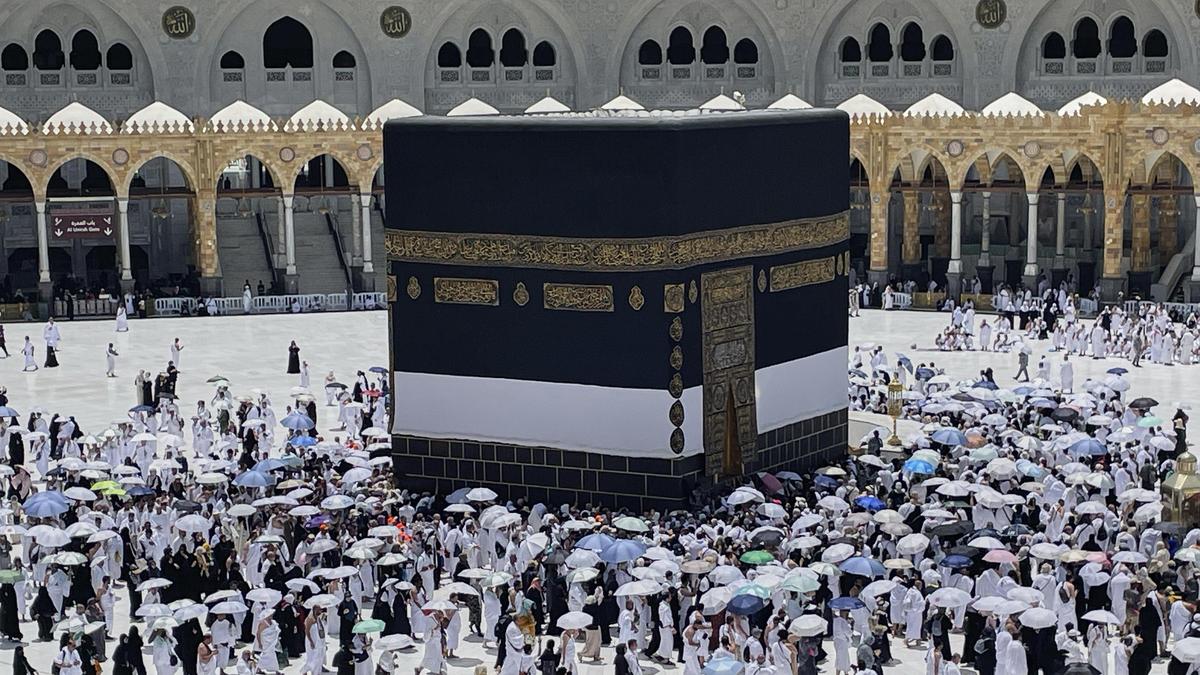
India has officially begun the massive logistical undertaking of transporting 175,025 pilgrims to Saudi Arabia for the 2026 Hajj season. This figure represents the full utilization of the bilateral quota negotiated between New Delhi and Riyadh. While the number itself is a repeat of previous years, the operational framework has shifted significantly under new digital mandates and revised aviation contracts. The first flights are scheduled to depart from various Indian embarkation points, marking the start of a multi-week deployment that tests the limits of India’s civil aviation and minority welfare infrastructure.
Getting over 175,000 people across the Arabian Sea is not just a matter of faith. It is a grueling exercise in supply chain management.
The Mechanics of the 175,025 Quota
The distribution of these slots remains split between the Hajj Committee of India and private tour operators. Historically, the Committee handles roughly 70% of the pilgrims, providing a subsidized, standardized experience for the masses. The remaining 30% are managed by private players who cater to those seeking shorter durations or high-end proximity to the Masjid al-Haram.
Securing this specific number—175,025—is the result of intense diplomatic back-and-forth. Saudi Arabia allocates quotas based on a country's Muslim population, generally following a formula of one pilgrim per thousand residents. For India, maintaining this specific ceiling is vital for domestic political stability and religious equity. However, the sheer volume creates an immediate bottleneck at Indian airports.
This year, the Ministry of Minority Affairs has streamlined the application process through the "Hajj Suvidha" app. The goal was to remove the middleman, but the reality on the ground shows a digital divide. Many elderly pilgrims from rural belts still rely on local volunteers to navigate the interface. The "paperless" dream often hits the wall of ground-level literacy and technical glitches at the registration hubs.
Aviation Contracts and the Embarkation Struggle
The most volatile variable in this entire operation is the airfare. Transporting 175,000 people in a concentrated window requires a massive surge in "ferry flights"—planes that fly full one way and return empty. This creates an inherent inefficiency that airlines loathe.
Air India, Saudia, and various private charters compete for these contracts. In previous cycles, we saw massive delays and stranded pilgrims due to aircraft maintenance issues or scheduling conflicts at Jeddah’s King Abdulaziz International Airport. For 2026, the government has spread the embarkation points across 20+ cities to de-congest major hubs like Mumbai and Delhi.
The Cost of Convenience
Pilgrims departing from smaller cities often pay a premium. It is a geographical tax on faith. While a traveler from Mumbai might benefit from competitive bidding among multiple carriers, someone flying from Srinagar or Guwahati faces higher costs due to the lack of local competition and the operational expenses of positioning large aircraft in those regions.
The government claims to have negotiated "capped" fares, but these caps are often higher than standard commercial tickets booked months in advance. The justification provided is the "flexibility" required for Hajj charters, which include baggage handling for Zamzam water and specialized ground services. Veteran observers know this is where the transparency often fades into bureaucratic fog.
Health and Age Demographics
The 2026 batch carries a significant demographic weight. A large percentage of the 175,025 pilgrims are over the age of 60. Saudi Arabia’s removal of the age cap—a vestige of the pandemic era—has unleashed a backlog of elderly applicants who have waited years to fulfill their obligation.
This creates a massive medical liability.
The Indian Medical Mission in Saudi Arabia is being scaled up to handle the influx. We are talking about temporary hospitals in Makkah and Madinah staffed by Indian doctors and nurses. The most common issues aren't exotic diseases; they are heat exhaustion, dehydration, and the exacerbation of chronic conditions like diabetes and hypertension. The physical toll of the "Ramy al-Jamarat" (the stoning of the devil) is immense. When you put nearly two million people in a confined valley like Mina, the margin for error disappears.
The Private Tour Operator Friction
While the Hajj Committee handles the bulk of the 175,025, the private sector is where the real money moves. Private Hajj Group Organizers (HGOs) are under increased scrutiny this year. The government has implemented a strict grading system for these companies to prevent the "fly-by-night" operations that have historically abandoned pilgrims in sub-standard housing miles away from the Holy Sites.
A private package can cost three to four times the Committee price. In exchange, pilgrims expect luxury. But "luxury" in Makkah during Hajj is a relative term. Even the wealthiest travelers are subject to the same traffic jams and crowd control measures as everyone else. The friction arises when HGOs over-promise and under-deliver on proximity. New regulations require these operators to deposit a bank guarantee with the government, which can be forfeited if they fail to meet service standards.
The Economic Impact on the Ground
Every pilgrim carries a minimum amount of foreign exchange. Multiply that by 175,025. This represents a significant outflow of capital from the Indian economy into the Saudi service sector. From the perspective of the Saudi "Vision 2030," these Indian pilgrims are a vital pillar of the non-oil economy.
Saudi Arabia has been aggressively privatizing the "Muallim" services—the local guides responsible for housing and food in the tent cities of Mina and Arafat. This privatization has driven costs up. What used to be a regulated, state-adjacent service is now a corporate bidding war. The Indian government has had to push back against these price hikes to keep the pilgrimage affordable for its middle-class citizens.
The Hidden Logistics of Food and Waste
Providing three meals a day for 175,000 people in a desert environment is a nightmare. The "Adahi" or Qurbani system—the ritual sacrifice of animals—is another massive cog in the machine. India has moved toward a centralized voucher system where pilgrims pay for the sacrifice through the Islamic Development Bank. This prevents the chaos of thousands of individual transactions and ensures the meat is processed and distributed to the poor globally rather than going to waste in the heat.
The Reality of the "Green" Hajj
There is a growing conversation about the environmental footprint of this mass migration. 175,025 people flying thousands of miles, using millions of plastic water bottles, and producing tons of waste in a concentrated period is unsustainable.
Saudi authorities have introduced the "Hajj Metro" to reduce bus traffic, but its capacity is limited. Indian groups are being encouraged to reduce waste, yet the logistics of providing safe drinking water in 45-degree Celsius heat necessitates plastic. The "Green Hajj" remains a PR-friendly concept that struggles to survive the reality of 175,025 people trying to survive the desert summer.
Tracking the First Batch
The departure of the first batch is more than a photo opportunity for politicians. It is the start of a 40-day cycle of anxiety for the Ministry of External Affairs. Every flight delay in Lucknow or Kochi ripples through the system. If the first 1,000 people are delayed by six hours, the entire landing slot schedule in Saudi Arabia begins to collapse.
Aviation authorities are using a "hub and spoke" model to manage the flow. Smaller regional airports feed into the main embarkation points. The efficiency of this system depends entirely on the ground handling staff's ability to process thousands of elderly travelers who may not speak the local language or understand the security protocols of an international airport.
The Geopolitical Undercurrents
The smooth execution of the Hajj is a litmus test for India-Saudi relations. In an era where energy security and maritime cooperation are at the forefront, the "soft power" of the Hajj cannot be ignored. The Saudi government’s willingness to maintain the 175,025 quota—even as they renovate the Grand Mosque and limit overall numbers—is a signal of New Delhi's importance in Riyadh's strategic calculus.
However, this relationship is transactional. The Saudi Ministry of Hajj and Umrah has become increasingly rigorous about compliance. Any country that fails to manage its pilgrims—whether through overstays or visa violations—faces quota cuts in subsequent years. India’s focus is on ensuring that every one of the 175,025 departs and returns exactly as scheduled.
The Technology of Movement
Every Indian pilgrim now wears an OID (Off-site Infrastructure and Logistics) tag. This allows the Indian Consulate in Jeddah to track the movement of groups in real-time. If a bus breaks down on the highway to Madinah, the command center knows. If a pilgrim gets lost in the tunnels of Makkah, the tag provides a lifeline.
This isn't just about safety; it's about data. By tracking the 175,025, the government can identify which embarkation points are the most efficient and which private operators are cutting corners. The data collected in 2026 will dictate the policy for 2027. We are seeing the transformation of a spiritual journey into a data-driven logistical operation.
The Final Boarding Call
As the first planes taxi onto the runways this week, the heavy lifting moves from the offices of New Delhi to the streets of Makkah. The success of this operation will not be measured by the speeches given at the airport send-offs. It will be measured by the health outcomes, the lack of logistical "friction," and the ability of 175,025 people to navigate a foreign land under extreme conditions.
The sheer scale of the Indian Hajj contingent is a reminder of the country's demographic complexity. Managing it requires a level of coordination that few other nations can replicate. Between the digital apps, the aviation charters, and the medical missions, the "First Batch" represents the tip of a very large, very expensive, and very high-stakes iceberg.
Ensure your travel documents are verified against the digital "Hajj Suvidha" portal before arriving at the embarkation point to avoid immediate disqualification at the gate.