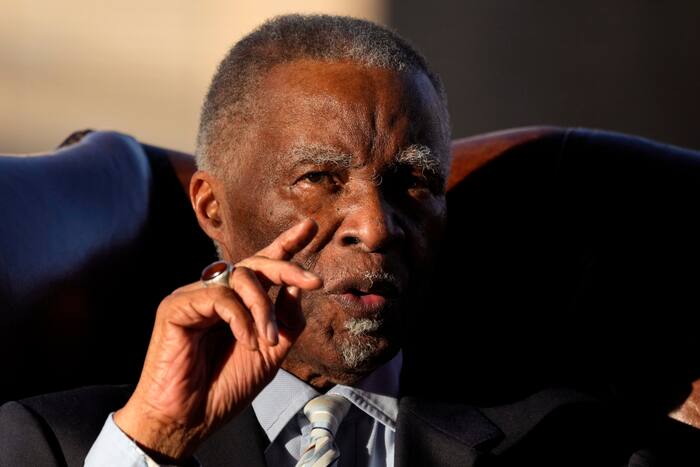
Former South African President Thabo Mbeki told a judicial inquiry in October 2026 that he never ordered prosecutors to halt apartheid-era cases or struck secret deals to shield former security officers. His denial sits right at the center of one of post-apartheid South Africa's sharpest moral and legal reckonings: why roughly 300 cases referred by the Truth and Reconciliation Commission (TRC) gathered dust for years while victims' families grew old waiting for justice.
If you're following this story, the real question isn't just whether Mbeki says he's innocent. It's how an entire transitional justice system stalled between political choices, prosecutorial hesitation, and hard legal boundaries.
How Apartheid Cases Stalled After the TRC
When South Africa ended formal white minority rule in 1994, the TRC was designed to balance truth, reconciliation, and accountability. Perpetrators could apply for amnesty if their acts were politically motivated, proportionate, and accompanied by full disclosure. Those who didn't apply, or whose amnesty bids were denied—out of 7,111 applications recorded by the TRC, 5,392 were refused and 849 granted—were supposed to face ordinary criminal prosecution.
That bargain broke down in practice. For years after the TRC wrapped up its core work, investigations moved slowly or stopped altogether. Meanwhile, key witnesses and alleged perpetrators died, memories faded, and apartheid-era records became harder to trace.
South African courts eventually pushed back hard against the delay. In the landmark Joao Rodrigues litigation, judges criticized the lack of a bold prosecution policy and pointed to a timid retreat linked to executive political interference with the National Prosecuting Authority (NPA). Yet pinpointing exact lines of blame has remained messy, which is why President Cyril Ramaphosa established a judicial commission of inquiry chaired by retired Constitutional Court Judge Sisi Khampepe, alongside Judge Frans Diale Kgomo and Advocate Andrea Gabriel SC.
What Mbeki Actually Told the Khampepe Commission
Testifying before the Khampepe Commission in Newtown, Johannesburg, Mbeki pushed back forcefully against claims that his administration suppressed investigations. Calling allegations of secret amnesty deals with apartheid-era generals a "complete fabrication," he explained that a 1996 contact from generals involved grievances over political leaders facing accountability and whether F.W. de Klerk and National Party leadership would appear before the TRC.
Mbeki also drew a sharp legal line between presidential pardons for convicted offenders and prosecutorial decisions over unconvicted suspects. In his view, exercising pardon powers was legally distinct from instructing the NPA not to investigate or prosecute someone who hadn't received amnesty or been convicted.
Mbeki's core defense rests on institutional separation: he maintains he acted as head of state—dealing with security risks like hidden arms caches and secret networks—rather than acting as a prosecutor.
Still, his explanation doesn't settle everything. Critics, legal scholars, and victims' families have long argued that high-level political signals—including debates around special dispensations and inter-ministerial coordination—created a chilling effect inside state institutions. Even where no written order stopped a docket, bureaucratic inertia and mixed messages can do plenty of damage on their own.
Was It Political Interference or Institutional Failure?
One of the most interesting twists in the Khampepe hearings is that blame isn't neatly split into a single villain. Different witnesses have pointed to different breakdowns across the state:
- Executive and political pressure: Families and some legal observers argue that senior political figures and former justice officials created roadblocks or failed to champion prosecutions consistently.
- NPA inertia and management: Mbeki has placed responsibility squarely on the NPA to account for why roughly 300 TRC referrals weren't pursued, while testimony before the inquiry has also aired claims of internal missteps and "deliberate ineptitude" within prosecuting units.
- Evidentiary decay and time: Decades after killings in detention, disappearances, and covert operations, tracking down surviving witnesses, physical evidence, and aging suspects has grown harder every year.
From hands-on observation of post-conflict accountability processes, I've seen how easily big historical promises get lost in day-to-day administration. A common mistake people make is assuming that justice stops only when a politician picks up a phone and gives a direct order. Honestly, cases stall just as often when units are under-resourced, priorities shift, or officials treat old files as someone else's problem.
At the same time, it's only fair to acknowledge the opposing view. Defenders of the post-1994 transition argue that leaders were trying to hold a fragile, newly democratic country together while dismantling entrenched security structures. Whether that caution was wise statecraft or an abdication of constitutional duty is precisely what historians and judges are wrestling with.
Why Victims' Families Are Still Pushing
For families of activists like the Cradock Four, Ahmed Timol, Anton Fransch, and others killed or disappeared during apartheid, legal technicalities feel cold. Many parents and loved ones have already passed away without seeing accountability, and surviving relatives have turned to the courts and the Khampepe Commission demanding answers.
Research and commentary from groups like the Foundation for Human Rights and analyses of South Africa's obligations under the International Convention on the Elimination of All Forms of Racial Discrimination (ICERD) highlight that delayed justice erodes public trust in the rule of law. When state accountability is put off for decades, it sends a quiet message that graves abuses can outlast the law.
Practical Ways to Follow and Verify the Inquiry
If you want to track what actually happens next rather than relying on secondhand summaries, start with primary sources:
- Check official commission records: Visit the TRC Cases Inquiry website to review hearing notices, rulings, and official submissions before Justice Sisi Khampepe's panel.
- Track victim-led case updates: Read case dossiers and statements compiled by civil society initiatives such as Unfinished TRC to see how individual inquests and prosecutions are progressing.
- Compare testimony against court findings: Watch how witness claims about executive involvement or NPA delays line up against prior High Court judgments and declassified or tabled records rather than taking any single political account at face value.
Former President Thabo Mbeki testifies before TRC inquiry provides direct broadcast coverage of Mbeki's testimony denying secret amnesty deals with apartheid-era generals.