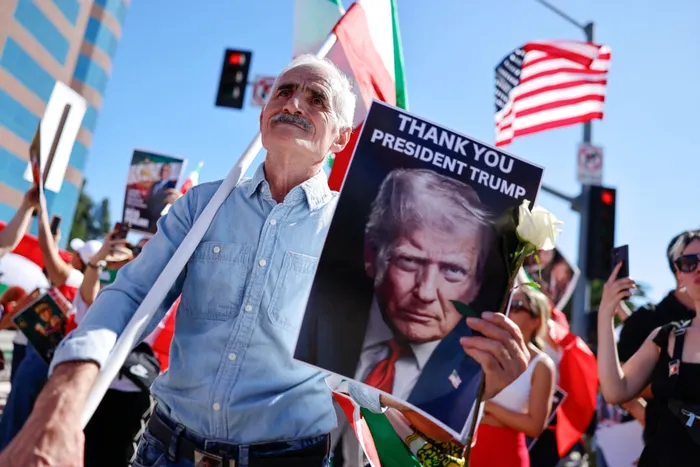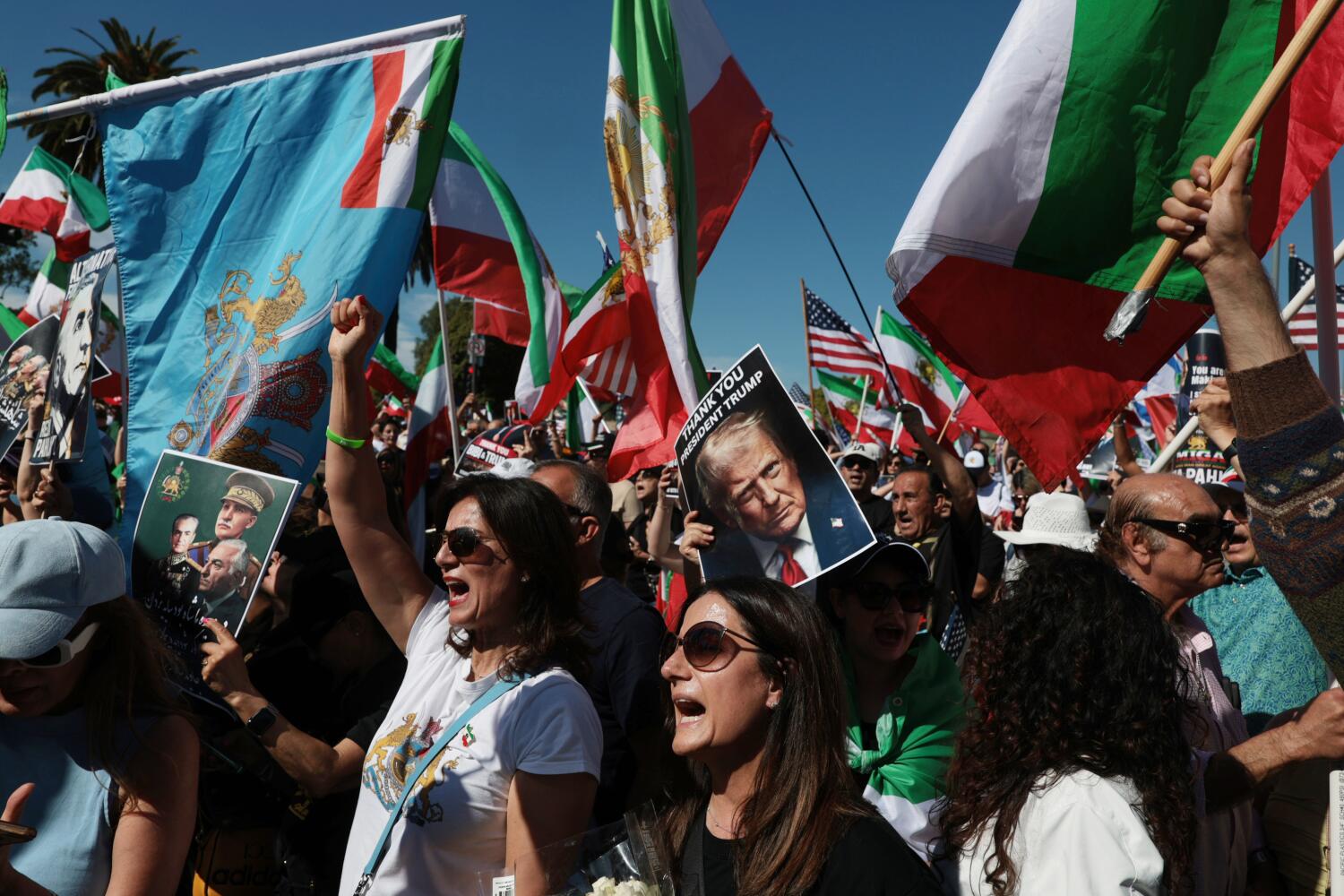
The escalation of kinetic friction between the United States and the Islamic Republic of Iran creates a specific psychological and political vacuum within the Iranian diaspora. When military posturing transitions from theoretical deterrence to active strikes, the resulting "rally 'round the flag" effect usually benefits the incumbent regime. However, the 2024 Westwood demonstrations reveal a counter-mechanic: the decoupling of national identity from the existing state apparatus. To understand these protests is to understand the sophisticated coordination of soft power, the economics of political advocacy, and the specific strategic objectives of the "Free Iran" movement during periods of high-intensity conflict.
The Triad of Diaspora Influence
The efficacy of a mass demonstration in a secondary theater—such as Los Angeles—is measured not by its immediate impact on foreign policy, but by its ability to modulate three specific variables:
- Legislative Pressure (The External Vector): Protests serve as visible data points for Western policymakers. They provide the domestic political cover necessary to maintain or escalate "maximum pressure" sanctions. Without a vocal, visible constituency, elected officials face higher political costs for supporting hawkish stances that risk regional instability.
- Information Infiltration (The Internal Vector): Digital echoes of Westwood reach Tehran within seconds. The objective is to degrade the Iranian state’s internal narrative of "unbreakable national unity." When Iranians inside the country see massive crowds in the West chanting for a "Free Iran," it lowers the perceived cost of domestic dissent by signaling a global support network.
- Capital and Resource Consolidation: High-visibility events function as massive networking hubs for the Iranian-American elite. These gatherings facilitate the flow of capital into lobbying efforts, satellite broadcasting (Farsi-language media), and underground support networks within Iran.
The Strategic Shift From Reform to Replacement
The rhetoric observed in recent Westwood mobilizations signifies a fundamental transition in the political objective function. For decades, the diaspora was bifurcated between "Reformists"—who sought incremental change within the existing constitutional framework—and "Revolutionaries." The current escalation has effectively killed the Reformist position.
The movement now operates under a Total Replacement Framework. This logic dictates that the Islamic Republic is not a state that has problems, but a state that is the problem. This shift is critical because it changes the requirements for victory. It is no longer about human rights concessions or nuclear transparency; it is about the managed collapse of the clerical establishment.
The Logistics of the Westwood Corridor
The choice of Westwood as the operational theater is not coincidental. Los Angeles contains the highest concentration of Iranians outside of Iran, often referred to as "Tehrangeles." This geographic density creates a "Force Multiplier" effect:
- Proximity to Media Hubs: Direct access to major Western networks ensures that the visual language of the protest—the pre-1979 Lion and Sun flag—replaces the official state flag in international news cycles.
- Symbolic Continuity: By utilizing the symbols of the Pahlavi era or secular democratic movements, the protesters are performing a "Legitimacy Swap." They are asserting that the true sovereign power of Iran resides in its people and its history, not the current theocratic structure.
The Cost Function of U.S. Intervention
A significant tension within these protests involves the role of U.S. military power. While many activists call for the downfall of the regime, there is a sophisticated internal debate regarding the "Iraq Trap"—the fear that a Western-led regime change would lead to a fractured state.
The analytical consensus among protest organizers generally leans toward a Managed Attrition Model. In this model, the U.S. is not expected to occupy or invade, but to:
- Neutralize the regime’s power projection capabilities (the IRGC's regional proxies).
- Enforce "Smart Sanctions" that target the leadership’s financial assets while theoretically minimizing the impact on the general populace (though the data shows this distinction is difficult to maintain).
- Provide "Digital Corridors" (Starlink or VPN support) to bypass the regime's frequent internet shutdowns during domestic uprisings.
The Fragility of the "Free Iran" Coalition
While the Westwood rally presented a unified front, the movement faces a structural bottleneck: the lack of a centralized "Government in Exile." The opposition is composed of diverse factions, including:
- Monarchists: Supporters of Reza Pahlavi, who emphasize historical continuity and national identity.
- Republican Democrats: Those seeking a secular, parliamentary system based on Western models.
- Ethno-Regional Groups: Representatives of Kurds, Baluchis, and Azeris who demand federalist autonomy.
The regime in Tehran exploits these internal divisions through a "Divide and Rule" strategy, often using state-controlled media to portray the opposition as a chaotic collection of interests that would lead Iran into a Syrian-style civil war. The challenge for the Westwood organizers is to project a coherent Post-Transition Vision that addresses the security concerns of the Iranian middle class, who may dislike the regime but fear total state collapse.
Analyzing the 2024 Escalation Cycle
The specific catalyst for the recent rallies—increased direct strikes between the U.S./Israel and Iranian assets—creates a high-risk, high-reward environment for dissidents.
The Risk: Kinetic conflict allows the regime to use "Emergency Powers" to execute internal dissidents under the guise of national security. The "War Footing" makes any protest within Iran appear like an act of treason.
The Reward: The strikes expose the regime’s technological and intelligence vulnerabilities. When the IRGC's defense systems fail, the "Invincibility Myth" is shattered. The Westwood protests are a strategic attempt to capitalize on this perception of weakness, signaling to the Iranian military's lower ranks that the current leadership is no longer a viable guarantor of their own safety.
Operational Recommendations for Diaspora Strategy
For the "Free Iran" movement to transition from a protest culture to a political force, it must execute three specific shifts in its operational logic:
- Transition from Symbolic to Functional Support: Rather than just rallies, the diaspora must build robust "Mutual Aid" networks that can provide direct financial and logistical support to striking workers inside Iran (e.g., the oil and petrochemical sectors). A general strike is the only non-military mechanism capable of toppling the regime.
- Develop a Transitional Justice Framework: The movement needs to clearly define how it will handle the millions of people currently employed by the state. A "Blanket De-Ba'athification" (similar to post-2003 Iraq) would ensure a bloody civil war. A "Truth and Reconciliation" model would incentivize defections from the mid-level bureaucracy.
- Codify the Foreign Policy Doctrine: The movement must present a unified stance on the JCPOA (the nuclear deal) and regional security to the U.S. State Department. Currently, the diaspora speaks with too many voices, allowing Western diplomats to ignore them in favor of traditional state-to-state negotiations.
The Westwood demonstrations are not merely an emotional response to war; they are a calculated assertion of political presence. The success of this movement will be determined by its ability to convert the energy of the street into a stable, credible alternative to the current clerical rule. The primary bottleneck is no longer the regime’s strength, but the opposition’s ability to prove it can manage the vacuum that follows a collapse.
Establish a "Shadow Cabinet" composed of technocrats from the diaspora and internal dissidents to provide a clear, risk-mitigated roadmap for the 72 hours following a potential regime collapse, focusing on the immediate securing of infrastructure and the continuity of the food supply chain.