The failure of an infectious disease containment strategy occurs long before diagnostic confirmation. When an Ebola virus disease (EVD) outbreak intersects with a highly fragmented, under-funded healthcare infrastructure—such as that found in rural or conflict-affected regions of the Democratic Republic of the Congo (DRC)—the primary failure mode is not clinical ignorance; it is systemic saturation. When local health facilities declare they are full, it signifies a total breakdown of the epidemiological catchment area. The rapid spread of EVD is the direct mathematical consequence of exceeding fixed operational capacity constraints.
Understanding the trajectory of an uncontained EVD outbreak requires deconstructing the transmission dynamics from a resource-allocation perspective. Containment relies on keeping the effective reproduction number ($R_t$) below 1. If the rate of isolation lags behind the rate of transmission, the system enters a compounding deficit loop. Discover more on a connected issue: this related article.
The Triad of Epidemic Saturation
The structural collapse of a healthcare response during an EVD outbreak can be systematically mapped across three critical operational pillars. Each pillar represents a hard constraint. When one fails, the burden shifts to the remaining two, accelerating the collapse of the entire regional health network.
1. The Isolation Throughput Bottleneck
Ebola virus containment dictates immediate, absolute isolation of symptomatic individuals to halt community transmission vectors. The throughput of an Ebola Treatment Unit (ETU) is governed by a strict capacity formula: More analysis by Mayo Clinic delves into similar views on this issue.
$$\text{Throughput} = \frac{\text{Available Beds}}{\text{Mean Length of Stay (LoS)}}$$
In low-resource environments, the Mean LoS is prolonged not just by clinical recovery timelines, but by delayed diagnostic confirmation and bureaucratic discharge protocols. When the influx of suspected cases exceeds this throughput, the system faces two choices, both resulting in increased transmission:
- Turning away patients, which returns highly infectious individuals directly to the community.
- Overcrowding the facility, which breaches infection prevention and control (IPC) protocols, converting the health center into a amplification hub for nosocomial transmission.
2. The Contact Tracing Decay Function
Contact tracing operates on a strict temporal window. To effectively break transmission chains, 100% of primary contacts must be identified, monitored, and isolated before they become infectious. The efficiency of this process decays exponentially as community transmission increases.
In dense or highly mobile populations, the sheer volume of contacts per index case quickly overwhelms the manual tracing capacity of field teams. If a single trace team can manage 20 contacts per day, and a single unisolated case generates 30 community contacts due to delayed isolation, the tracing deficit accumulates daily. Once the tracing backlog surpasses a critical threshold, the geographical perimeter of the outbreak becomes functionally unmappable.
3. Supply Chain Elasticity and Asymmetry
An outbreak response requires a continuous, highly asymmetric influx of specialized materials, including personal protective equipment (PPE), viral transport media, reagents, and targeted therapeutics or vaccines (such as Ervebo).
The supply chain in remote regions is highly inelastic. Road networks are often non-existent or compromised by security threats, leaving air transport as the sole logistical vector. Because the consumption rate of PPE scales linearly with the number of isolated patients, any disruption in supply chains forces medical personnel to ration equipment. This instantly increases the infection rate among healthcare workers, reducing the available clinical staff and further suppressing the facility's operational capacity.
The Compound Cascading Failure Model
Epidemic acceleration is rarely linear. It follows a predictable cascade where micro-failures at the facility level trigger macro-acceleration across the region.
[Patient Influx Exceeds ETU Capacity]
                │
                ▼
[Infectious Patients Turned Away] ──► [Home-Based Care Initiated] ──► [Household Transmission Surges]
                │
                ▼
[Nosocomial Transmission Scales] ──► [Healthcare Worker Attrition] ──► [Total Facility Closure]
When primary care facilities reach maximum capacity, they cease to function as diagnostic sieves and begin operating as community vectors. Patients exhibiting early, non-specific symptoms of EVD (such as fever, malaria-like malaise, or gastrointestinal distress) are turned away or forced to wait in communal areas.
This triggers a secondary behavioral shift: the institutional trust deficit. When communities observe that health facilities are full or turning into mortality centers, they stop presenting to formal care altogether. Instead, they pivot to home-based care or traditional healing networks.
Home-based care removes the infected individual from the epidemiological tracking system. The transmission environment changes from a controlled clinical setting to a highly exposed domestic environment, where family members handle bodily fluids during peak viral shedding phases. This shifts the transmission dynamics from a calculated network of traceable contacts to an uncontrolled, clustered expansion.
Logistical Deficits and the Transmission Multiplier
The critical metric in EVD containment is the time elapsed from symptom onset to absolute isolation ($T_{si}$). In a functional containment strategy, $T_{si}$ must be less than 48 hours. In the breaking points observed in rural DRC infrastructure, this metric frequently exceeds 120 hours.
The delay is composed of three distinct operational latencies:
- Behavioral Latency: The time it takes for a patient to seek care, prolonged by fear of stigma or institutional failure.
- Logistical Latency: The physical transport time from remote hamlets to the nearest functional ETU, often requiring multi-day journeys on foot or motorbike.
- Diagnostic Latency: The turnaround time for RT-PCR results. If blood samples must be transported via courier to a centralized laboratory hundreds of kilometers away, the patient remains in a highly ambiguous "suspected" state, occupying a bed without definitive therapeutic deployment.
Every 24-hour increment added to $T_{si}$ multiplies the contact matrix of the patient exponentially. If an individual interacts with five people per day while symptomatic, a five-day delay yields 25 primary contacts. If those 25 contacts are not tracked before they progress to infectivity, the secondary transmission generation expands beyond the containment capabilities of local response teams.
Operational Execution Strategy for Saturated Scenarios
When an epidemic reaches the saturation point where every health facility is full, standard containment protocols are no longer viable. The response must pivot from a centralized isolation paradigm to an aggressive, decentralized mitigation framework designed to artificially depress the transmission curve while rapidly scaling capacity.
Phase 1: Decentralized Triage and Forward Isolation Units
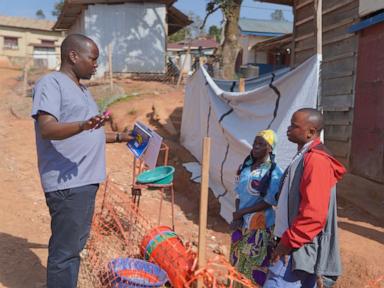
Rather than forcing patients into centralized, overflowing ETUs, the immediate requirement is the rapid deployment of localized, low-overhead Forward Isolation Units (FIUs). These are temporary structures constructed from locally available materials lined with heavy-duty plastic sheeting, designed purely to achieve immediate physical separation of suspected cases from the community.
FIUs do not attempt high-level clinical intervention; their primary objective is the containment of viral shedding. By shifting the initial isolation barrier closer to the community, logistical latency is eliminated. Patients are isolated within hours of symptom identification, radically shrinking the contact matrix before diagnostic confirmation is achieved.
Phase 2: Ring Vaccination and Targeted Transmission Blunting
In an environment where absolute contact tracing has collapsed, response teams must shift to geographic ring vaccination and deep-trench prophylaxis. Instead of trying to track individual chains of transmission through an unmapped population, vaccination teams draw an epidemiological perimeter around the affected zone.
[Outbreak Center] ──► [Tier 1: High-Exposure Contacts (Immediate Ring)]
                         │
                         ▼
                      [Tier 2: Geographic Perimeter (Community Ring)]
Every individual within a defined radius of known clusters must receive the vaccine immediately, irrespective of confirmed contact history. This strategy creates an artificial immunological barrier that absorbs the spillover from untraced or unisolated community cases, effectively suffocating the virus's ability to leap to new demographic hubs.
Phase 3: The Asymmetric Supply Corridor
To counter supply chain inelasticity, a dedicated logistics corridor must be established, completely independent of commercial or standard civilian transport routes. This involves setting up forward supply hubs within helicopter operational range of the isolated zones.
Supply distribution must be predictive, not reactive. Rather than dispatching PPE and therapeutics based on case counts reported 48 hours prior, logistics systems must utilize predictive modeling to forward-deploy assets based on current transmission velocity. If a zone shows a 20% week-over-week increase in suspected cases, its supply allocation must be increased by 50% in anticipation of the compounding isolation demand.
Deficit Projections and Tactical Reorientation
The standard playbook of waiting for laboratory validation before deploying major isolation infrastructure is structurally flawed when managing rapid EVD proliferation in resource-constrained environments. If the current operational paradigm remains unchanged, the transmission deficit will widen until the outbreak achieves geographic self-sustainability across regional borders.
The immediate operational pivot requires treating a "facility full" declaration not as an indicator for increased funding for existing centers, but as a hard trigger to abandon centralized isolation protocols in favor of immediate, decentralized community-level containment zones. Failure to execute this tactical pivot guarantees that the healthcare network itself becomes the primary vector driving the epidemic toward systemic failure.