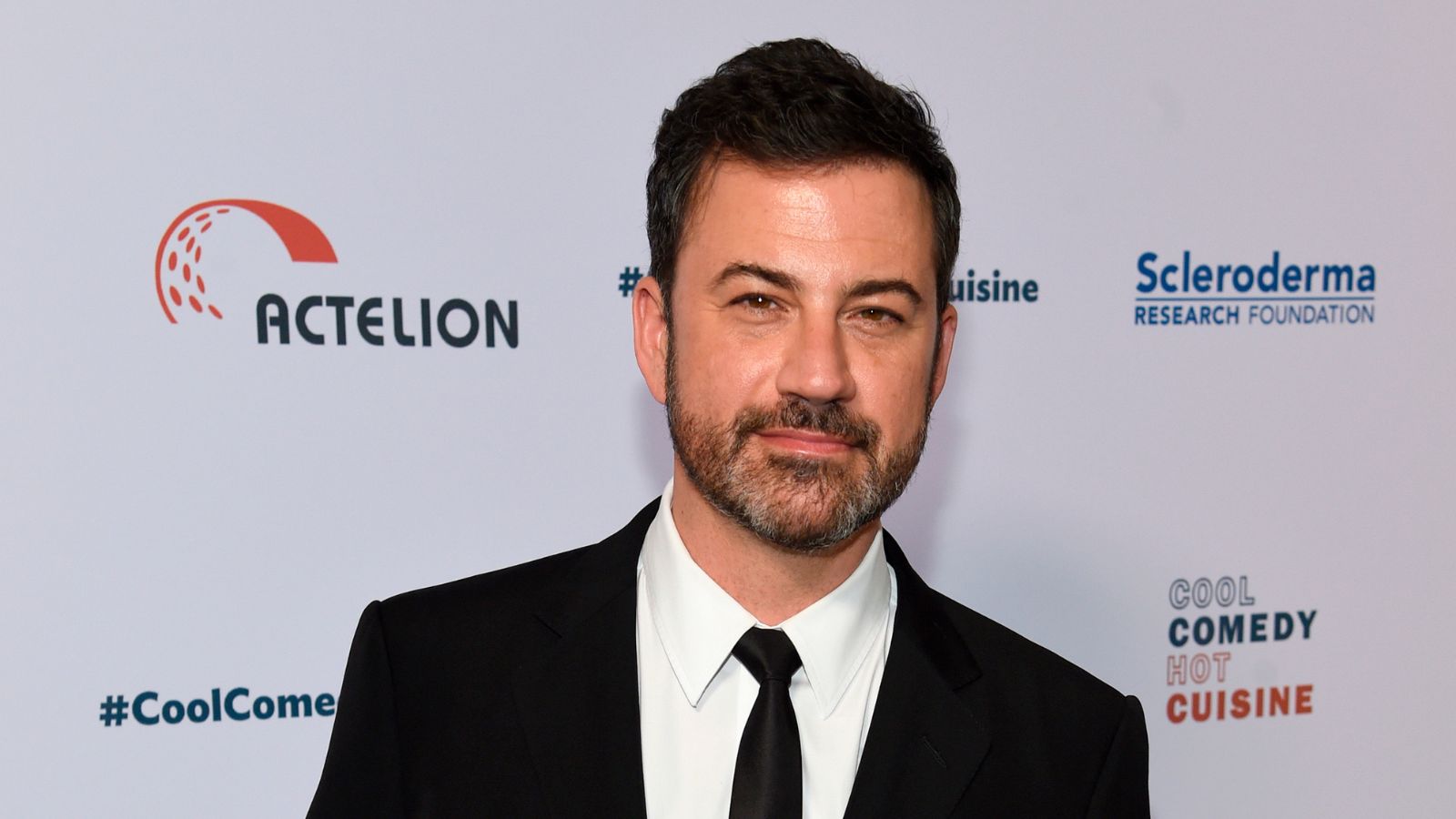
The intersection of executive political power and late-night broadcast media functions through a predictable cycle of grievance, amplification, and brand fortification. When a former or sitting president demands the termination of a television host—specifically the recent call regarding Jimmy Kimmel’s monologue references to the First Lady—the action is rarely a literal attempt at human resources intervention. Instead, it serves as a tactical deployment of the "Aggrieved Audience Mechanism." This framework transforms a singular comedic critique into a rallying point for political mobilization, forcing the media outlet into a defensive posture that simultaneously increases the host's relevance and the politician's base engagement.
The Tripartite Model of Media Escalation
Understanding this friction requires deconstructing the relationship between the orator, the platform, and the regulatory environment. The interaction follows three distinct phases of escalation.
1. The Satirical Catalyst
Late-night comedy operates on a fundamental principle of topical subversion. By utilizing the First Lady as a comedic subject, the program enters a high-volatility zone of social norms. In traditional American political etiquette, family members are often categorized as "off-limits," though this boundary is fluid and depends entirely on the family member's level of active participation in policy or campaigning. The catalyst here is the perceived breach of this unwritten code, which provides the necessary moral high ground for a formal rebuttal.
2. The Demand for Institutional Correction
The request for ABC—a subsidiary of the Disney Corporation—to fire Kimmel acts as a stress test for corporate autonomy. From a strategic standpoint, the demand is an exercise in brand-to-brand warfare. The politician identifies the parent company as a surrogate for the host’s opinions. By framing the joke not as protected speech but as a corporate failure, the orator attempts to shift the narrative from "free speech" to "professional misconduct." This creates a conflict of interest for the network: protect the talent (the revenue driver) or mitigate the reputational risk associated with high-level political condemnation.
3. The Feedback Loop of Reciprocal Value
A symbiotic relationship exists between the critic and the criticized.
- For the Politician: The public demand serves as a signal to the electorate that they are a "fighter" against a perceived "hostile media elite." It bypasses standard news filters and communicates directly with the base via social media channels.
- For the Host: The attack provides a week's worth of content. In the attention economy, being singled out by a president or former president is the highest form of validation for a political satirist. It increases viewership metrics among the opposition and solidifies the host’s position as a central figure in the cultural zeitgeist.
The Economic Disincentive for Termination
The call for termination faces a structural bottleneck: the contract and the bottom line. Networks do not operate on ideological purity; they operate on audience retention and ad-rate stability. For a network like ABC to terminate a flagship host over a joke, the "Cost of Retention" must exceed the "Cost of Litigation and Replacement."
The Cost of Retention includes:
- Ad-Sponsor Flight: If a joke causes a mass boycott that threatens 20% or more of the show’s quarterly ad revenue, the network's commitment wavers.
- FCC Regulatory Pressure: While the FCC does not regulate cable or streaming in the same way as broadcast, the threat of regulatory scrutiny—even if legally tenuous—adds a layer of administrative friction.
The Cost of Replacement includes:
- Contractual Buyouts: High-tier talent often has "pay-or-play" clauses, meaning the network might owe the host tens of millions of dollars regardless of whether they stay on the air.
- Market Share Vacuum: Late-night audiences are loyal to personalities, not time slots. Replacing a host involves a multi-year lead time to rebuild the demographic profile desired by advertisers.
Unless the political pressure translates into a quantifiable drop in these metrics, the demand for termination remains a rhetorical tool rather than a functional corporate directive.
Regulatory Realities and the First Amendment Barrier
A common misconception in these disputes is that a political leader can exert direct legal pressure to silence a comedian. The legal architecture of the United States, specifically the precedent set in Hustler Magazine, Inc. v. Falwell (1988), provides broad protection for satire involving public figures.
The court established that the First Amendment prohibits public figures from recovering damages for the tort of intentional infliction of emotional distress without showing that the publication contains a false statement of fact made with "actual malice." Since a joke is, by definition, not a statement of fact, it falls under protected rhetorical hyperbole.
The mechanism for "firing" a host is therefore strictly private-sector. It is a matter of labor law and corporate policy, not constitutional law. This distinction is vital because it explains why these demands are issued via social media (public relations) rather than through the Department of Justice or the FCC (legal action). The goal is to induce "voluntary" corporate censorship through the threat of market-based retaliation.
The Role of First Lady Status in Political Strategy
The use of the First Lady as a shield or a sword is a calibrated tactic. In the "Two-Tiered Visibility Scale," spouses who do not hold office are often framed as private citizens when attacked, but as public assets when being promoted.
- Defensive Layering: By focusing on a joke about a spouse, the politician can frame the media as "mean-spirited" or "anti-family," which is a more effective emotional hook than complaining about a joke regarding their own policy failures.
- The Gendered Component: Historically, attacks on First Ladies trigger a specific type of protective response from traditionalist voting blocs. This intensifies the "Outrage Dividend," a metric where the intensity of the response is disproportionately higher than the actual severity of the insult.
Structural Incentives for Network Non-Compliance
ABC and its peers have developed a specific immune response to these demands. In the current fragmented media environment, "niche-dominance" is more profitable than "broad-neutrality."
- Audience Segmentation: Late-night comedy has largely abandoned the attempt to capture 100% of the public. They target a specific demographic—typically urban, college-educated, and politically active. This demographic views attacks from the opposition as a "badge of honor" for the host.
- The Streisand Effect: Attempting to suppress a joke or fire a host usually results in the joke being viewed significantly more times than it would have been otherwise. The network calculates that any capitulation would alienate their core audience and appear as a sign of weakness, potentially leading to a counter-boycott from the opposite side of the political spectrum.
The Diminishing Returns of the Termination Demand
Over the last decade, the frequency of calls for public figures to be fired has led to "Outrage Fatigue." The first time a president calls for a host to be removed, it is a seismic event. The twentieth time, it becomes a predictable part of the media cycle.
This devaluation of the demand leads to a tactical pivot. The politician no longer expects the host to be fired. Instead, the demand is used to:
- Distract: Shifting the news cycle away from an unfavorable legal or political development.
- Fundraise: Using the "Hostile Media" narrative in email campaigns to generate small-dollar donations.
- Benchmark: Testing which media personalities are the most effective foils for the current political season.
Strategic Forecast of Media-Political Friction
The trend lines indicate a hardening of these silos. We should expect an increase in the "Corporate Surrogate" strategy, where political entities target the advertisers of programs rather than the networks themselves. This moves the battlefield from the First Amendment to the balance sheet.
However, as long as late-night comedy remains a primary vehicle for political discourse for a specific segment of the population, the host's job security is tied more to their ability to generate "viral friction" than to their adherence to traditional decorum. The demand for a firing is the fuel that keeps the engine running.
The immediate tactical move for any corporate entity in this position is to issue a non-committal statement regarding "artistic freedom" while privately auditing the host's contract for "morals clauses" that could be triggered only in the event of a catastrophic loss of sponsors. Barring that economic collapse, the host remains an asset precisely because they are a target.
Organizations must monitor the "Sponsor Sensitivity Index"—the point at which a political controversy begins to affect the brand equity of the show's top five advertisers. If the index remains stable, the host’s position is secure. If the index drops, the host will be phased out under the guise of "creative evolution" rather than a direct response to a political demand, preserving the appearance of network independence while satisfying the economic necessity of de-escalation.