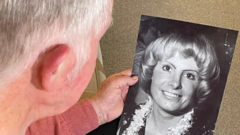
The Architecture of Persistent Motivation
Commitment to a deceased partner through specific behavioral rituals—often categorized as "keeping a promise"—is frequently viewed through a sentimental lens. However, a rigorous analysis reveals this phenomenon as a high-stakes optimization of psychological continuity and social identity. When an individual like "Jimmy" sustains a multi-decade performance of Sinatra-inspired rituals to honor a late spouse, they are not merely "remembering." They are maintaining a complex internal equilibrium designed to mitigate the cognitive dissonance associated with permanent loss.
This behavioral persistence functions as a closed-loop feedback system. The "promise" acts as the initial set point. Every subsequent action—whether it is vocal performance, stylistic adherence, or public tribute—serves as an error-correction mechanism to bridge the gap between the presence of the past and the void of the current reality.
The Cognitive Cost Function of Grief Management
The maintenance of a specific identity (the "Sinatra fan") serves three distinct strategic functions within the human psyche following a significant loss:
- Identity Anchoring: Loss often results in "identity drift." By adhering to a specific set of interests shared with or promised to a partner, the survivor prevents the erosion of their self-concept.
- Externalized Processing: Expressing grief through a structured medium (music) converts abstract emotional pain into a tangible, repeatable task. This reduces the metabolic load required to process grief by providing a predictable framework for emotional discharge.
- Social Validation Loops: Performing a promise in a public or semi-public sphere creates a social contract. The community recognizes the survivor as "faithful" or "dedicated," which provides external reinforcement that makes the cost of maintaining the habit lower than the social cost of abandoning it.
The Sinatra Variable: Aesthetic Rigor as a Stability Metric
Choosing a specific cultural icon like Frank Sinatra as the vehicle for a promise is not an arbitrary selection; it provides a high-resolution template for behavior. The "Sinatra" persona is defined by specific metrics: vocal phrasing, sartorial precision, and a philosophy of individualistic resilience ("My Way").
For a survivor, these metrics offer a "Standard Operating Procedure" for living. When life becomes chaotic due to the death of a spouse, having a rigid aesthetic and behavioral framework to follow provides a sense of agency. The "doing it his way" philosophy is, paradoxically, a method of strict adherence to a pre-defined path. It is a strategic deployment of defiance to protect a vulnerable emotional core.
The Entropy of Memory and the Ritual Solution
Human memory is inherently lossy. Over time, the specific nuances of a relationship fade, replaced by generalized impressions. Ritualized behavior—such as performing specific songs on specific dates—serves as a data-redundancy protocol.
Each performance is a "refresh rate" for the memory of the deceased. Without these rituals, the survivor faces the "Second Death," defined in psychological literature as the moment when the last person who truly remembers the deceased also passes, or when the memories themselves become so distorted that they no longer represent the original subject. By tying the memory to a consistent cultural artifact (Sinatra's discography), the survivor attaches a volatile personal memory to a stable cultural monument, thereby slowing the rate of mnemonic decay.
Quantifying the Promise: The Burden of Consistency
While the public perceives a "promise kept" as an act of pure love, a data-driven view must account for the "Consistency Principle." Cognitive psychology suggests that once an individual has publicly committed to a position or identity, they feel a powerful internal and external pressure to behave consistently with that commitment.
- Initial Investment: The emotional weight of the promise at the time of death.
- Accumulated Equity: The years of behavior already spent fulfilling the promise.
- Sunk Cost Fallacy: The difficulty of stopping the behavior because doing so would retroactively "invalidate" the previous years of effort.
This creates a self-perpetuating cycle. The longer Jimmy keeps his promise, the higher the psychological cost of breaking it becomes. The behavior ceases to be a choice and becomes a structural necessity of his daily operations.
The Role of Performative Resilience
In the case of Jimmy, the act of singing "his way" is a public demonstration of resilience. This performance serves an evolutionary purpose: signaling high fitness and emotional stability to the surrounding tribe. Even in old age, the ability to maintain a complex skill (vocal performance) and a rigorous code of conduct (the promise) signals that the individual remains a functional, contributing member of the social hierarchy.
The music of Sinatra is particularly effective here because it emphasizes autonomy and stoicism. These are "low-entropy" traits—they resist the natural tendency of things to fall apart. By channeling Sinatra, the survivor adopts a psychological armor that protects against the perception of frailty or abandonment.
Structural Limitations and Behavioral Risks
No system is without potential points of failure. The reliance on a single behavioral pillar to maintain emotional stability carries specific risks:
- Rigidity Trappedness: If the ritual becomes the only source of meaning, the individual may struggle to form new attachments or adapt to changing life circumstances.
- Performance Fatigue: The physical or cognitive decline associated with aging may eventually make the "performance" of the promise impossible, leading to a secondary crisis of identity.
- Audience Dependency: If the ritual requires an audience for validation, the loss of that audience (through social isolation or relocation) can cause the system to collapse.
Strategic Recommendation for Long-Term Legacy Management
To maximize the efficacy of a commemorative promise while minimizing the risk of psychological stagnation, individuals should move from "Static Rituals" to "Generative Legacies."
Instead of merely repeating a behavior (singing the same song), the survivor should pivot toward behaviors that produce new value based on the original values of the partnership. This transitions the system from a "closed loop" (which eventually consumes itself) to an "open system" that can grow.
If the objective is to honor a spouse through Sinatra's music, the optimal path is to utilize that interest to mentor others, fund music education, or build community structures. This transforms the "promise" from a burden of debt into a capital asset. The focus shifts from the act of keeping a promise to the impact the promise has on the future. This is the only way to ensure that "doing it his way" results in a sustainable and expanding legacy rather than a diminishing echo of the past.


