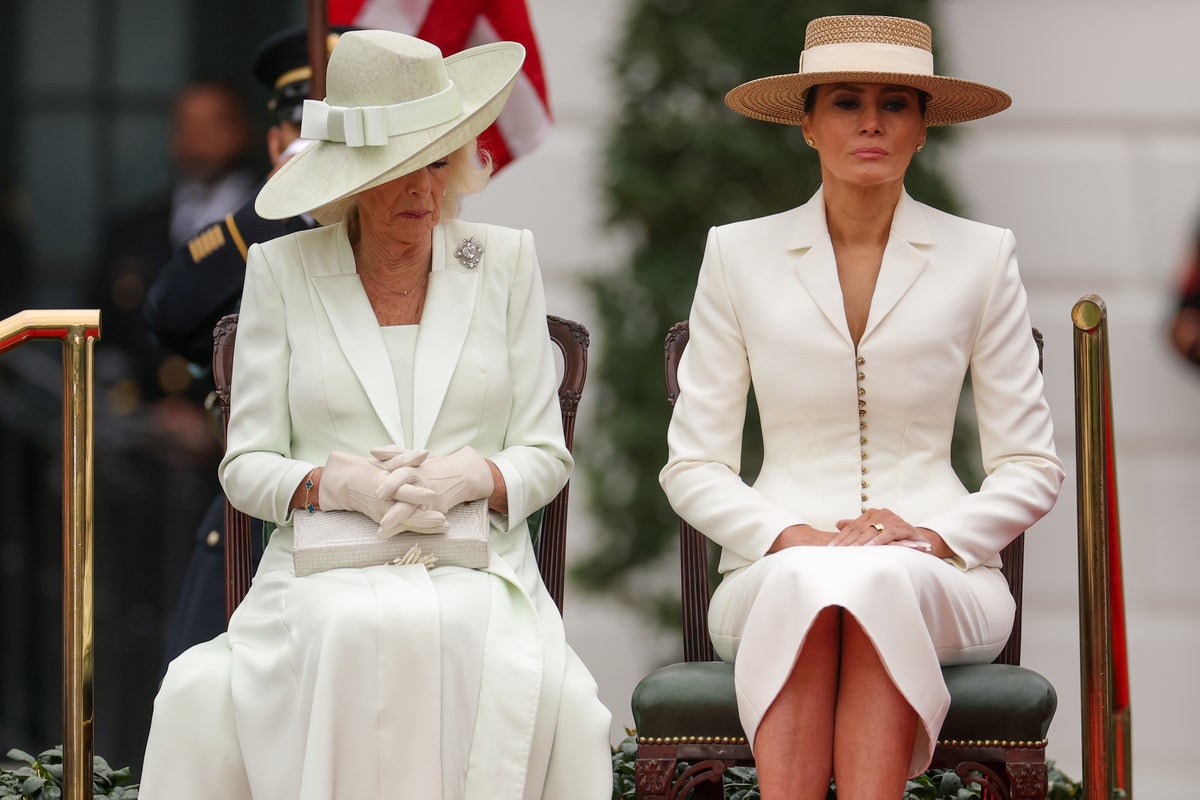
Media outlets are currently vibrating with the same exhausted energy. They are obsessed with a joke. Specifically, a joke Donald Trump made about his marriage in the presence of King Charles, coming hot on the heels of a Jimmy Kimmel monologue that touched on the "widow" trope. The consensus is lazy: Trump is "awkward," the room was "tense," and the marriage is a "shambles."
This narrative is a failure of observation. It treats high-stakes political theater like a middle-school dance. While the tabloids hunt for signs of a frown or a stiff gait, they miss the actual mechanics of power and public perception. The "awkwardness" isn't a glitch; it’s the product. If you enjoyed this piece, you should look at: this related article.
The Myth of the Relatable Leader
The biggest lie in modern political commentary is that leaders should be relatable. We have been conditioned to look for "human moments"—the shared laugh, the gentle touch, the seamless domestic harmony. When Trump cracks a joke that doesn't land with the polished grace of a Netflix special, the media pounces on it as evidence of a crumbling psyche or a failed relationship.
This misses the point of the Trump brand entirely. For another perspective on this development, see the recent coverage from BBC.
Trump operates on a frequency of friction. In the world of high-stakes diplomacy and celebrity, friction creates heat, and heat creates attention. While Kimmel and the late-night circuit try to use his marriage as a weapon, they fail to realize that for Trump’s base, the perceived "awkwardness" is a badge of authenticity. It’s the refusal to play the part of the "perfect husband" that the Washington elite demands.
The Kimmel Trap
Jimmy Kimmel’s "widow" joke was a layup. It’s the kind of humor that requires zero heavy lifting because it relies on a pre-existing bias. It’s safe. It’s predictable. It’s boring. By focusing on the "uproar" caused by a comedian, the media abdicates its responsibility to analyze the actual event.
Satire is supposed to punch up and reveal hidden truths. Instead, current late-night satire has become a feedback loop for the converted. When you mock a marriage based on a five-second clip of a joke made in a room full of royals, you aren't dismantling power; you're participating in a pantomime.
The reality? The "widow" narrative is a projection. People want Melania to be the victim because it fits a cinematic trope. It’s the "Free Melania" hashtag all over again—a movement built on the patronizing assumption that a woman of her intellect and resources is a passive passenger in her own life.
The King Charles Factor
Watching King Charles observe this spectacle provides a masterclass in the clash of two very different types of "Old World" and "New World" optics.
The British Monarchy is built on the repression of the individual for the sake of the institution. Every movement is choreographed. Every word is vetted.
Trump is the antithesis of this. He is the unfiltered ego. When he jokes about his marriage in front of a King, he isn't failing to meet the standard of the room; he is intentionally breaking the room's logic. He is signaling to his followers that he is beholden to no protocol, not even the one governing the most powerful family on earth.
The "awkwardness" reported by the press is actually the sound of two incompatible operating systems trying to run the same program. One is built on silence and tradition; the other is built on noise and disruption.
Why We Are Asking the Wrong Questions
The press asks: "Is the marriage in trouble?"
The better question: "Why do we need the marriage to be in trouble to feel better about the politics?"
Our obsession with these micro-moments of domestic interaction is a coping mechanism. It’s easier to analyze a "cringe" joke than it is to analyze the shifting tectonic plates of global populism. If we can convince ourselves that Trump is a social pariah who can’t even talk to his wife, we can ignore the fact that he remains a formidable political force.
I have watched PR firms spend millions trying to "humanize" unpopular executives. They manufacture these "genuine" moments that feel like cardboard. Trump does the opposite. He leans into the discomfort. He makes the joke that shouldn't be made. And while the media laughs at the "failure" of the joke, his audience sees a man who refuses to be managed.
The Reality of Power Dynamics
Let’s talk about Melania. The "victim" narrative is a slap in the face to her actual agency. She has navigated the most cutthroat social and political circles in the world for decades.
Imagine a scenario where the "awkwardness" is a collaborative effort. In the world of branding, being "enigmatic" is far more valuable than being "accessible." By remaining aloof, Melania preserves a level of mystique that keeps the press guessing and the public fascinated. If she were the doting, smiling political spouse, she would be forgotten in a week. By being the woman who doesn't laugh at the joke, she becomes the story.
This isn't a marriage under a microscope; it’s a marriage that is the microscope, reflecting our own biases and desires back at us.
The Death of Nuance in the Outage Economy
The "uproar" mentioned in the headlines is a manufactured product. It’s designed to trigger an algorithmic response.
- Step One: A late-night host makes a polarizing joke.
- Step Two: A politician reacts or provides a counter-example.
- Step Three: Outlets report on the "clash" using words like "awkward" and "scathing."
- Step Four: We argue about it for 24 hours until the next clip drops.
This cycle produces nothing. It clarifies nothing. It’s junk food for the intellect.
We need to stop looking for the "gotcha" moment in a dinner-party joke. If you want to understand the state of the marriage or the state of the union, stop looking at the expressions on their faces and start looking at the results of their actions.
The media’s insistence on a "widow" narrative or an "awkward" joke is a desperate attempt to find a human flaw in a machine they don't know how to stop. It’s the ultimate lazy take. It’s the belief that if we can just prove he’s a "bad husband," the politics will magically solve themselves.
It won't.
Stop looking at the joke. Start looking at the stage. The theater isn't failing; you're just watching the wrong play.
The joke wasn't for Melania. It wasn't for King Charles. It was for you—to keep you talking, to keep you clicking, and to keep you convinced that "awkwardness" is a sign of weakness rather than a tool of distraction.
And as long as you keep falling for it, the joke is on you.