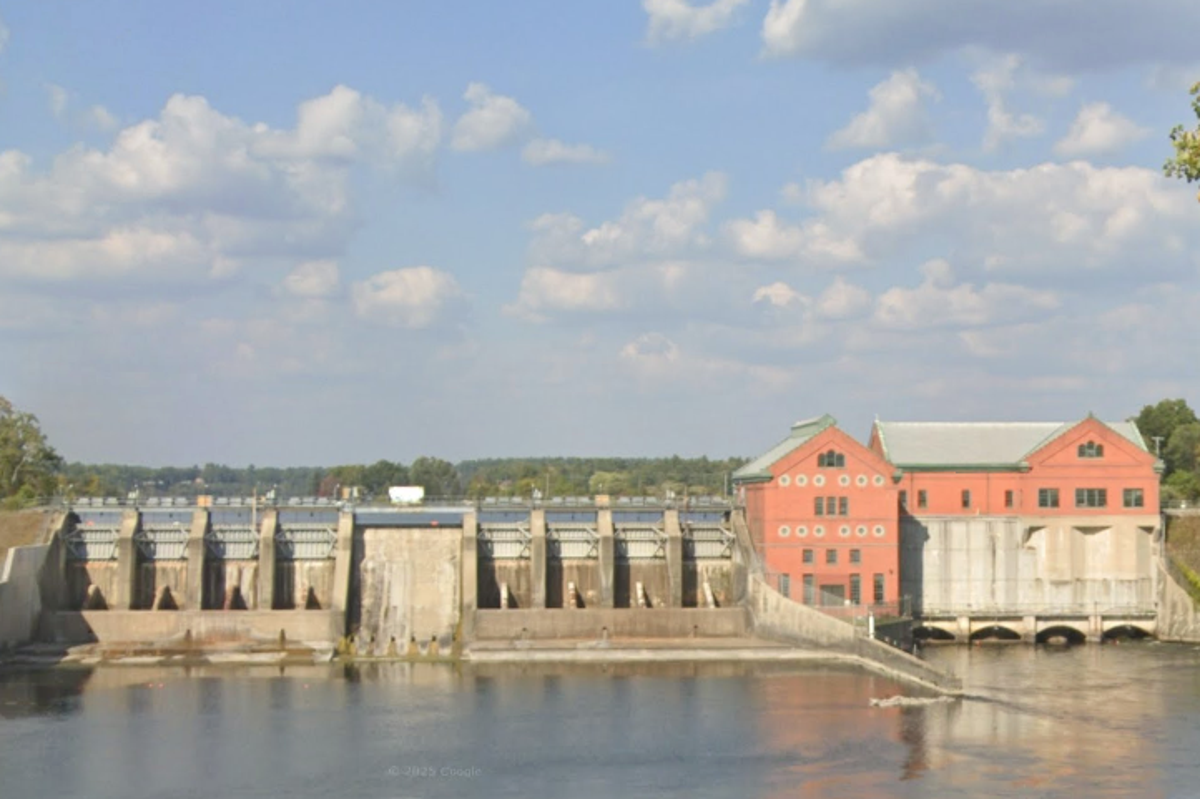
The emergency sirens echoing across Gladwin and Midland counties are not just a warning of rising water; they are a loud, rhythmic indictment of a systemic failure. When local authorities issued the order for residents near the Edenville and Sanford dams to evacuate immediately, it was the culmination of decades of neglect, regulatory toothlessness, and a fundamental misunderstanding of what modern climate patterns do to mid-century engineering. The Tittabawassee River is no longer behaving according to the charts drawn up fifty years ago.
This is not a freak accident. You might also find this connected story useful: Why Foreign Pleas for Peace in Lebanon Are Destined to Fail.
For the residents forced to pack their lives into the back of a truck, the "once-in-a-century" flood has become a recurring nightmare. The immediate crisis is a matter of life and death, but the underlying story is one of a catastrophic disconnect between private ownership of public safety infrastructure and the state's inability to enforce basic maintenance.
The False Security of Earth Fill Dams
Most people look at a dam and see a solid wall of concrete. That is a dangerous misconception. Many of the structures scattered across Michigan’s river systems are embankment dams, essentially massive mounds of compacted earth and rock. While they are cost-effective to build, they are incredibly sensitive to overtopping. As reported in latest reports by Al Jazeera, the results are notable.
When water levels rise faster than the spillways can discharge, the water begins to flow over the crest of the dam. Earth and gravel are quickly washed away by the force of the current. Once a small notch is formed, the pressure of the reservoir behind it turns that notch into a chasm in minutes. This is known as piping or a breach, and it is exactly what engineers have feared for these specific Michigan sites for years.
The Tittabawassee River system is particularly prone to this because of its geography. It drains a massive area of the state, funneling rain from thousands of acres into narrow channels regulated by structures that were never designed for the rapid-fire, high-intensity rain events we now see annually.
A History of Ignored Warnings
The tragedy of the current evacuation order is that the blueprint for this disaster was written years ago. Investigative records show a long, litigious history involving the owners of these dams and the Federal Energy Regulatory Commission (FERC).
In 2018, FERC actually revoked the license for the Edenville Dam because the operator failed to increase the spillway capacity. The regulators knew the dam couldn't handle a major flood. They said it explicitly in their filings. Yet, when the federal license was pulled, the oversight shifted to the state of Michigan. This transition created a regulatory "no-man's-land" where the owner lacked the funds or the will to make repairs, and the state lacked the immediate legal leverage to force a massive infrastructure overhaul before the clouds opened up.
The Spillway Problem
To understand why these dams fail, you have to look at the Probable Maximum Flood (PMF). This is a technical standard used to determine how much water a dam must be able to pass safely through its spillways without collapsing.
- Capacity: The Edenville structure was reportedly only capable of handling about 50% of the PMF.
- Obstruction: Debris, siltation, and aging gate mechanisms often reduce that capacity even further in real-world conditions.
- Pressure: As the reservoir rises, the weight of the water against the earthen wall increases exponentially.
When a dam owner refuses to expand spillways, they are gambling with the lives of everyone downstream. In this case, the gamble failed.
The Economic Mirage of Private Dams
There is a hard truth that politicians rarely want to discuss: many of these dams no longer serve a viable economic purpose. Originally built for hydroelectric power or to create high-value lakefront property, the cost of maintaining them now far exceeds the revenue they generate.
When a dam stops being a "profit center" and becomes a "liability center," private owners often go into a defensive crouch. They cut maintenance budgets. They fight regulators in court for years to delay expensive upgrades. Meanwhile, the residents living in the "inundation zone"—the area designated to be destroyed if the dam fails—are often kept in the dark about how precarious their situation actually is.
Taxpayers are now being asked to foot the bill for the emergency response, the National Guard deployments, and the eventual rebuilding of the roads and bridges that will be swept away. It is a classic case of privatized profits and socialized losses. The state of Michigan is left holding a multi-billion dollar repair bill for infrastructure it doesn't even technically own.
The Engineering Reality of a Breach
If a total breach occurs, the mechanics are brutal. A wall of water moves downstream, carrying with it everything it has collected: trees, cars, propane tanks, and pieces of other houses. This creates a "battering ram" effect. The water alone is heavy, but the debris turns the flood into a grinding machine that can take out bridges that were otherwise high enough to survive the water levels.
Emergency management teams in Midland are currently calculating the time-to-crest. This is the window between the dam failure and the peak water level arriving at the city center. In some areas, that window is less than an hour.
Why Sandbags Aren't Enough
In a crisis of this scale, sandbagging is a psychological comfort rather than a physical defense. When a river rises ten feet above its banks, sandbags are easily bypassed by seepage. Water doesn't just come over the top; it pushes through the soil underneath the bags, bubbling up inside basements and behind barriers.
We are seeing a shift from "flood fighting" to "managed retreat." The goal is no longer to save the property; it is to ensure that the body count stays at zero.
The Infrastructure Debt is Calling
Michigan is currently the canary in the coal mine. According to the American Society of Civil Engineers, there are thousands of "high-hazard" dams across the United States that are in poor or mediocre condition. A "high-hazard" designation doesn't mean the dam is likely to fail; it means that if it does fail, people will likely die.
The state's Department of Environment, Great Lakes, and Energy (EGLE) is chronically underfunded. Inspectors are spread too thin. They can find the cracks, they can write the reports, but they cannot physically force a private company to pour millions of dollars into a concrete spillway without years of litigation.
This evacuation is a glimpse into a future where the mechanical failures of the 20th century meet the weather patterns of the 21st. We have built our civilizations around the idea that water can be controlled, tucked away behind earth and concrete. That control was always an illusion, and the illusion is currently washing away in Gladwin County.
The immediate priority is the safe evacuation of every soul in the path of the Tittabawassee. But once the mud dries and the insurance adjusters arrive, the conversation must shift. We cannot continue to patch up 90-year-old mounds of dirt and call it a safety plan. Either these structures are upgraded to modern standards, or they must be decommissioned and the rivers returned to their natural states.
Anything else is just waiting for the next siren to sound.
Direct the flow of state emergency funds toward permanent removal of non-compliant structures rather than endless, temporary repairs that fail when the pressure rises.