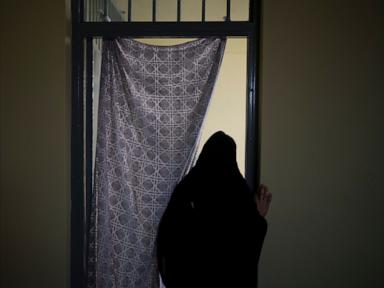
The enforcement of dress code mandates in urban Afghanistan functions as a systematic, state-sanctioned mechanism designed to dismantle female economic autonomy and institutionalize risk within the household. While international bodies frame the recent detentions in Herat and Kabul as isolated human rights anomalies, an evaluation of the structural architecture reveals a deliberate strategy of social friction. By shifting the financial, psychological, and legal liabilities of compliance from the state to the domestic sphere, the de facto authorities have created an enforcement model that leverages familial networks to achieve comprehensive civilian containment.
Understanding this dynamic requires looking beyond ideological rhetoric to analyze the operational pipeline of enforcement, the calculated creation of legal ambiguity, and the deliberate transfer of enforcement costs to private citizens.
The Strategic Architecture of Compliance Transfer
The operational efficiency of the Ministry for the Propagation of Virtue and the Prevention of Vice relies on a structural design that transfers enforcement costs away from the state apparatus. Rather than deploying a capital-intensive, permanent standing police presence to monitor every public square, the authorities utilize a multi-tiered framework that converts the traditional male guardian (mahram) into an unpaid agent of state surveillance.
[State Edict Issued]
       │
       ▼
[Arbitrary Detention of Female Demographics]
       │
       ▼
[Financial & Social Liability Transferred to Male Guardian]
       │
       ▼
[Private Enforcement & Domestic Isolation]
This model operates via a three-stage pipeline:
- The Shock Incursion: Selective, highly visible sweeps are conducted in urban commercial hubs, transit chokepoints, and markets. The primary objective of these interventions is not comprehensive incarceration, but rather the maximization of public visibility to create a perception of omnipresent surveillance.
- The Liability Transfer: Upon detention, the state refuses to negotiate directly with the detained individual. Instead, operational protocols dictate that a male relative must present themselves to the police district to assume formal custody.
- The Binding Guarantee: To secure a release, the male guardian must sign a binding legal document (multazim). This text explicitly states that future non-compliance by the female relative will result in direct punitive action—including asset forfeiture, physical flagellation, or imprisonment—directed at the man himself.
This structure shifts the cost function of enforcement. The state removes itself from the daily maintenance of public discipline, forcing families to self-police to protect their own economic survival and physical safety. The domestic space is thus transformed into an extension of the state's penal system.
Calculated Ambiguity as an Enforcement Multiplier
A primary vulnerability of conventional legal frameworks is the necessity of precise definition; clear boundaries allow citizens to optimize behavior to avoid infractions. The current administration in Kabul avoids this operational constraint by intentionally maintaining an undefined standard for what constitutes a "bad hijab."
While formal edicts point toward the chadari (the head-to-toe burqa) or dark, loose-fitting garments paired with surgical masks as the baseline compliance metrics, field implementation remains deliberately erratic. Human rights monitors operating under anonymity have documented cases where individuals wearing identical black attire were selectively detained based entirely on the location, time, or localized quotas of the morality police units.
This structural unpredictability serves two distinct strategic functions:
- Risk Inflation: When the boundary between compliance and violation is fluid, rational actors cannot optimize their behavior to safely navigate public spaces. The perceived risk of arrest artificially expands, forcing individuals to overestimate the hazard of any outdoor activity.
- Destruction of Public Trust: By executing detentions that appear random to onlookers, the state prevents the formation of standardized public expectations. The resulting cognitive strain degrades community cohesion, ensuring that collective resistance or organized pushback is replaced by atomized survival strategies.
The Socio-Economic Insulation Matrix
The systematic exclusion of women from the public square yields measurable economic consequences, operating as an insulation matrix that cuts off households from secondary income streams. The restriction on movement acts in tandem with existing macro-level prohibitions, notably the suspension of female education beyond the sixth grade and restrictions across formal employment sectors.
The economic impacts follow a clear cascading path:
[Movement Restrictions & Dress Code Arrests]
       │
       ▼
[Voluntary Withdrawal from Markets (Risk Mitigation)]
       │
       ▼
[Loss of Secondary Household Income Streams]
       │
       ▼
[Increased Dependence on Male Earnings & State Allocation]
When public movement carries the threat of arbitrary detention, households engage in rational risk mitigation by withdrawing female members from local markets. This voluntary insulation removes consumers from the retail ecosystem and curates a structural dependency framework.
With secondary income potential eliminated, families become entirely reliant on single-earner configurations or external humanitarian distribution channels. Consequently, economic survival becomes tethered to compliance with local power structures, decreasing the likelihood of civic disruption.
International Institutional Friction and Policy Deficits
The response from international entities, primarily coordinated through the United Nations Assistance Mission in Afghanistan (UNAMA), uncovers a fundamental mismatch in geopolitical leverage. The standard toolkit of international diplomacy—comprising public statements of concern, condemnation via digital platforms, and appeals to international human rights conventions—fails to alter the domestic calculations of the de facto government.
The structural gridlock stems from conflicting priorities:
| Entity | Primary Metric | Enforcement Mechanism | Strategic Horizon |
|---|---|---|---|
| UNAMA / International Observers | Adherence to Global Treaties (CEDAW), Freedom of Movement | Diplomatic Isolation, Conditional Aid Allocation | Long-term institutional integration |
| De Facto Authorities | Internal Consolidation, Ideological Consolidation | Localized Coercion, Resource Capture | Immediate preservation of domestic authority |
Because the Ministry of Virtue and Vice operates on a performance framework tied to ideological consolidation rather than international recognition, external condemnation acts as a zero-cost variable. Diplomatic friction does not alter the domestic balance of power; instead, it is often utilized internally to validate the administration's resistance to external political interference. Consequently, statements noting that "all persons are entitled to equality before the law" lack an enforcement mechanism capable of altering local operational realities.
The Strategic Projection of Institutional Cohesion
The current expansion of dress-code detentions from Kabul into western regional urban centers like Herat signals a transition from localized experimentation to a standardized national policy. This geographic expansion is timed to project centralized control over provincial factions that may historically favor distinct enforcement methodologies.
By enforcing uniform compliance standards across diverse urban topographies, the central authority signals internal alignment to both domestic critics and external observers. The state's administrative willingness to sustain international condemnation over domestic social policies demonstrates that internal ideological cohesion takes precedence over integration into global financial and diplomatic networks.
The long-term trajectory points toward the institutionalization of an absolute enclosure model. As urban spaces are cleared of independent female economic participation, the survival of the household unit becomes dependent on its integration into state-sanctioned distribution channels. Organizations operating within the region must prepare for an operational landscape where access to aid, basic resources, and localized commerce is strictly gated by verified compliance with the state's domestic framework. Future humanitarian interventions that fail to account for this structural reality will find their distribution networks co-opted, effectively turning international aid into an inadvertent subsidization of the domestic enforcement apparatus.