A whistle blows. Seconds later, dozens of rescue workers scramble out of a leaning, three-story grocery store building in General Santos city. Concrete chunks slam onto the pavement right where they stood. It's Wednesday, June 10, 2026, and a powerful aftershock has just brought search operations to a sudden, terrifying halt.
This is the reality on the ground in the southern Philippines. A massive 7.8-magnitude earthquake ripped through southern Mindanao on Monday, leaving at least 45 people dead, 17 missing, and over 630 injured. The primary topic hitting the headlines is the initial destruction, but the real crisis right now is the unstable ground. Over 2,100 aftershocks have rattled the region in less than 48 hours. Some reached magnitudes up to 6.4, according to Teresito Bacolcol, head of the Philippine Institute of Volcanology and Seismology. It's a terrifying scenario that turns every rescue attempt into a dangerous gamble.
The true scope of this disaster goes far beyond the immediate body count. More than 25,000 displaced people are packed into 45 government-run emergency shelters. Many are too traumatized to step inside a building, preferring to sleep in open fields. If you want to understand why the Mindanao earthquake recovery effort is stalling, you have to look past the initial tremor and focus on the secondary disasters unfolding right now.
The Ring of Fire and the Cotabato Trench Strike Back
The Philippines sits directly on the Pacific Ring of Fire. It's an area known for intense seismic activity, but Monday's quake was something else entirely. It stands as one of the most powerful earthquakes to hit the country in a half-century.
The culprit behind this specific catastrophe is the Cotabato Trench, a major undersea depression. Historically, this fault line is capable of generating absolute horror. Back on August 17, 1976, movement in the exact same trench triggered an 8.1-magnitude quake and a massive tsunami that killed around 8,000 people. While the 2026 event hasn't reached those catastrophic casualty numbers, the geological violence is eerily similar.
The quake caused massive landslides and building collapses across General Santos, Sarangani, South Cotabato, and Davao Occidental. But it didn't just shake the land. It warped the ocean. Swells up to 1.4 meters above tide level triggered tsunami warnings across the region, sending smaller waves washing ashore as far away as Indonesia, Palau, and southern Japan.
The sudden shifts created lethal rip currents near the coast. Minutes after the main tremor, seven swimmers near General Santos were dragged out to sea by violently altered currents. While the coast guard managed to pull three out alive and one swam back, one drowned and two remain missing.
Trapped Under the Tuna Capital
General Santos isn't just a random coastal city. It's a bustling commercial hub and the undisputed tuna capital of the Philippines. Because of its dense population and economic importance, the structural damage here has paralyzed the broader region.
Look at the infrastructure toll. The initial reports confirm damage to
- More than 3,100 homes
- 29 major roads
- 11 critical bridges
- Over 100 government buildings
Eric Apolonio, spokesperson for the Civil Aviation Authority of the Philippines, confirmed that the international airport in General Santos has been shut down indefinitely. The runways and facilities sustained structural damage, forcing authorities to ban all commercial traffic. Right now, only military and government flights carrying response personnel and emergency aid can land. It's a massive bottleneck for supplies.
The timing of the disaster added a layer of heartbreak. The 7.8-magnitude earthquake hit on the very first day of classes nationwide following a two-month summer break. Thousands of excited students had gathered in school yards for morning flag-raising ceremonies when the ground buckled. Falling debris from unreinforced concrete walls and roofs caused a high number of injuries among school-aged children. Now, education officials face the staggering task of structurally assessing roughly 6,000 public school buildings across the affected provinces before any semblance of normal life can return.
The Psychological Trap of Over 2000 Aftershocks
When an earthquake ends, the emergency response usually shifts to structured recovery. But you can't recover when the ground won't stop moving.
Firefighter spokesperson Ressa Mia Tactaquin-Betoya highlighted this when explaining the halted grocery store search. Teams were hunting for the final missing employee inside the ruined building when the 6.4 aftershock hit. The structural integrity of thousands of structures is compromised. A building that survived the Monday quake can easily pancake on Wednesday under the stress of a strong aftershock.
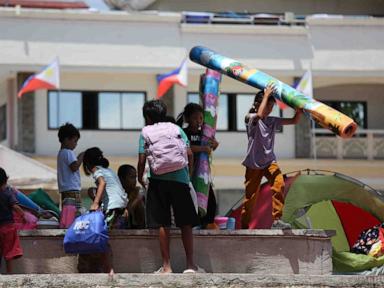
This endless shaking does deep psychological damage to the population. Emergency shelters are overflowing, but a significant portion of the 25,000 displaced citizens refuse to stay under the roofs of the government centers. They're setting up makeshift tents in parks, sports fields, and parking lots. They're terrified that the shelter itself will become a tomb.
Local authorities face a logistical nightmare. Managing sanitation, clean water, and food distribution across structured evacuation centers is hard enough. Managing thousands of citizens scattered across open fields because they're too afraid of concrete is nearly impossible.
Immediate Steps to Stabilize the Region
The situation in Mindanao requires a shift from frantic rescue to strategic stabilization. If local and international aid agencies want to prevent the death toll from climbing due to secondary infections and exposure, they need to execute several immediate steps.
First, stop sending search teams into deeply compromised multi-story structures without specialized shoring equipment. The aftershocks are too frequent and too violent. Rescuers need heavy acoustic monitoring gear and robotic cameras to search voids rather than risking human lives under leaning concrete.
Second, the structural assessment of the 6,000 public schools and key transit bridges must be decentralized. Relying solely on national engineers from Manila will take months. Local structural engineering firms and military engineering battalions must be deputized immediately to clear supply lines.
Third, the open-air displaced camps require instant attention. Monsoonal rains can quickly turn public parks into mud pits, sparking outbreaks of waterborne diseases. Aid groups must prioritize distributing heavy-duty tarpaulins, elevated cots, and mobile water purification units directly to the open areas where people are actually sleeping, rather than trying to force traumatized families back indoors.
The ground in southern Mindanao will eventually settle, but the recovery timeline just bought itself weeks, if not months, of delays. The Cotabato Trench gave a grim reminder of its power, and the immediate focus must stay on the living who are currently shivering in the fields of General Santos.