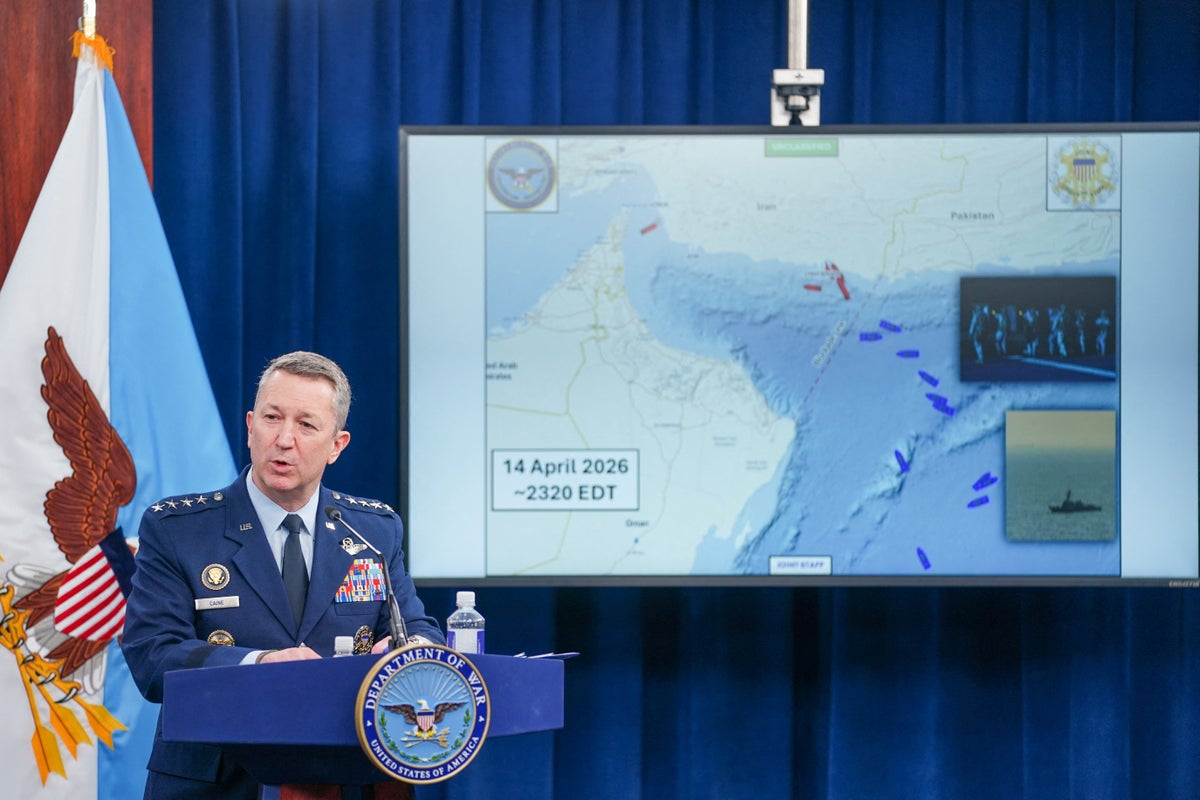
The Pentagon wants you to believe that if the Strait of Hormuz is mined, a fleet of high-tech ships and underwater drones will simply "clear the path" in a matter of weeks. It is a comforting narrative. It is also a lie.
The conventional media discourse focuses on timelines. They ask, "How long will it take?" as if clearing mines is a construction project with a predictable schedule. This premise is fundamentally flawed. In modern naval warfare, mine clearance isn't a technical hurdle; it’s a meat grinder designed to exhaust the patience, budgets, and political will of the world’s most powerful navies. Learn more on a similar subject: this related article.
The Math of Symmetric Failure
The Strait of Hormuz is roughly 21 miles wide at its narrowest point. However, the actual shipping lanes—the two-mile-wide corridors that carry 20% of the world’s petroleum—are the only parts that matter. To the uninitiated, this seems like a small area to sweep.
To a naval strategist, it’s a nightmare. Additional analysis by Al Jazeera delves into comparable views on the subject.
A single MK 65 Quickstrike mine costs a fraction of the fuel burned by a single Avenger-class mine countermeasures (MCM) ship during a one-week deployment. We are talking about a cost-exchange ratio that favors the disruptor by a factor of 10,000 to 1. The U.S. Navy and its regional allies are playing a game where they spend millions to find a "dumb" object that cost five thousand dollars to drop from the back of a dhow.
If you think technology solves this, you haven't been paying attention to the littoral combat ship (LCS) debacle. The "plug-and-play" MCM modules intended for the LCS have faced years of delays. While we wait for the perfect autonomous solution, the reality on the water remains stuck in the 20th century: slow, methodical, and incredibly dangerous.
Why "Clearing" is a Misnomer
The competitor's view suggests that "clearing" is a binary state. You sweep, the mines are gone, and the tankers move.
Reality works differently.
Mine warfare is psychological. You don't need to plant 1,000 mines to shut down the Strait. You only need to plant ten and claim you planted 1,000. The moment a single VLCC (Very Large Crude Carrier) hits a mine, the maritime insurance market (Lloyd’s of London) effectively shuts down the waterway. War risk premiums skyrocket to the point where it becomes economically suicidal to transit, regardless of what the Navy’s PR department says about "90% clearance rates."
A "cleared" channel is a temporary ghost. In a contested environment, the adversary doesn't just mine the water once. They re-seed. They use "smart" mines with ship counters that allow the first five vessels to pass safely before detonating on the sixth. They use mines that bury themselves in the seabed, invisible to sonar.
The goal isn't to sink the U.S. Navy; it's to make the cost of safety higher than the value of the oil.
The Drone Delusion
We hear endless chatter about UUVs (Unmanned Underwater Vehicles). The pitch is that we can send a swarm of low-cost drones to map the seafloor and neutralize threats without risking human life.
I have seen the testing data. Here is what they don't tell you: the Strait of Hormuz is one of the most difficult acoustic environments on the planet.
- Salinity and Temperature: The extreme evaporation in the Persian Gulf creates massive shifts in water density. This creates "thermoclines" that bounce sonar signals, creating blind spots where a mine can sit in plain sight, invisible to sensors.
- Ambient Noise: It is one of the loudest underwater environments globally. Between the heavy commercial traffic and the biological noise, "finding a needle in a haystack" is too generous a metaphor. It’s more like finding a specific needle in a field of needles while wearing a blindfold.
- The Bottom Profile: The seafloor isn't a flat parking lot. It’s littered with shipwrecks, discarded containers, and rock formations. Every one of these shows up as a "mine-like object" (MLO).
In a standard exercise, an MCM crew might find 500 MLOs. They then have to investigate every single one. If 499 are old tires and one is a mine, you still have to spend the time. Drones don't speed this up as much as they simply move the bottleneck from the water to the data analysts sitting in a trailer in Bahrain.
The Intelligence Gap
The U.S. relies on the International Maritime Security Construct (IMSC) to provide a "united front." This is geopolitical theater. In a real-world mining scenario, the regional players have vastly different thresholds for risk.
If the U.S. claims a channel is safe, but a regional power like Oman or the UAE disagrees, the global supply chain stays frozen. We treat mine clearance as a physics problem. It is actually a trust problem.
The "lazy consensus" says the U.S. Fifth Fleet is the guarantor of stability. But the sheer existence of a mine threat proves that the guarantor has already failed. You don't "fix" a mined strait; you manage a catastrophe.
The Brutal Truth About Timelines
The question isn't "How long until the mines are gone?"
The question is "How many tankers are you willing to lose to prove the channel is clear?"
If you want a timeline, look at historical precedents like the "Tanker War" of the 1980s or the clearing of Wonsan during the Korean War. In Wonsan, the U.S. Navy was held at bay by "primitive" Soviet mines for weeks. Rear Admiral Allen Smith famously remarked: "We have lost control of the seas to a nation without a Navy, using weapons that were obsolete through WWI, laid by vessels that were utilized at the time of the birth of Christ."
Not much has changed. Our ships are shinier, but the physics of a 500-pound explosive charge against a thin-hulled tanker remain undefeated.
The Solution No One Wants to Hear
Stop focusing on the sweepers. The only way to "clear" the Strait of Hormuz is to prevent the mines from entering the water in the first place. This requires a level of pre-emptive maritime interdiction and intelligence that is currently suppressed by political concerns over escalation.
Once the mines are in the water, the adversary has already won the economic round. You are then operating on their timeline, not yours.
The U.S. Navy could spend a year sweeping and still not guarantee a 100% "clean" bill of health. In the world of high-stakes shipping, 99% certainty is 0% certainty. Any article promising a "swift resolution" via technology is selling you a fantasy designed to keep oil futures from spiking.
The Strait is a choke point because it works. If it were easy to clear, it wouldn't be a threat. Stop asking how long it takes to sweep and start asking why we've allowed our global energy security to depend on the hope that a $200 million ship can find a $5,000 rusted metal ball in a noisy, muddy bathtub.
The mines won’t be cleared. They will be endured, or the world will simply stop moving.