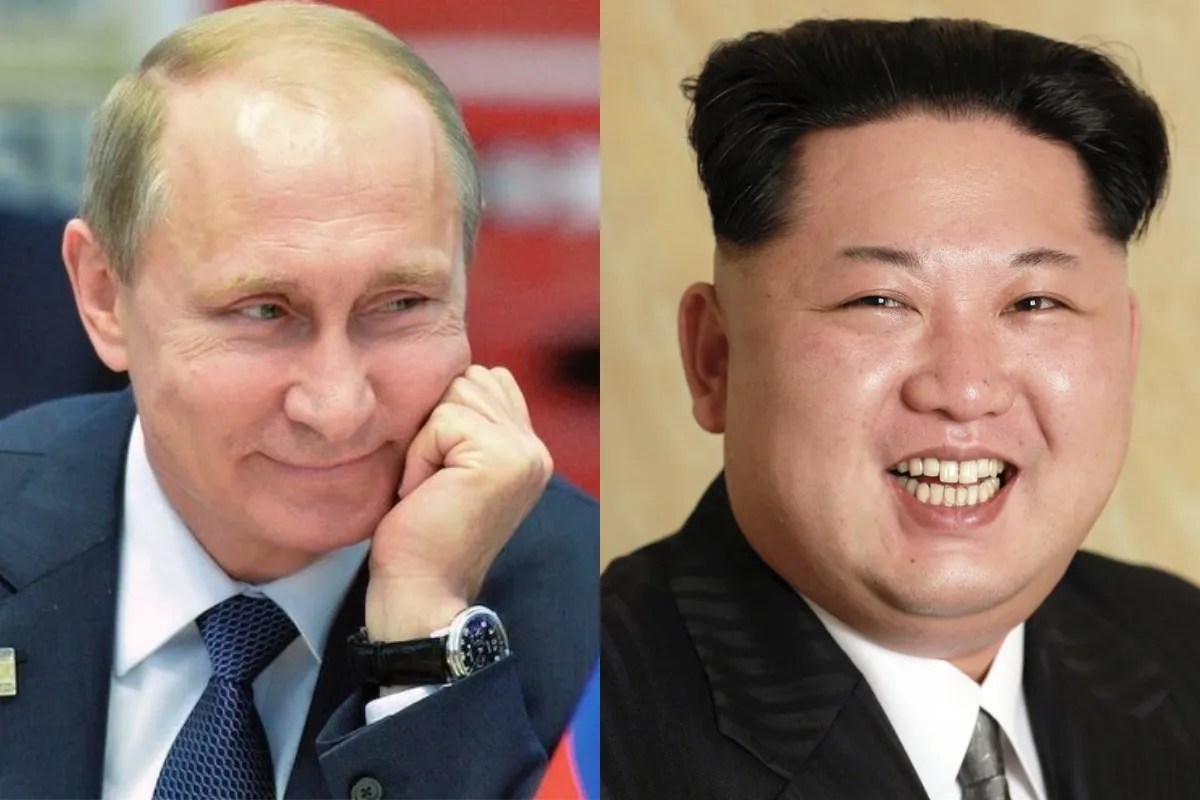
The ink on the documents in Pyongyang does more than just solidify a title. When Kim Jong Un secured his position for a third term as the Chairman of the State Affairs Commission, the applause in the Mansudae Assembly Hall was expected. It was rhythmic. It was scripted. But the most genuine smile triggered by this confirmation wasn't found in North Korea. It was etched onto the face of Vladimir Putin, thousands of miles away in the Kremlin.
To understand why a Russian leader would find such profound relief in the political longevity of a hermit kingdom’s ruler, we have to look past the military parades. We have to look at the cold, metallic reality of the shipping containers moving across the Tumangang-Khasan border.
The Logistics of Desperation
Imagine a chess player who has lost most of his high-value pieces. He is cornered, his clock is ticking, and his usual suppliers have stopped selling him parts. This is the reality for Russia as the conflict in Ukraine drags into years rather than weeks. The sophisticated, "smart" weaponry that Russia once touted requires semiconductors and precision components that are now tangled in a web of global sanctions.
But North Korea offers something different. They offer the "dumb" power of the past.
Kim Jong Un sits atop one of the world's largest stockpiles of legacy artillery shells and rockets. These aren't laser-guided drones or satellite-linked missiles. They are simple, rugged, and explosive. For a Russian military that has reverted to a war of attrition—a grinding, slow-motion battle of inches—these millions of shells are more valuable than gold.
When Kim is confirmed for a third term, Putin isn't celebrating a shared ideology. He is celebrating the stability of his supply chain. A new leader in North Korea would represent an unknown variable. A transition of power could lead to a pause in shipments or a shift in diplomatic leverage. By staying in power, Kim ensures that the trains keep running.
A Partnership Born of Necessity
The relationship between these two men is rarely about friendship. It is a transaction between two individuals who have found themselves increasingly isolated from the Western financial and diplomatic systems.
Consider the "satellite" factor. North Korea has long struggled with its space program, facing repeated failures in putting reconnaissance eyes into the sky. Following Kim’s high-profile visit to the Vostochny Cosmodrome in Russia’s Far East, the technical "hiccups" in North Korea’s rocket launches suddenly began to vanish.
Russia has decades of rocket telemetry and engine designs. North Korea has the raw industrial capacity to churn out ammunition. The trade is simple: Russian technical expertise in exchange for North Korean firepower.
This exchange changes the math on the battlefield in Eastern Europe. Every North Korean shell fired from a Russian howitzer is one less shell Russia has to manufacture itself, allowing its domestic industry to focus on more complex systems. It is a symbiotic survival strategy.
The Human Cost of High Politics
While the leaders exchange warm telegrams and expensive gifts, the people living in the shadow of these decisions face a different reality. In North Korea, the "Third Term" signifies a continuation of the Byungjin policy—the simultaneous development of the economy and the nuclear arsenal. But in a closed system, one always starves the other.
Resources are diverted to the foundries making shells for export, while the average citizen navigates a landscape where electricity is a luxury and food security remains a fragile hope. The "joy" Putin feels is a political victory; for the North Korean laborer, it is the status quo, reinforced.
The world often views North Korea as a relic of the Cold War, a strange frozen moment in history. But through this partnership with Russia, Kim Jong Un has made his nation a central player in a very modern, very global conflict. He is no longer just a local threat; he is a vital cog in a continental war machine.
The Strategic Shadow
There is a specific kind of tension that exists when two nuclear-armed neighbors decide to ignore global norms in favor of mutual benefit. The international community watches these developments with a mixture of frustration and genuine alarm. Sanctions, once the primary tool for Western diplomacy, lose their edge when the two most sanctioned nations on earth decide to simply trade with each other.
It creates a "sanction-proof" corridor.
If North Korea provides the kinetic energy—the shells and the powder—Russia provides the diplomatic shield. As a permanent member of the UN Security Council, Russia can veto any further attempt to tighten the noose around Pyongyang. This is the "Secret" or the "Raj ki Baat" that observers whisper about. It isn't just about bullets; it's about a mutual defense pact against global isolation.
The handshake between Moscow and Pyongyang is not a sign of strength. It is a sign of a changing world where old alliances are being dusted off to solve modern problems. It is a reminder that in the world of high-stakes geopolitics, your best friend is often the one who has exactly what you need when no one else is willing to talk to you.
The trains continue to rattle across the border in the dead of night, carrying the weight of two regimes that have decided their best chance at tomorrow is to lean heavily on each other today. The shells moving west and the technology moving east are the true pulse of this relationship, far more than any official portrait or state-sponsored parade could ever reveal.
Would you like me to analyze the specific types of military hardware currently being exchanged between these two nations or explore the impact this alliance has on South Korea's defense strategy?