The headlines are carbon copies of a tired script. "Diplomats meet." "Stability discussed." "Settlement explored." If you believe the sanitized reports coming out of the latest sit-down between the Russian and Iranian foreign ministries, you are falling for the oldest trick in the geopolitical playbook: the performance of progress.
Reuters and the rest of the legacy press treat these meetings as if they are a genuine search for an exit ramp. They frame these discussions as a rational attempt to solve a "conflict." This is a fundamental misunderstanding of how power functions in the 21st century. Moscow and Tehran aren't looking for a settlement. They are looking for a sustainable way to keep the fire burning without catching their own sleeves on fire.
The consensus view is that these two powers are a monolithic "axis of resistance" working toward a unified peace plan. That is a fantasy. It ignores the deep-seated historical friction, the competing energy interests, and the reality that both regimes thrive on the very instability they claim to be trying to fix.
The Settlement Myth
Peace is bad for business when your primary export is defiance.
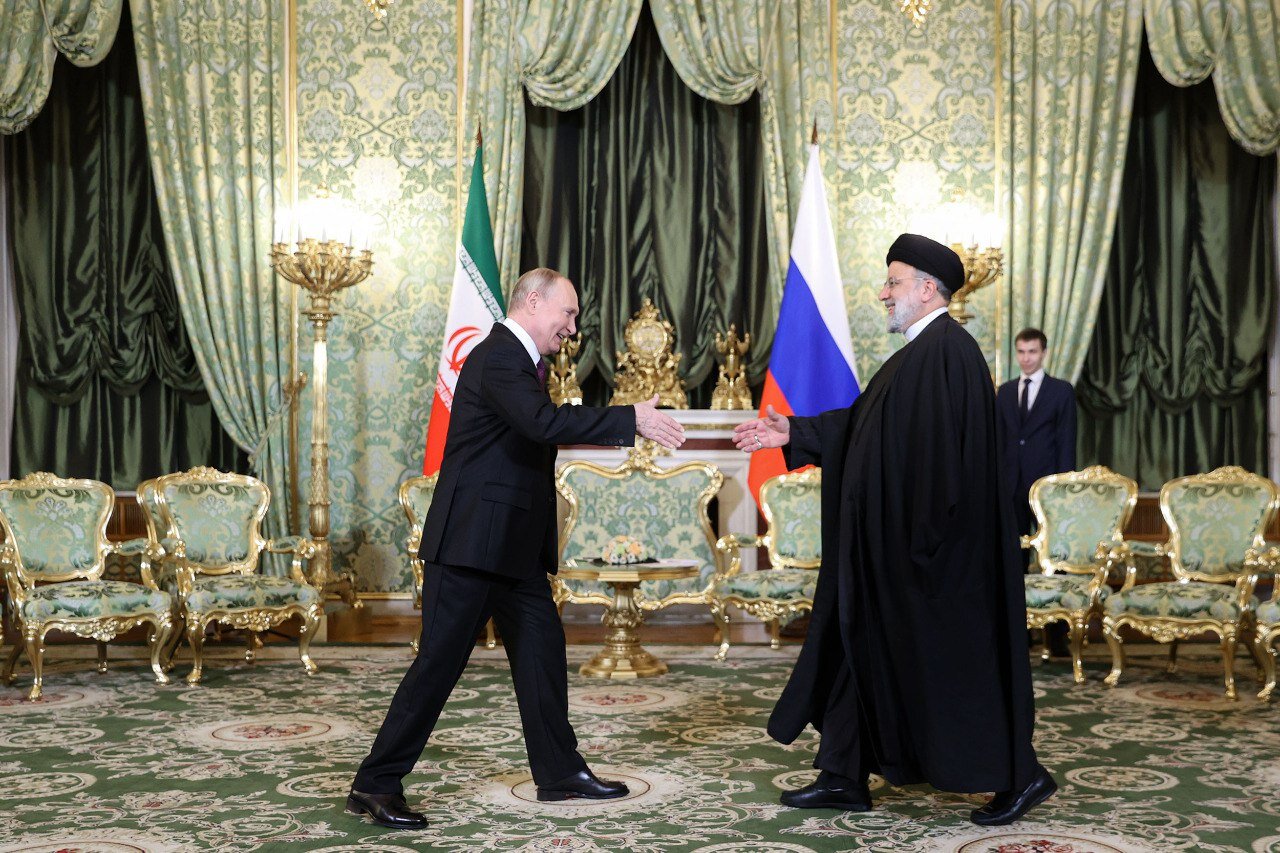
When Sergei Lavrov and his Iranian counterpart sit across from each other, they aren't drafting a blueprint for a post-conflict utopia. They are calibrating a thermostat. To "settle" the conflicts in the Middle East or Eastern Europe would be to invite a return to a global order where their specific brands of disruptive leverage no longer carry weight.
Let’s look at the math of the situation. For Russia, a total settlement in the Levant or the Gulf would free up American resources to refocus entirely on the Ukrainian theater. For Iran, a stabilized region would mean a loss of the "gray zone" environment that allows their proxy networks to operate with impunity.
Neither side wants the "solution" the West keeps waiting for. They want a managed stalemate. This is not a failure of diplomacy; it is the intended outcome.
Why the Legacy Press Gets It Wrong
The media remains obsessed with the idea of the "rational actor" seeking an end to war. They ask questions like, "What are the terms of the deal?" or "What is the timeline for withdrawal?" These questions are built on a flawed premise.
- The Zero-Sum Illusion: The press assumes that if Russia and Iran agree on something, it must be a step toward peace. In reality, their agreements are usually tactical deconfliction—ensuring they don't accidentally kill each other's personnel while pursuing diverging goals.
- The Economic Blind Spot: Russia and Iran are competitors. They both rely on high oil prices and the same shadow tanker fleets to bypass sanctions. A truly settled, peaceful Middle East would likely lead to a drop in energy prices and a reintroduction of Iranian crude into the formal market—a move that would cannibalize Russia's market share in Asia.
- The Proxy Paradox: Iran’s influence is built on the backs of non-state actors. You cannot "settle" a conflict that involves Hezbollah or the Houthis without either dismantling those groups (which Iran won't do) or legitimizing them (which the world won't do).
The Battle Scars of "Strategic Partnerships"
I have watched these "strategic partnerships" play out for decades. I’ve seen diplomats waste years chasing a signature on a piece of paper that wasn't worth the ink it was printed with. In the 90s, it was the "New World Order." In the 2010s, it was the "Pivot to Asia." Now, it’s this idea that an anti-Western bloc can create its own internal peace.
It’s a lie.
I’ve sat in rooms where "cooperation" was just a euphemism for "how do we stop the other guy from stabbing us in the back while we both stab the Americans?" Russia and Iran don't trust each other. They share a common enemy, but their visions for the world are diametrically opposed. Moscow wants a multi-polar world where it is the ultimate arbiter; Tehran wants a regional hegemony that eventually pushes all outside powers—including Russia—out of their sphere.
The Real Mechanics of the Meeting
What actually happens in these meetings? It’s not about "settlement." It’s about interoperability of misery.
They are discussing how to synchronize their defiance. They talk about:
- Sanction Evasion Architecture: Comparing notes on which front companies in Dubai are still viable.
- Drone-for-Jet Bartering: Russia needs the Shahed tech; Iran needs the Su-35s. This isn't peace; it's an arms race fueled by mutual desperation.
- Intelligence Shuffling: Trading signals intelligence on NATO movements for human intelligence on Gulf monarchy stability.
If you call this a "discussion on conflict settlement," you are providing cover for a war council.
The Nuance of the "Gray Zone"
The status quo isn't a bug; it's a feature. We have entered an era of "Permanent War-Adjacent Competition."
The goal for Lavrov and the Iranian leadership is to stay in the $Zone_{75}$: a state where tension is at 75%, enough to keep the West reactive and overextended, but not at 100%, which would trigger a direct, regime-threatening confrontation.
When they talk about "settling" the conflict, they are actually talking about bringing the tension back down from 90% to 75%. That’s not peace. That’s maintenance.
Counter-Intuitive Reality: The West Needs the Friction Too
This is the part no one wants to admit. If these conflicts were actually settled, the current political and industrial structures in Washington, London, and Brussels would have to undergo a painful, systemic contraction.
The military-industrial complex and the "think tank" industry are just as invested in the process of seeking a settlement as Russia and Iran are in the process of discussing one. Everyone is getting paid to keep the wheel turning.
The Actionable Truth
If you are an investor, a policy analyst, or just someone trying to understand the world, stop looking for the "Deal." There is no Deal. There is only the Transaction.
- Ignore the Communiqués: The joint statements issued after these meetings are written by low-level bureaucrats to satisfy the press. They mean nothing.
- Follow the Hardware: If Russia moves S-400 systems to Iran, that is a data point. If Iran sends ballistic missiles to the Russian border, that is a data point. The movement of kinetic assets is the only honest language they speak.
- Watch the Caspian: The real tension between these two isn't in Syria or Ukraine; it's in the Caspian Sea and the Caucasus. This is where their interests actually collide. Watch for signs of Russian-Iranian friction in Azerbaijan or Armenia. That will tell you more about the "partnership" than any press conference in Moscow.
The Flaw in the Question
People ask: "When will Russia and Iran finally settle the conflict?"
The question is flawed because it assumes "The Conflict" is a discrete event with a beginning and an end. It isn't. Conflict is the new baseline. It is the environment in which these regimes breathe. Asking them to settle it is like asking a fish to settle its dispute with the water.
They are navigating the current, not trying to dry out the pond.
Stop waiting for the breakthrough. Start preparing for the long-term management of a world where "peace talks" are just another weapon of war.
If you want a settlement, you have to change the cost-benefit analysis of the friction itself. Right now, for both Moscow and Tehran, the friction is profitable, it is stabilizing for their domestic grip on power, and it keeps their enemies distracted. Why on earth would they ever want it to end?
The next time you see a headline about these two foreign ministers "discussing peace," remember that they are actually discussing how to ensure the war remains useful.
Don't buy the script. Watch the hands, not the mouth.