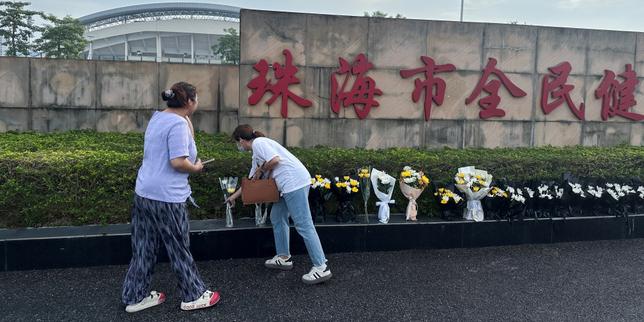
Western media loves a tidy narrative of suppression. When a car plows into a crowd in Zhuhai or a stabbing occurs in a primary school in Jiangsu, the editorial desks in London and New York pivot instantly to a pre-written script. They talk about the "erasure" of news, the "scrubbing" of social media, and the mysterious phenomenon of baofu shehui—vengeance against society.
They treat these tragedies as a peculiar byproduct of an authoritarian pressure cooker, a unique Chinese pathology that could be solved if only people had a "vent" for their frustrations. This isn't just lazy journalism. It is a fundamental misunderstanding of how digital contagion works and a refusal to acknowledge that the West is currently losing the same battle against viral nihilism.
The "censorship" being decried isn't just about protecting a political image. It is about preventing the gamification of mass murder.
The Contagion Is the Content
Standard reporting suggests that the Chinese government removes videos of these attacks solely to maintain the illusion of "social harmony." While stability is the goal, the mechanism is grounded in a psychological reality that Western platforms have failed to master: the Werther Effect.
When you broadcast the visceral details of a "revenge against society" attack, you aren't informing the public. You are providing a blueprint for the next person at the end of their rope. You are showing them that for the low price of a kitchen knife or a mid-sized sedan, they can achieve a dark, immortal relevance.
In the United States, we call this the "No Notoriety" movement, yet our media outlets routinely ignore it for clicks. China has simply institutionalized the "No Notoriety" rule through the Great Firewall. Is it heavy-handed? Yes. Is it effective at breaking the feedback loop of copycat violence? The data on suicide and mass shootings suggests that denying a platform to the perpetrator is the only variable that actually bends the curve.
The Fallacy of the Social Vent
The "lazy consensus" argues that if Chinese citizens had better mental health care or a way to protest the government, these attacks would vanish. This assumes that mass violence is a logical, hydraulic release of pressure.
It isn't.
If political freedom were a vaccine against "vengeance against society," the United States—the supposed gold standard of individual expression—wouldn't be averaging more than one mass shooting per day. The reality is that extreme social atomization is a global tax paid by any society transitioning through rapid technological and economic shifts.
The attacker in Zhuhai wasn't a political dissident. He was a man angry about a divorce settlement. The attacker in Wuxi was a student upset about failing an exam. These are banal, personal failures projected onto a public stage. To frame these as "political" acts is to give the perpetrators exactly what they want: a grander meaning for their pathetic cruelty.
Digital Ghosting as a Security Protocol
Critics point to the "vanishing" of hashtags and the "cleaning" of search results as evidence of a fragile state. Look closer. This is a high-speed security protocol.
When an incident occurs, the state isn't just hiding the event; they are killing the algorithm. By removing the digital breadcrumbs, they prevent the creation of an "incel" style subculture where these attackers are lionized.
In the West, we allow these manifestos to live forever on 4chan or the darker corners of X. We build digital shrines to the "misunderstood" killer. China treats the digital footprint of a mass killer like a biohazard. They incinerate it.
The trade-off is clear: you lose "transparency," but you gain a break in the chain of imitation. If you believe the public's right to see a cell phone video of a dying child outweighs the necessity of preventing the next attack, your priorities aren't humanitarian—they're voyeuristic.
The Economic Anxiety Trap
We are told these acts are a response to a slowing Chinese economy. This is another "status quo" take that falls apart under scrutiny. If economic hardship were the primary driver of mass stabbings, the most violent periods in modern history would correlate perfectly with GDP contractions. They don't.
The driver isn't poverty; it’s the gap between expectation and reality.
China’s "involution" (neijuan)—the feeling of running in place while the world moves faster—is a psychological state, not a fiscal one. You see the same thing in the "deaths of despair" across the American Rust Belt. The difference is that while the West medicates its losers with opioids, China is struggling to manage them through a mix of digital silence and physical surveillance.
Neither side is winning, but at least one side recognizes that the media is a force multiplier for the madness.
The Surveillance Paradox
Here is the truth no one wants to admit: The "vengeance against society" phenomenon proves the limits of the surveillance state, not its power.
You can have a camera on every street corner and a facial recognition algorithm at every gate, but you cannot stop a "lone wolf" with a car and a grudge. The sheer unpredictability of these events is what terrifies the authorities. The move to erase the news is an admission of failure. It is a sign that the "Safe China" brand is a house of cards.
But—and this is the part that hurts—the Western alternative of "Awareness and Thoughts and Prayers" is equally impotent. We trade "truth" for more bodies. They trade "bodies" for a curated reality.
Stop Asking "Why" and Start Asking "How"
The "People Also Ask" section of your brain wants to know the "root cause." Is it the CCP? Is it the lack of lawyers? Is it the economy?
Those are the wrong questions.
The "root cause" is that in a hyper-connected world, the quickest way for a "nobody" to become a "somebody" is to break the world. The weapon isn't the knife or the car; it's the 5G signal that carries the image of the act to a million other "nobodies."
China has realized that you cannot fix the "nobody" problem overnight. You can’t instantly give everyone a perfect marriage, a high-paying job, and a sense of purpose. What you can do is cut the signal.
The Brutal Reality of News Sanitization
Is the Chinese government lying by omission? Absolutely. They are gaslighting a billion people into believing that their society is safer than it is.
But consider the alternative. Every time a stabbing is reported with full, gory detail, the "social contagion" model predicts a spike in similar activities within 14 days. This isn't a theory; it’s been documented in the suicide clusters of the 1980s and the school shooting "seasons" of the 2010s.
When the Chinese internet goes dark after a massacre, it is a desperate, cynical, and perhaps necessary attempt to stop a wildfire. We view it through the lens of "freedom of information" because we are obsessed with the process. They view it through the lens of "harm reduction" because they are obsessed with the outcome.
The competitor’s article you read wants you to feel superior to the "silenced" Chinese public. It wants you to pity the people who don't know the full extent of the chaos.
Don't.
The people on the ground know exactly what is happening. They see the police tape. They hear the sirens. They just aren't allowed to turn the tragedy into a viral trend.
If the West had the stomach to "erase" its own viral tragedies, we might have fewer parents burying children in Connecticut or Texas. Instead, we have "First Amendment Rights" and an endless supply of martyrs for the digital age.
China’s "erasure" of news isn't a sign of a government that doesn't care about its people. It's a sign of a government that understands exactly how dangerous a desperate person with an audience can be.
The silence isn't just censorship. It’s a firewall against a plague of the mind that the West has already surrendered to.
Stop looking for the "suppressed" truth. You already know it. The real question is whether you actually want to live in a world where every madman is given a megaphone.