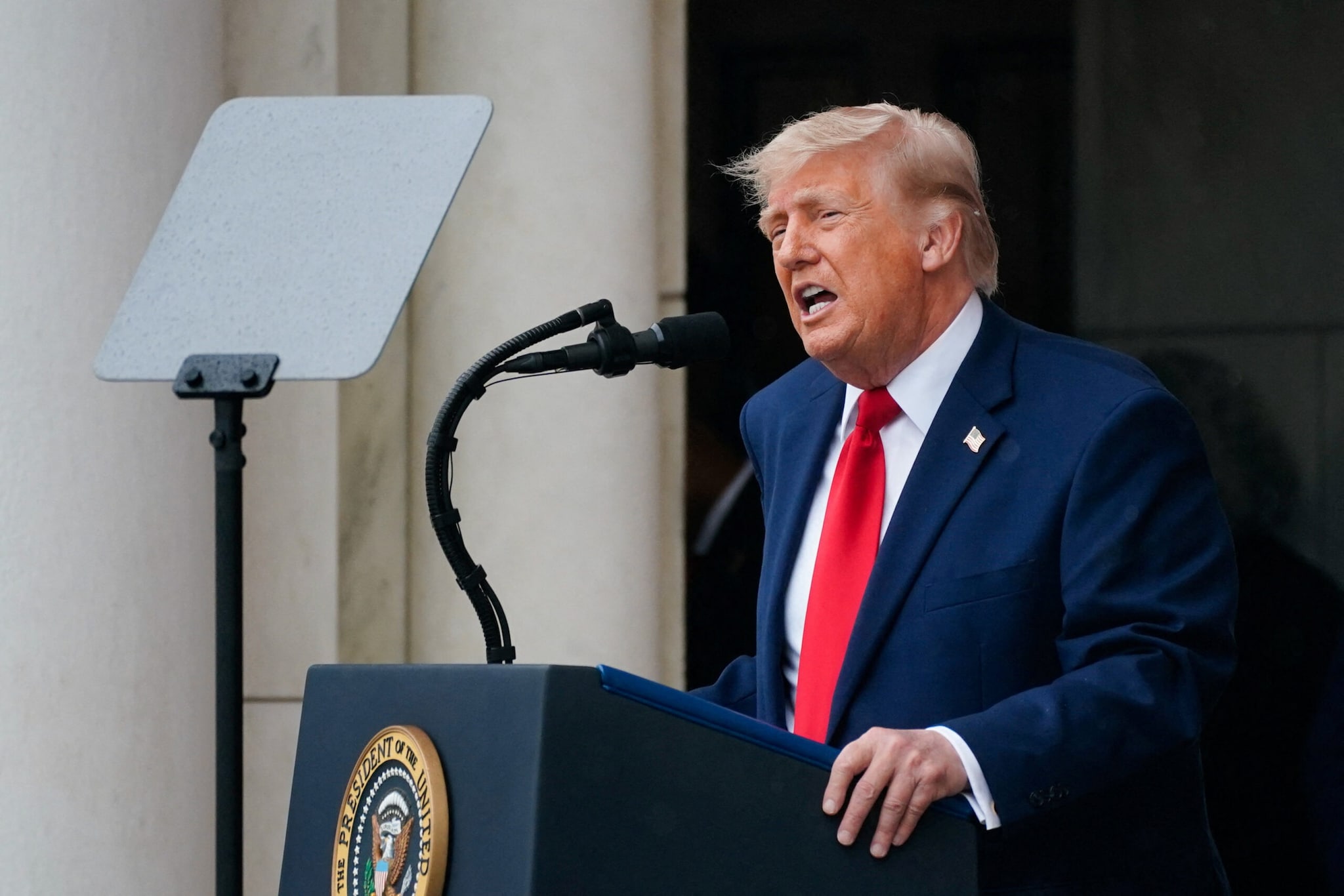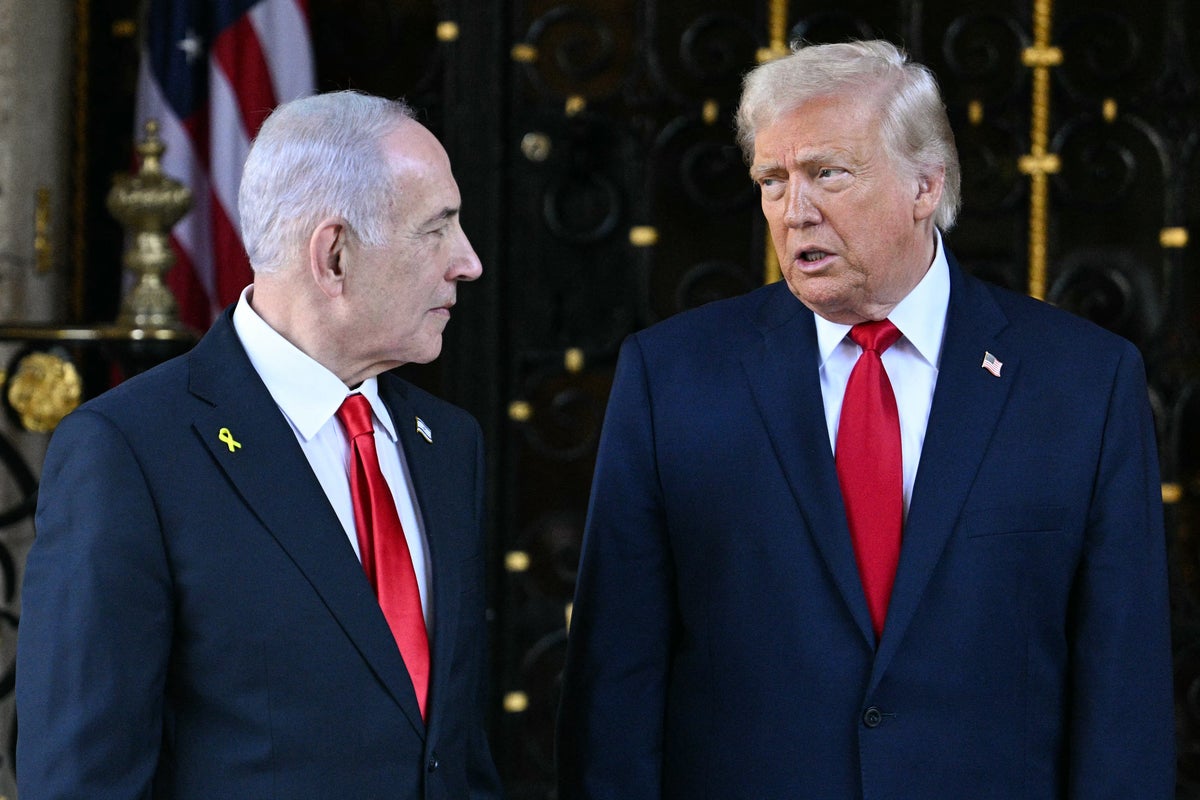
Donald Trump claims that without him, Israel would cease to exist. The mainstream media treats this statement as a shocking diplomatic breach, a dangerous rift in the fabric of the US-Israel alliance, or a sign of personal feud with Benjamin Netanyahu.
They are all missing the point.
The media focuses on the theater of political egos, parsing the drama like a reality TV episode. They accept a flawed premise: that the survival of a sovereign nation hinges entirely on the whims, transactional favors, or personal affection of a single American president. This isn't just bad history; it is a fundamental misunderstanding of geopolitics, statecraft, and how real power operates.
The lazy consensus wants you to choose a side in this schoolyard spat. You are told to believe either that Trump is the lone savior of the Jewish state or that his rhetoric is uniquely destroying America's strategic alliances. Both narratives are wrong. The reality is far more cold, calculated, and transactional than either side wants to admit.
The Illusion of the Executive Savior
I have spent decades watching political analysts dissect foreign policy through the lens of executive personality traits. It is an exhausting exercise in superficiality.
When a leader says "there would be no Israel if not for me," they are playing to a domestic audience that craves simple, messianic narratives. The political class panics because they treat diplomatic decorum as sacred text. They confuse the noise of a microphone with the gears of structural power.
Let's look at the actual mechanics. Sovereign states do not survive on the benevolence of foreign leaders. They survive on institutional alignment, intelligence integration, defensive depth, and hard power.
Consider the historical record. In 1948, President Harry Truman famously recognized Israel against the strenuous advice of his own State Department and Defense Secretary George Marshall. The romantic view is that Truman single-handedly saved the nascent state. The historical reality is that Israel won its war of independence with clandestine weapons smuggled from Czechoslovakia and Soviet bloc complicity, not American troops or American armor.
The Transactional Trap
The current hysteria surrounding the Trump-Netanyahu friction ignores a core tenet of international relations: alliances are built on shared national interests, not personal friendships.
When the relationship between leaders sours, the bureaucracy remains. The Deep State—in the literal, non-pejorative sense of permanent military and intelligence structures—does not rewrite its strategic doctrine because of an angry press conference or a social media post.
- The Pentagon’s hardware pipeline is locked into multi-year procurement cycles.
- Shared intelligence feeds between the NSA and Unit 8200 operate on automated, deeply embedded institutional protocols.
- Joint military exercises are planned years in advance by career commanders, not political appointees.
To believe that a personal clash can instantly dissolve these structures is to misunderstand how institutional inertia works. It assumes the state is a monarchy where the king’s mood dictates the empire's borders.
Imagine a scenario where a US President decides to completely cut off a major strategic ally overnight because of a personal insult. The immediate pushback from the defense industrial base, congressional appropriations committees, and the intelligence community would paralyze the directive. Why? Because the relationship is an asset for American power projection, not a charity project.
The Flawed Premise of "People Also Ask"
If you look at public discourse around this topic, the questions being asked are fundamentally broken.
Does Israel depend entirely on US financial aid to survive?
No. This is a favorite talking point for pundits who like simple spreadsheets. US military aid to Israel is roughly $3.8 billion annually. While significant, this constitutes less than 1% of Israel’s GDP. More importantly, the vast majority of this aid is essentially a subsidy for the American defense sector, as foreign military financing (FMF) rules require these funds to be spent on US-manufactured weapons. It is an economic loop that benefits Lockheed Martin and Raytheon as much as it benefits the Israeli Defense Forces. Israel is an economic and technological powerhouse; it is not a client state living on welfare.
Can a US President unilaterally dissolve an alliance?
A president can shift diplomatic tone, move embassies, or delay specific weapon shipments. We saw the Obama administration use abstentions at the UN Security Council, and we saw the Biden administration pause specific bomb deliveries. But changing the structural foundation of an alliance requires congressional consensus. The Countering America's Adversaries Through Sanctions Act (CAATSA) and various foreign assistance acts show that Congress holds the purse strings and the legislative veto over long-term strategic shifts.
The Cost of the Contrarian Reality
Let's be brutal about the downside of this perspective. If alliances are purely transactional and structural, it means moral arguments are irrelevant.
The danger of realizing that Israel doesn't depend on the personal favor of an American president is the realization that the US doesn't act out of moral obligation either. The moment the strategic value of an alliance drops below its political or material cost, the relationship cools. This isn't unique to one administration; it is the permanent condition of global politics.
Relying on structural permanence means accepting that policy changes slow down. It means acknowledging that rhetoric is mostly theater designed to rally voters, manage domestic coalitions, and project an aura of absolute control that no human being actually possesses.
Stop analyzing foreign policy through the lens of celebrity gossip. Stop asking whether two septuagenarian politicians get along behind closed doors. The survival of nations is determined by geographic reality, technological superiority, industrial capacity, and the raw will of a population to defend its borders. Everything else is just television.