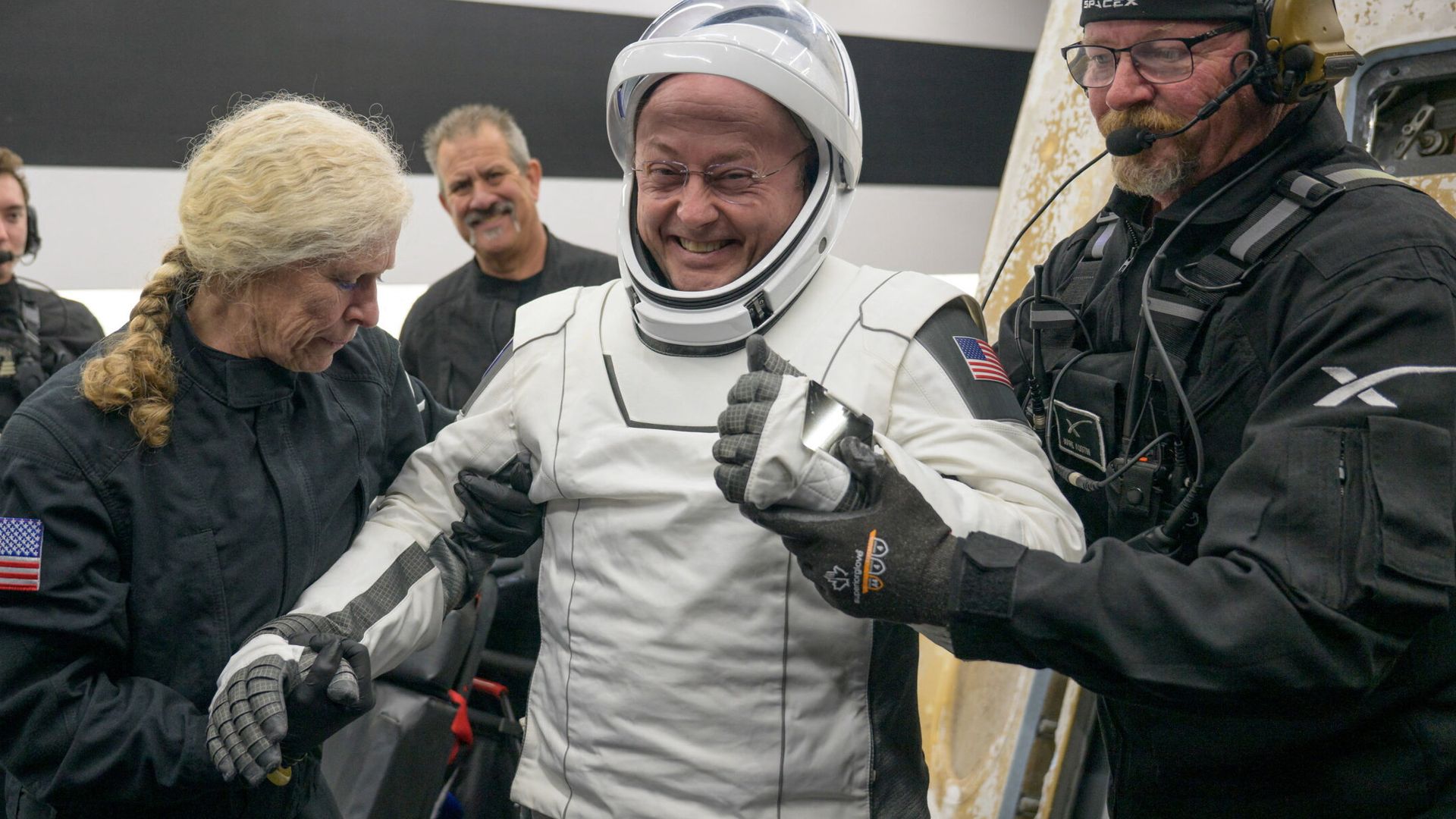
NASA finally broke its silence on the medical incident that turned the end of the Crew-8 mission into a high-stakes emergency. It wasn't just a standard splashdown. When the SpaceX Dragon capsule hit the water off the coast of Florida in late 2024, what should’ve been a celebratory return for astronauts Matthew Dominick, Michael Barratt, Jeanette Epps, and Alexander Grebenkin quickly turned into a hospital evacuation.
You probably remember the vague headlines at the time. NASA cited "privacy" and kept the details under lock and key. It’s the kind of secrecy that fuels conspiracy theories, but the reality is often more grounded in the brutal physics of spaceflight. We’re finally getting a clearer picture of what happened, why one astronaut ended up in a Pensacola hospital, and what this means for the future of long-duration missions.
Space is a nightmare for the human body. That’s the simple truth. After 235 days in orbit—the longest flight for a U.S. crew vehicle to date—the transition back to Earth’s gravity is like being hit by a freight train. NASA officials recently shared more context during a briefing, and while they’re still shielding the specific individual's identity, the data points to a "medical event" triggered by the immense physical toll of re-entry after extreme durations in microgravity.
The physical cost of 235 days in orbit
Most people think of space as a weightless playground. It isn't. It’s a slow-motion biological breakdown. When you spend nearly eight months on the International Space Station (ISS), your body forgets how to be a body on Earth. Your bones shed calcium. Your heart muscle actually shrinks because it doesn't have to pump against gravity. Your blood volume drops.
By the time the Crew-8 team hit the atmosphere, they were already physically compromised. NASA’s delayed return—pushed back repeatedly by Boeing Starliner issues and then by Hurricane Milton—added weeks of extra strain. Those extra days matter. The "safety margin" for human health in space isn't a suggestion; it's a physiological wall.
When the Dragon capsule decelerates from 17,500 mph to a dead stop in the ocean, the "G-loads" are intense. For an astronaut who hasn't felt their own weight in 200+ days, even 4 or 5 Gs can cause a "orthostatic intolerance." Basically, your blood refuses to go to your brain because it’s all pooling in your legs. You faint. Or worse, your heart skips beats.
Why the Pensacola hospitalization was a big deal
Usually, astronauts walk out of the recovery ship or get carried to a waiting van for some light Gatorade and a nap. Crew-8 was different. All four were flown to Ascension Sacred Heart Pensacola. Three were released quickly, but one stayed overnight for "observation."
NASA’s recent disclosures suggest that the hospitalization wasn't just a "precaution" in the way they originally framed it. It was a response to a specific medical anomaly that occurred during the recovery process. While they won't name the "event," flight surgeons have pointed to the increased risk of cardiovascular issues and neurological shifts that happen during the "re-adaptation" phase.
Honestly, the secrecy was a mistake. By trying to protect privacy, NASA made the incident feel more ominous than it likely was. We know from past missions that prolonged exposure to cosmic radiation and the shift in fluid pressure towards the head can cause SANS (Spaceflight Associated Neuro-ocular Syndrome). If an astronaut was already dealing with high intracranial pressure, the shock of splashdown could easily trigger a crisis.
Lessons from the Crew-8 incident for Mars missions
If we can’t get a crew back from the ISS—which is essentially a backyard orbit—without a hospital visit, how are we supposed to send humans to Mars? A trip to the Red Planet is a three-year round trip. There are no recovery ships in the Martian desert. There are no Level 1 trauma centers in Pensacola waiting for a helicopter.
The Crew-8 incident is a reality check. It proves that our current "countermeasures"—the exercise bikes and resistance machines on the ISS—might not be enough for missions that exceed the six-month mark. Michael Barratt, one of the Crew-8 astronauts and a doctor himself, has been vocal about the "mystery" of how the body adapts. He’s noted that we’re still "learning things in the space environment we don't fully understand."
The data points NASA is watching now
- Bone density loss: Even with heavy exercise, some bone loss is permanent.
- Fluid shifts: The "puffy face" look in space is actually fluid pressing against the brain and eyes.
- Immune system suppression: Space makes your immune system sluggish, making minor infections a major risk.
- Radiation exposure: Long stays increase the risk of acute radiation sickness if a solar flare hits.
What happens next for ISS safety protocols
You can bet that every future mission, including the upcoming Crew-10 and the eventual return of the "stranded" Starliner crew (Butch Wilmore and Suni Williams), will have much stricter re-entry medical requirements. NASA is currently re-evaluating the "length of stay" limits. We might see a hard cap on how many days a human can stay in orbit before the risks of re-entry become statistically unacceptable.
Don't expect a full medical transcript. NASA is a government agency, but astronauts are employees with HIPAA rights. However, the "safety first" mantra is getting a massive update. The agency is looking at new ways to hydrate and medicate astronauts before they leave orbit to stabilize their blood pressure for the descent.
If you're following space news, don't look for a single "smoking gun" in the Crew-8 files. Look for the subtle changes in how NASA handles the next splashdown. If they start spending more time on the recovery ship before flying the crew to land, you'll know they're worried about those same physiological spikes.
The best thing you can do to stay informed is to keep an eye on the flight surgeon reports from the upcoming SpaceX missions. Watch the "walk-out" videos. If the astronauts are being carried more than usual, the "medical incident" of 2024 has likely changed the rules of the game for good. Space is hard. Getting back is harder.
Check the official NASA mission logs for Crew-9's scheduled return. Compare their "time in orbit" to the Crew-8 record. If NASA starts shortening these missions, it's a direct admission that the 235-day mark is the current limit of human endurance.