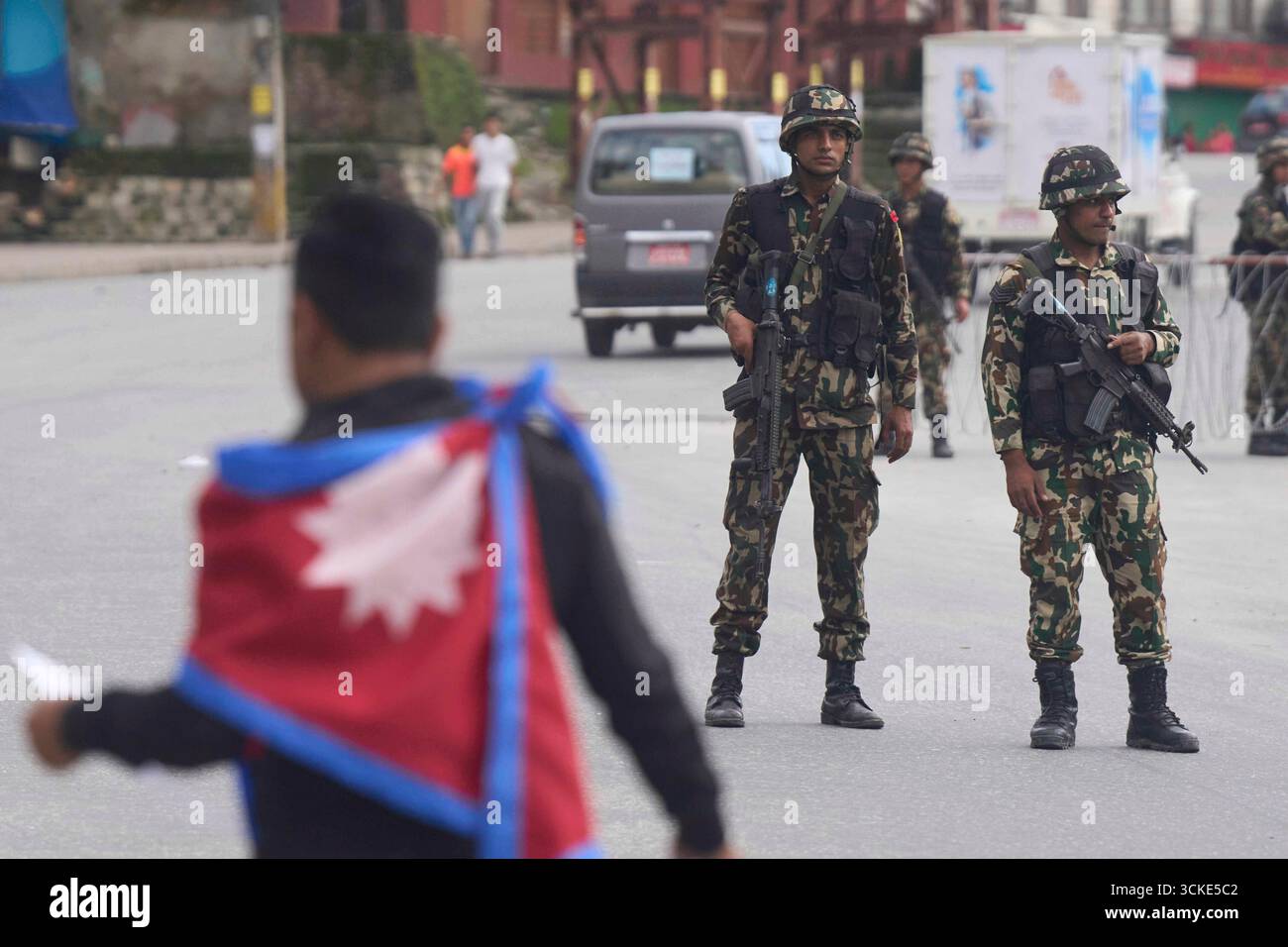
Nepal’s political theater just hit a fever pitch, and honestly, it’s not the politicians pulling the strings anymore. While the new coalition government under the Nepali Congress and CPN-UML tries to project a sense of "assertive" governance, the real spotlight is glaring at the Bhadrakali headquarters. The Nepal Army, historically the silent guardian of the status quo, has transitioned into a role that looks less like a defense force and more like the country's ultimate arbiter.
You've got to understand the sheer weight of what happened during the 2025 Gen Z uprising. When the streets of Kathmandu turned into a battlefield and the police essentially vanished, the Army didn't just step in to stop the bleeding. They facilitated the exit of KP Sharma Oli, shielded the political elite, and basically handpicked the conditions for the interim administration. If you think they’re going back to the barracks now that a "new" government is in place, you’re missing the bigger picture.
The Myth of Civilian Supremacy in 2026
The current government is trying to act tough, but it’s a performance. They talk about "assertive turns" and constitutional mandates, yet they can't even fix a pothole in Kathmandu without wondering if the generals approve. The Nepal Army has effectively become a state within a state. They aren't just holding guns; they’re building highways, running schools, and managing massive commercial enterprises that would make a Fortune 500 CEO blush.
When the government hands over the multi-billion dollar Kathmandu-Terai Fast Track project to the military, they aren't doing it because soldiers are better engineers. They’re doing it because the civilian leadership is too fractured and corrupt to get anything done. It’s a convenient arrangement: the politicians get to avoid accountability for delays, and the Army gets to expand its economic empire. This isn't just "supportive" behavior; it’s a slow-motion takeover of the nation’s developmental skeleton.
What the Hindu Article Missed About the Gen Z Factor
The recent coverage suggests the Army is simply reacting to a vacuum. That’s a polite way of saying they’re the only ones left standing. What’s rarely discussed is the sheer level of distrust the younger generation has for the "Old Guard"—the revolving door of PMs like Deuba, Oli, and Dahal.
During the protests, the youth weren't shouting for a military coup, but they weren't exactly cheering for the police either. The Army played a high-stakes game of "neutrality" that actually served as a massive power play. By refusing to use lethal force against the protesters while the government was collapsing, they won a level of public legitimacy that the Parliament hasn't seen in decades. They’ve positioned themselves as the "adults in the room," and that’s a dangerous place for a democracy to be.
The Geopolitical Tightrope
Don't think for a second that New Delhi and Beijing aren't watching this with sweaty palms.
- India wants a stable Nepal but is terrified of a military that leans too far into "sovereign assertiveness" (read: pro-China moves).
- China views the Nepal Army as a reliable partner compared to the chaotic, faction-ridden communist parties they’ve tried to manage for years.
Basically, the Army is the only institution that can talk to both neighbors without sounding like a desperate petitioner. They use this leverage to secure hardware, training, and political cover. When the Chief of Army Staff makes a statement about "national integrity," he isn't just talking to the Nepali public; he's sending a signal to the regional powers that the military is the guarantor of any deals made in Kathmandu.
The Dangerous Allure of the Hindu State Narrative
There’s a whispering campaign—and sometimes a shouting one—about reverting to a Hindu monarchy. You’ll hear it in the tea shops and see it in the fringe rallies. The Army has historically been close to the palace, and while they’ve officially embraced the secular republic, their DNA is deeply conservative.
If the current coalition fails to deliver on basic economic promises—and let's be real, their track record isn't great—the "assertive turn" the government is taking might just be a precursor to a complete institutional shift. The Army doesn't need to stage a 1950s-style coup. They just need to wait for the civilian government to become so irrelevant that the public begs for a "strongman" intervention.
Why This Matters to You Right Now
If you're an investor, a diplomat, or just someone who cares about the Himalayas, stop looking at who is sitting in the Prime Minister's chair. Look at who is sitting in the Chief of Army Staff’s office. The "assertive" government is a facade. The real policy decisions regarding infrastructure, border security, and even social stability are being filtered through a military lens.
The "spotlight" isn't just on the Army because of a few new policies. It's on them because the civilian experiment in Nepal is gasping for air. The next time you see a headline about a "new direction" for the Nepali government, ask yourself if the generals signed off on it first.
Don't wait for the next crisis to realize where the power lies. Start tracking military-led infrastructure projects and the Army's statements on "internal security." That’s where the real budget is, and that’s where the real future of Nepal is being written. If the civilian leaders don't start delivering results soon, the "spotlight" on the military is going to turn into a permanent sun.