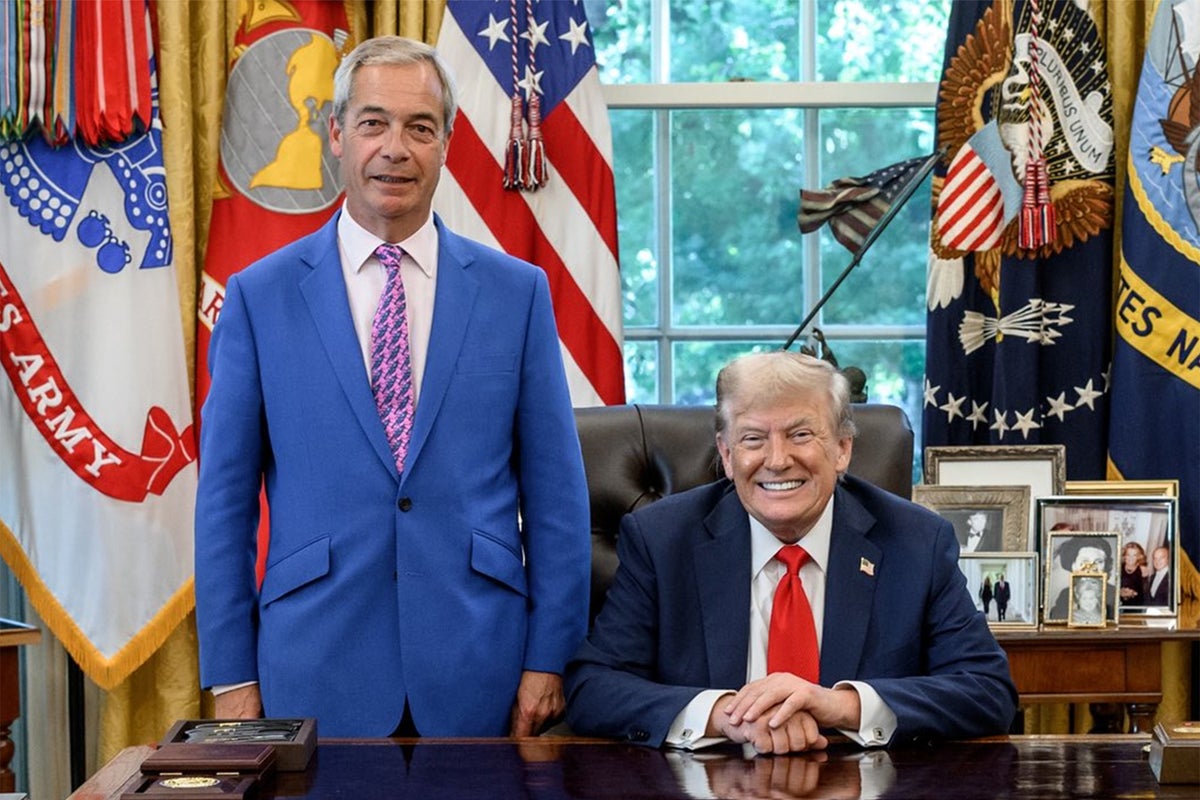
Nigel Farage and Donald Trump used to be the political tag-team of the century. They shared rallies, photo ops, and a shared disdain for the "establishment" on both sides of the Atlantic. But look at the situation in April 2026, and the vibe has shifted. Farage recently admitted he hasn’t spoken to the former president in months.
This isn't just a scheduling conflict. It is a calculated, cold-blooded attempt to survive the reality of British politics.
Farage has finally woken up to a simple fact that his critics have been shouting for years: most British voters do not like Donald Trump. In fact, they dislike him enough to make him a liability for anyone trying to build a serious political movement in the UK.
The Electoral Math of the Pivot
For a long time, Farage wore his proximity to Trump like a badge of honor. It signaled he had friends in high places and that he was part of a global populist wave. But in 2026, that wave looks more like a drag on his poll numbers. Data shows that roughly a quarter of voters list "Farage's support for Trump" as a primary reason they would refuse to cast a ballot for Reform UK.
When you’re trying to move from a protest party to a governing force, you can’t afford to scare off 25% of the electorate before the campaign even hits high gear.
He is essentially trying to perform a delicate political surgery. He needs to keep the base—the people who love the anti-establishment, populist energy—without alienating the suburban, moderate voters who might be open to his policies on immigration or the economy but get hives at the mention of Mar-a-Lago.
Why the Distance Is Necessary
Look at the recent shift in tone. Just a few months ago, Reform spokespeople were openly comparing their policies to "Trump 2.0." Now? The messaging has changed. They are working hard to distinguish their proposed "Deportation Command" from the controversial, high-profile tactics of US immigration agencies.
Farage is trying to frame his immigration agenda as a matter of British sovereignty and common sense, not an imported American culture war. He knows that if he allows his party to be branded as a UK subsidiary of the Trump campaign, he loses the argument on his own terms.
He’s even started talking about learning from different models—he recently referenced Barack Obama’s immigration policy, a move that would have been unthinkable for him a year ago. It’s transparent, sure. It’s also necessary. He needs to prove he isn't just a megaphone for someone else’s agenda.
The Problem With Being A Follower
The issue for Farage is that he has spent years positioning himself as a leader who dictates policy to himself. Admitting that his influence over the Trump circle has waned, or that he hasn't been in the loop, hurts that image.
The public sees the attempt to distance himself and they smell desperation. He is trying to walk a tightrope. He can't fully disavow Trump without losing the core supporters who view the former president as a hero. But he can't fully embrace him without cementing his status as a fringe figure in the eyes of the broader British public.
This ambiguity is the space he is stuck in. He’s gambling that voters will be more interested in his specific, aggressive plans for deportation and economic reform than in his past associations.
The Verdict on the Strategy
Is this move going to work? Maybe.
Reform UK is in a competitive position, but momentum is fickle. If Farage manages to pivot the conversation back to domestic issues like the cost of living, immigration, and the state of public services, he might just pull it off. He is counting on the average voter having a short memory regarding his past photo ops with US politicians.
However, if he keeps getting dragged into debates about what Trump said, did, or tweeted, the strategy fails. He’s trying to be a serious domestic statesman while holding onto his populist street cred. It’s a difficult act to pull off, and frankly, he’s running out of time to convince the public that he’s his own man.
The next few months will be the test. If he can maintain this distance and avoid the inevitable gravitational pull of American political chaos, he stands a chance. If he gets pulled back in, he’s just going to keep handing his opponents the ammo they need to keep him from power.