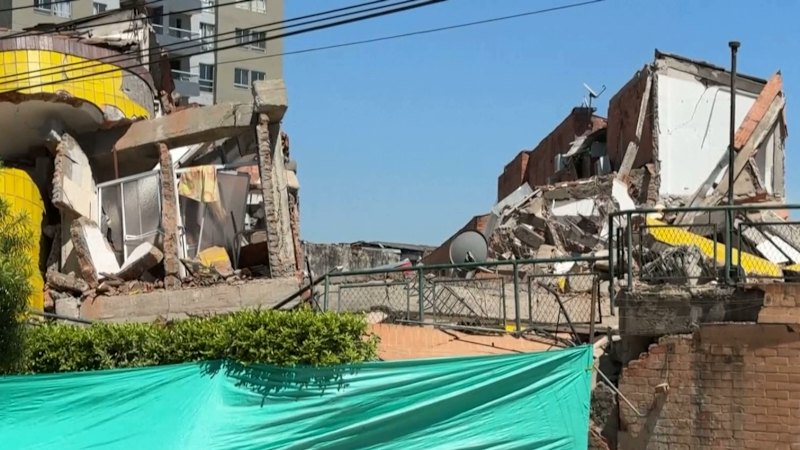
The earth does not warn you. It does not clear its throat or rattle a teacup on the saucer to announce its intentions. It simply waits, accumulating centuries of quiet pressure beneath the soil, until patience snaps.
At least one hundred and eleven human beings went to sleep under the Colombian sky, trusting the floor beneath their beds to stay still. They had no reason to think otherwise. Mountains are symbols of permanence in our collective imagination. We carve roads into their flanks, build brick homes against their steep shoulders, and plant coffee in the rich, volcanic soil they provide. We treat the earth as a solid foundation, forgetting that we are merely riding the crust of a restless, cooling stone.
Then came the rupture.
Consider what happens next: A sudden, violent heave. The sound is not a crash, but a roar like an oncoming freight train tearing through the living room. Walls buckle. Roof tiles rain down like heavy hail. In a matter of seconds, decades of human effort—families, memories, school notebooks, wedding photographs—are buried beneath tons of gray debris.
Statistics are cold things. One hundred and eleven. It sounds manageable on a morning news broadcast. It fits neatly into a chyron. But numbers cannot capture the texture of catastrophe. They do not smell the rising dust, nor do they hear the frantic calls for missing children echoing across a dark valley.
To understand what happened, you have to look closer at the geography of vulnerability. Colombia sits atop one of the most seismically volatile regions on the planet, where major tectonic plates grind against one another in a slow, brutal dance. Earthquakes here are not anomalies. They are inevitable chapters in a long geological story. Yet knowledge of the risk does not make the impact softer. Rural hillside communities, built with limited resources and minimal structural reinforcement, absorb the worst of these blows. When a slope gives way, homes do not just fall; they slide into oblivion.
Rescue workers arrived in the dark, navigating blocked roads and fractured bridges. Their hands became tools. Shovels scraped against concrete. Dogs sniffed the air for the faint, desperate scent of life trapped in air pockets beneath the rubble. Every minute mattered. Every minute stretched like an hour.
There is a profound vulnerability in modern life. We build towering achievements, yet we remain entirely at the mercy of the ground we stand on. When the shaking stops, the true weight of the tragedy settles in. It is carried by the survivors who wander through the wreckage looking for a familiar shoe, a stray pet, a keepsake that survived the fall.
The mountain is still there. It looms in the distance, indifferent to the grief it caused, shrouded in mist as if nothing happened. But the valley has changed forever. The names of the lost are now etched into the history of a nation that knows too well how fragile peace can be when the earth decides to move.
Silence returns. Not the peaceful silence of the countryside, but the heavy, ringing silence of absence.


