The silence in a hospital corridor is never actually silent. It is a hum of electricity, the rhythmic hiss of a ventilator, and the distant, metallic click of a trolley. But in the winter of 2020, that hum changed. It became a roar.
Imagine a structural engineer looking at a bridge. They see the stress points. They know exactly how much weight the steel can carry before it begins to scream. For decades, the National Health Service was that bridge. We kept adding lanes. We increased the speed limit. We ignored the rust flaking off the girders. Then, the pandemic hit like a seismic shift, and the bridge didn't just creak. It buckled.
According to the recent findings of the public inquiry, the UK entered the pandemic with a health system that was not just strained, but structurally fragile. We didn’t "almost" fail because of a sudden stroke of bad luck. We almost collapsed because the margins for error had been erased long before the first cough was heard in a ward.
The Mathematics of Human Suffering
To understand how close the collapse was, you have to look at a single hospital bed. In a functional system, a bed is a place of transition. You arrive, you are treated, you leave. But when the pandemic surged, the "exit" signs effectively turned off. Social care—the invisible network of nursing homes and home-check visits—was already starved of resources. When patients were ready to leave the hospital, there was nowhere for them to go safely.
This created a backup. A human logjam.
If the hospital is a heart, the social care system is the arteries. When the arteries are blocked, the heart has to pump harder and harder until the muscle fibers begin to tear. This isn't a metaphor for a balance sheet. It is the reality of a consultant sitting in a parked ambulance for eight hours because there is no physical square inch of floor space left inside the building to move a gasping patient.
The inquiry highlights a chilling statistic: the UK had some of the lowest numbers of intensive care beds per capita in the developed world. While other nations had "spare" capacity—a literal cushion of air—the NHS was running at 95% capacity on a normal Tuesday in 2019. We were a marathon runner trying to sprint while already holding our breath.
The Ghosts in the High-Vis Vests
Consider a nurse named Sarah. She isn't real, but she represents ten thousand women and men whose testimony now fills the inquiry's volumes.
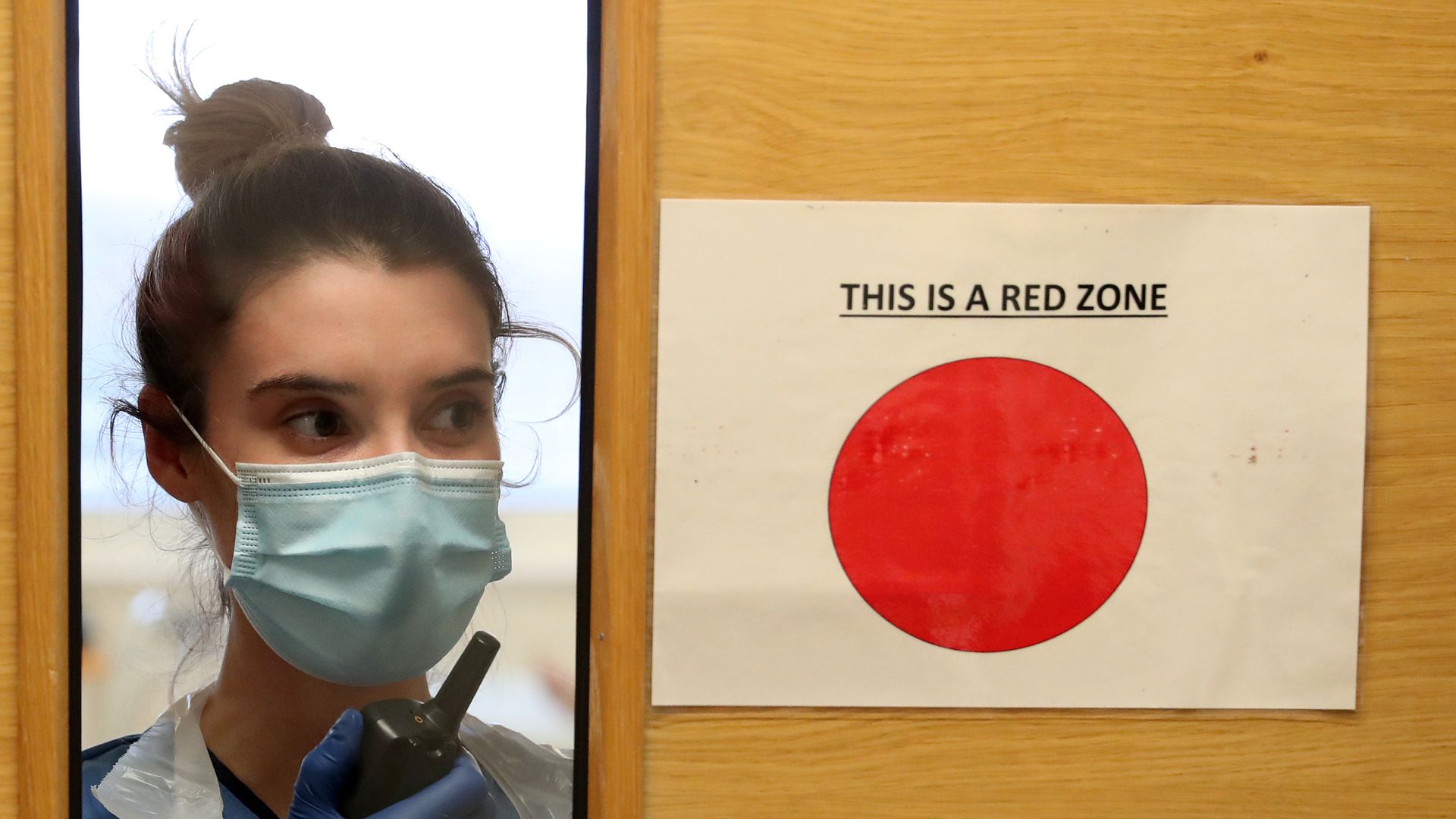
Sarah spent twelve hours a day encased in plastic that made her sweat until her skin peeled. She watched people die behind glass partitions, holding tablets so families could say goodbye through a screen. But the physical exhaustion wasn't the breaking point. The breaking point was the "moral injury."
Moral injury occurs when you are forced to provide care that falls below your own standards because the system has denied you the tools to do better. It is the weight of knowing that if there were more staff, or more monitors, or a more robust plan for a respiratory surge, the person in Bed 4 might still be breathing.
The inquiry found that the government’s pandemic planning was "outdated" and focused almost entirely on flu. We prepared for the wrong war. We spent years sharpening swords when the enemy was bringing a silent, airborne poison. Because the preparation was flawed, the response was reactive. Every decision felt like a desperate lunging at a closing door.
The Invisible Stakes of "Just in Time" Logistics
In the world of business, "Just in Time" is a mark of efficiency. You don't store what you don't need today. In healthcare, "Just in Time" is a death sentence.
When the PPE (Personal Protective Equipment) stockpiles were found to be inadequate or expired, it wasn't just a logistical hiccup. It was a betrayal of the frontline. Doctors were forced to wear bin bags. They were told to reuse single-use masks. This didn't happen because we are a poor nation. It happened because the philosophy of the NHS had shifted from "Resilience" to "Efficiency."
We optimized the system so tightly that it lost its ability to bend. When the pressure came, it snapped.
The inquiry makes it clear: the "near collapse" wasn't a localized event. It was a systemic failure of the state to protect its most vital organ. We relied on the individual heroism of staff to plug the holes left by decades of underfunding and fragmented planning. But heroism is a finite resource. You can only ask a person to be a martyr for so long before they simply quit.
The Cost of the Rebound
The tragedy didn't end when the lockdowns lifted. The "near collapse" has a long, jagged tail.
Because the system was pushed to the absolute brink, routine care vanished. Cancer screenings were missed. Heart surgeries were deferred. The "backlog" we discuss in news segments is actually a collection of millions of individual tragedies—people living in chronic pain, or whose treatable conditions became terminal while they waited for the system to stop screaming.
We are currently living in the aftermath of a cardiac arrest. The patient—the NHS—has been resuscitated, but the brain damage is evident. Waiting lists are at record highs, and the staff who survived the 2020-2022 period are leaving in droves, haunted by the memory of the night the oxygen pressure in the pipes began to drop because too many machines were drawing from it at once.
The Lesson Written in Lead
If we treat the inquiry’s report as a dry document to be filed away, we have already lost. The findings are a warning. They tell us that a civilized society cannot treat its health service as a cost-cutting exercise.
The next pandemic isn't a matter of "if." It is a matter of "when."
The Inquiry’s conclusion is a mirror held up to the nation. It asks us if we are willing to pay for the "spare" capacity that looks like waste during the good times, but looks like salvation during the bad. It asks us if we value the lives of the people in the plastic gowns enough to give them a system that doesn't require them to be superheroes just to survive a shift.
The bridge is still standing, but the cracks are wider than ever. You can see them in the eyes of every GP, every paramedic, and every patient waiting in a plastic chair at 3:00 AM.
We stared into the abyss, and for a few weeks in those dark winters, the abyss nearly swallowed us whole. The hum of the hospital is back, but it is fragile. It is the sound of a system holding its breath, waiting to see if we have truly learned what it costs to let a lifeline fray to its final, single thread.
A hospital bed is more than just metal and a mattress; it is a promise a country makes to its citizens that when the worst happens, there will be room. That promise was almost broken forever.