The dinner table in Givatayim was still covered in the remnants of a Friday night feast when the rhythm of life shifted. It wasn't a slow transition. It was the sudden, sharp wail of the Tzeva Adom—the "Red Color" alert—cutting through the humid air of the Mediterranean coast. For a moment, the clink of silverware stopped. A mother’s hand froze mid-air, holding a piece of pita.
Then, the muscle memory took over.
It is a strange, modern choreography that millions of people have mastered. You don't run in a blind panic; you move with a practiced, grim efficiency. You grab the sleeping toddler, the elderly grandmother’s arm, and the bag of "just-in-case" documents. You head for the Mamad, the reinforced security room that is as much a part of Israeli architecture as the kitchen sink.
Behind the heavy steel door, the world shrinks to the size of a few square meters. Outside, the sky was about to become a laboratory for the most sophisticated aerial physics on the planet.
The Calculus of the Iron Dome
While families huddled in concrete boxes, the atmosphere above them became a congested highway of high explosives. Iran had launched a massive wave of drones and missiles, a retaliatory strike that turned the silent space between nations into a theater of war. This wasn't just a skirmish. It was a saturation attack designed to overwhelm, to confuse, and to kill.
Consider the math involved. A drone moves slowly, humming like a lawnmower from hell. A cruise missile streaks low, hugging the terrain to hide from radar. A ballistic missile, however, is a different beast entirely. It arches into the edge of space before screaming back down at hypersonic speeds. To stop them, you aren't just hitting a bullet with a bullet. You are hitting a needle with another needle in a dark room while both are moving at several times the speed of sound.
The technology required to manage this chaos is almost beyond human comprehension. Computers must identify the threat, calculate its trajectory, determine if it is headed for a population center, and then launch an interceptor—all in a matter of seconds. If the computer calculates that a missile will land in an empty field, it lets it go. Every interceptor costs tens of thousands of dollars. The economy of survival is a brutal ledger.
The Sound of the Invisible Shield
Inside the shelters, you don't see the technology. You hear it.
First, there is the muffled thump-thump-thump of the interceptors leaving their canisters. It’s a rhythmic, heartbeat-like sound that signals the defense is active. Then, after a period of agonizing silence, comes the "boom." It is a heavy, chest-rattling vibration that tells you the sky has successfully eaten the threat.
In a hypothetical apartment in Jerusalem, a young girl named Maya asks her father why the windows are shaking. He tells her it’s just the clouds bumping into each other. It’s a lie, of course. It’s the sound of two pieces of high-grade military hardware vaporizing each other five miles above her head.
This is the psychological toll of the invisible shield. You are safe, but you are also a spectator to your own potential destruction. You are protected by a layer of silicon and steel, but the vulnerability remains etched in your marrow. The "success rate" of 99 percent is a triumph of engineering, but for the person sitting under that remaining one percent, the statistics are cold comfort.
A Regional Puzzle
This wasn't a solo performance. The night the sky caught fire, the geopolitical map of the Middle East flickered into a new, unexpected shape. For years, the narrative has been one of permanent friction and ancient animosities. Yet, as the Iranian drones crossed borders, a quiet coordination began to hum.
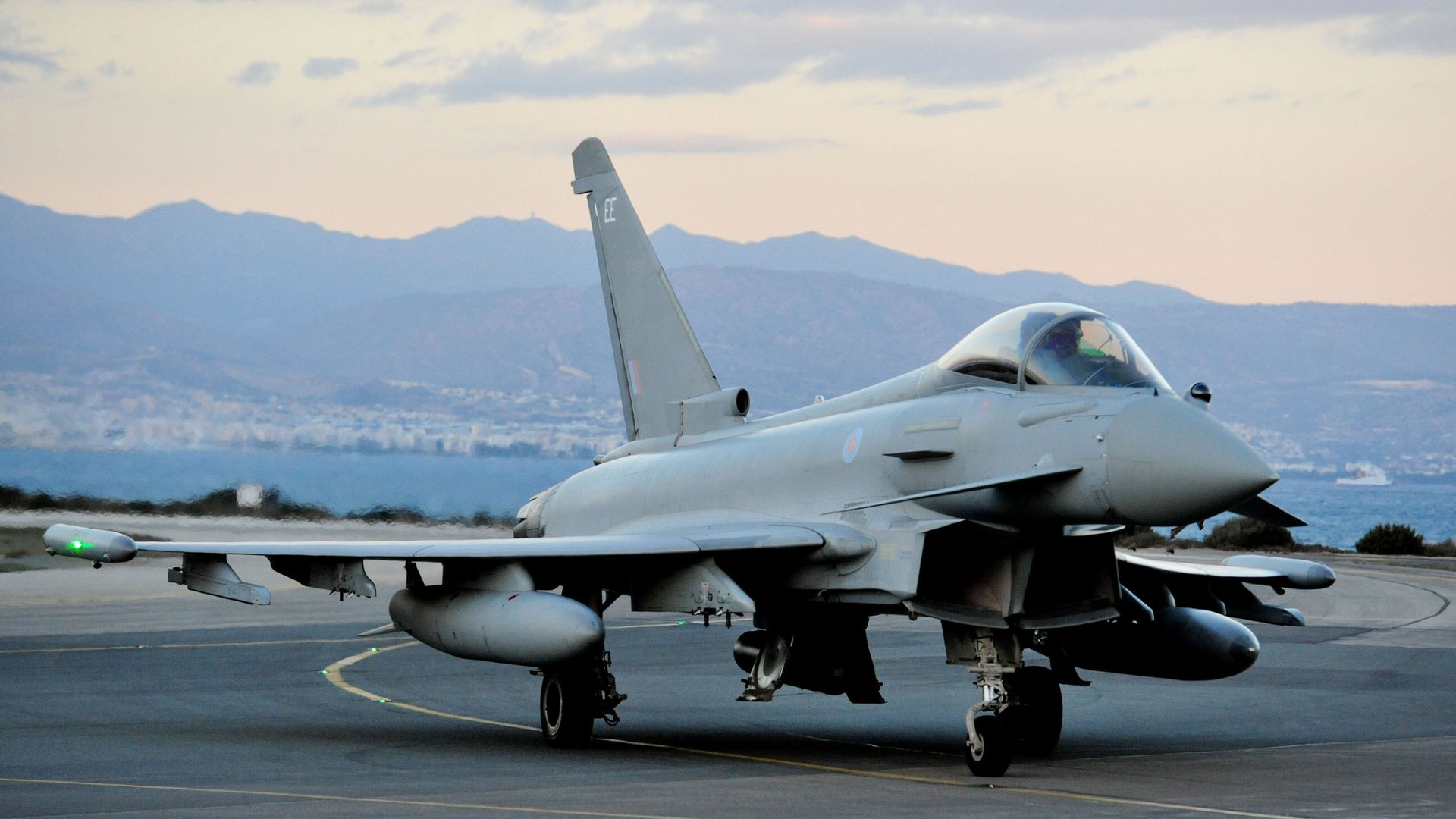
Jordanian pilots took to the sky. American and British jets vectored into intercept patterns. Saudi radar data flowed through shared channels. It was a moment where the shared desire for stability outweighed the public rhetoric of division.
The "retaliatory" nature of the attack was a chess move in a game where the board spans thousands of miles. Iran felt compelled to respond to the strike on its consulate in Damascus. Israel felt compelled to defend its sovereignty. The result was a massive, expensive, and terrifying display of "proportionality."
But what does proportionality mean to a family in a bunker? To them, the high-level strategy of Tehran or the cabinet meetings in Jerusalem are abstract shadows. The reality is the heat in the room, the smell of dust, and the blue light of a smartphone screen as they refresh news feeds, desperate for the "all clear" signal.
The Technological Ghost in the Machine
We often speak of these events in terms of "strikes" and "interceptions," but we rarely talk about the code. Millions of lines of software are the true frontline. This software must distinguish a bird from a drone, a decoy from a warhead. It must ignore the "clutter" of the ground and focus on the heat signature of a rocket motor.
If the software fails for a microsecond, the narrative changes from "successful defense" to "national tragedy."
The drones, specifically the Shahed models, are a chilling evolution in warfare. They are cheap. They are easy to mass-produce. They are designed to be "loitering munitions," essentially flying bombs that can stay in the air until they find a target or simply exhaust the enemy’s expensive interceptor supply.
It is an asymmetrical nightmare. An attacker can spend $20,000 on a drone, forcing the defender to spend $100,000 or more to stop it. This is a war of attrition played out in the currency of both blood and budgets.
The Morning After the Fire
When the sirens finally stopped and the doors of the Mamads creaked open, the sun was beginning to rise over a landscape that looked, on the surface, entirely unchanged. The palm trees were still there. The traffic lights in Tel Aviv still cycled from red to green. The cafes were preparing for another day of strong coffee and morning newspapers.
But the psychological map of the region had shifted again.
People walked out of their shelters with a new layer of weariness. They checked for shrapnel in their gardens, fragments of the "iron" that had saved them. The silence that followed the attack was louder than the booms. It was the silence of a region holding its breath, waiting to see if the cycle of "retaliation" would spin even faster.
The facts of the night tell us that 99 percent of the hundreds of projectiles were downed. They tell us that no major population center was leveled. They tell us that the air defenses held.
The story, however, is in the eyes of the child who now flinches when a car doors slams. It’s in the quiet, desperate prayers of a father who knows that while the technology is miraculous, it is also a fragile barrier between a normal life and a crater.
The stars didn't really fall over Tel Aviv. They were just the white-hot trails of interceptors, tracing the outlines of a conflict that refuses to go cold.