The marble hallways of the Rayburn House Office Building are designed to swallow sound. They are places of hushed whispers and the rhythmic clicking of expensive shoes on stone. Yet, on a Tuesday that felt like any other legislative workday, the air inside Hearing Room 2154 grew thick with a peculiar kind of tension. It wasn't the usual partisan bickering over budget line items or policy minutiae. It was something more visceral. Something that smelled, figuratively, of the wild and the macabre.
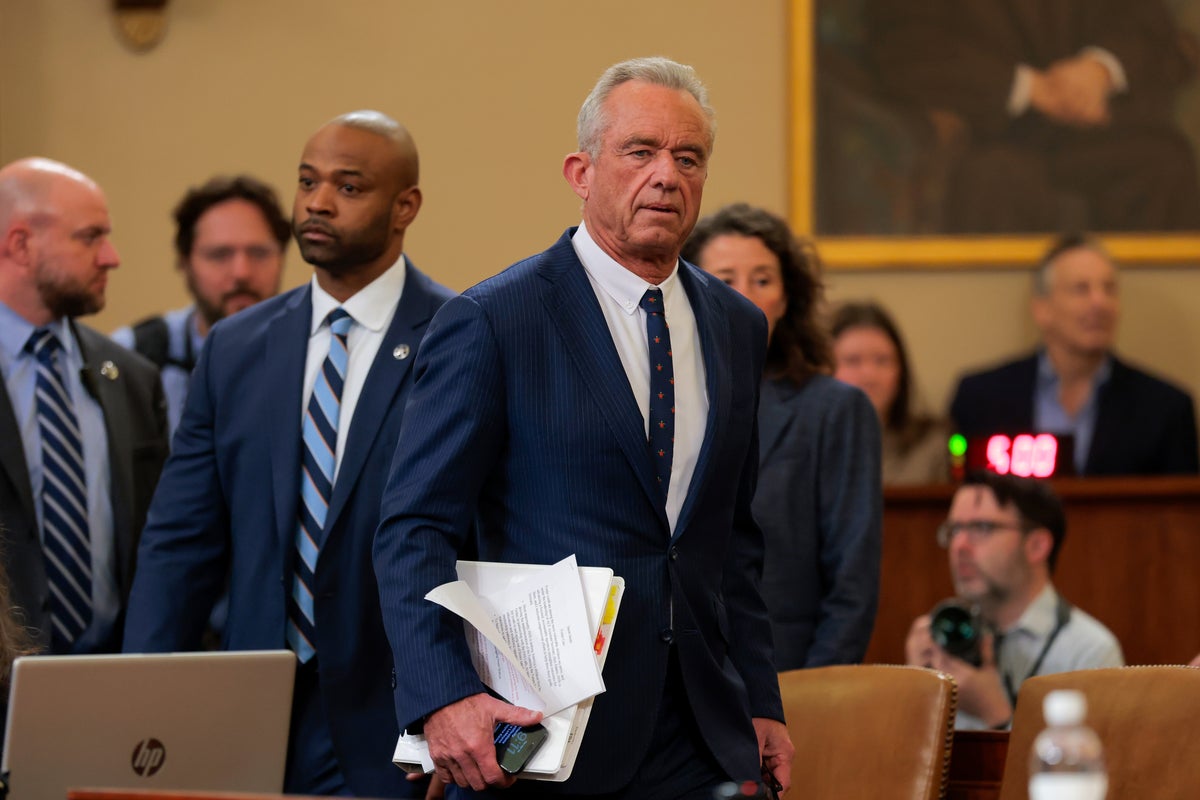
Robert F. Kennedy Jr. sat at the witness table, not as a fringe candidate or a private citizen, but as the man nominated to hold the keys to the nation's health. Across from him sat the House Oversight Committee, a collection of lawmakers tasked with deciding if a man who once admitted to staging a dead bear cub in Central Park—and more recently, to a penchant for collecting roadkill—should oversee the Food and Drug Administration and the Centers for Disease Control and Prevention.
The questioning began with the standard posturing. But the shift happened quickly. It moved from the abstract to the anatomical.
Consider the role of a Secretary of Health and Human Services. This person oversees the safety of the milk your children drink, the efficacy of the vaccines that keep polio at bay, and the research into pathogens that could spark the next global crisis. Now, place into that role a man who, by his own admission, stopped his car to scoop up a dead raccoon, intending to eat it, only to leave it in his trunk for hours.
It sounds like a dark comedy sketch. It isn't. It is the reality of the American political theater in 2026.
One representative leaned into her microphone, her voice tight with a mix of disbelief and strategic indignation. She didn't ask about Medicare reform. She didn't ask about the rising cost of insulin. She asked about the raccoon. Specifically, she asked if the man responsible for the nation’s bio-safety protocols understood the zoonotic risks of handling dead wildlife without a permit, let alone planning to serve it for dinner.
Kennedy’s response was a study in practiced deflection. He leaned back, his voice gravelly and calm, attempting to frame the incident as a quirk of a life lived close to nature. He spoke of "food sovereignty" and the "over-regulation of the American diet." To his supporters, this is the language of a rebel fighting against a "poisonous" food system. To his detractors, it is the language of a man who lacks the basic judgment required to handle a petri dish, let alone a federal department with a $1.7 trillion budget.
The stakes here aren't just about a dead animal in a trunk. They are about the invisible guardrails that keep modern society from sliding back into the era of preventable plagues.
Think about the last time you bought a gallon of milk. You trust that it won't give you tuberculosis or brucellosis because of a vast, invisible network of inspectors and scientists. These people report to the Secretary of Health. They are the ones who enforce the rules that Kennedy often describes as "corporate capture." When the person at the top views a dead raccoon on the side of a highway as a potential meal rather than a biological hazard, that invisible network begins to fray.
During the hearing, the room felt divided between two different versions of reality. In one, Kennedy is a visionary who wants to "Make America Healthy Again" by stripping away the chemical additives and corporate influence that have led to a crisis of chronic disease. In the other, he is a chaotic force, a man whose personal eccentricities—the bear cub, the brain parasite, the roadkill—are red flags the size of billboards.
The questioning turned to the "brain worm." Years ago, Kennedy experienced cognitive issues that he later attributed to a parasite that had entered his brain and died. Lawmakers pressed him on whether this history impacted his current fitness for a high-stress, high-consequence role.
He brushed it off. He smiled. He joked.
But the room didn't laugh.
The real tension in the room wasn't about the worm or the raccoon. It was about the loss of a shared language of expertise. For decades, the position of Health Secretary was filled by bureaucrats, doctors, or career politicians who colored inside the lines. They were predictable. They were, in the eyes of many, boring.
Kennedy is many things, but he is not boring.
The hearing dragged into the afternoon. Outside, the spring sun hit the Capitol dome, but inside, the atmosphere was claustrophobic. A doctor-turned-Congressman asked a pointed question about the resurgence of measles. He cited the $95,000 cost of a single pediatric ICU stay for a child with complications from a preventable disease. He asked if Kennedy’s skepticism toward traditional childhood immunizations would lead to more empty chairs in classrooms.
Kennedy pivoted. He spoke about the need for "better science" and "true informed consent." It is a rhetorical dance he has mastered over decades. He never says "don't vaccinate." He says "be careful." He says "look at the data." It sounds reasonable until you realize he is questioning data that has been settled for a century.
As he prepared to leave the panel, the hallway outside was a mosh pit of cameras and microphones. The "roadkill revelations" had already trended on social media. The memes were being made in real-time.
But as he walked toward the exit, flanked by security, a quiet question lingered in the wake of the spectacle. If the person in charge of our collective health operates on a set of rules that most people find incomprehensible—or worse, dangerous—what happens to the trust that holds the system together?
Trust is a fragile thing. It is built over decades of consistency and destroyed in an afternoon of bizarre anecdotes. We rely on the Secretary of Health to be the ultimate arbiter of what is safe and what is not. When that person treats a highway carcass like a grocery store aisle, the boundary between the wild and the regulated vanishes.
He stepped into the waiting black SUV. The doors closed with a heavy thud, sealing out the shouting reporters and the flashbulbs. Behind him, the committee members began to pack their briefings, looking like people who had just seen something they couldn't quite explain.
The raccoon was long gone, but the shadow it cast over the future of American medicine was only getting longer.