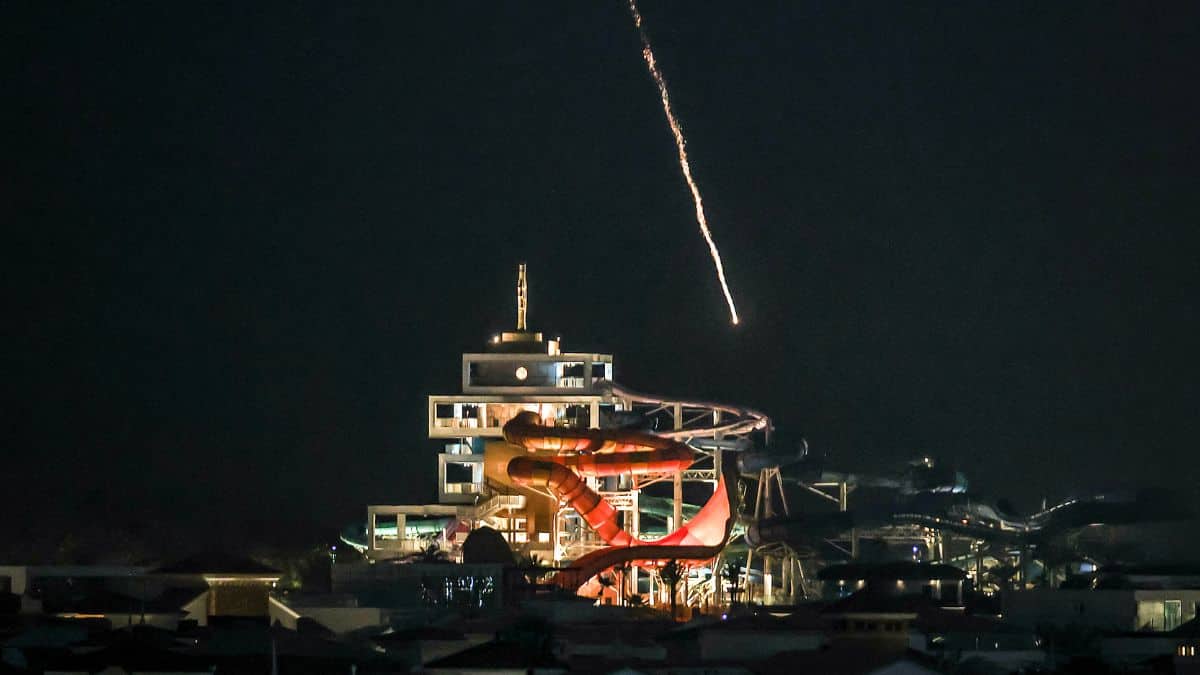
The decision to evacuate non-essential personnel from RAF Akrotiri following a kinetic drone strike represents a fundamental shift from static defense to operational elasticity. This is not merely a reactive safety measure; it is a calculated reduction of the base’s "attack surface." In modern asymmetric warfare, every non-combatant on a forward operating base represents a liability in the logistics of protection, medical readiness, and psychological warfare. By thinning the herd, the UK Ministry of Defence (MoD) is transitioning the Cyprus installation from a colonial-era legacy hub into a streamlined, high-readiness node capable of absorbing strikes without catastrophic institutional friction.
The Triad of Vulnerability
To understand why a drone strike necessitates an immediate personnel drawdown, one must analyze the base through the lens of three specific vulnerability vectors.
- The Logistic Drag Coefficient: Non-essential staff—dependents, administrative contractors, and secondary support roles—require a massive footprint of housing, food supply chains, and security details. In a high-threat environment, these individuals become "security sinks," diverting elite protection units away from the primary mission of power projection to the secondary mission of civilian safeguarding.
- The Information Asymmetry Gap: Large populations on military bases increase the digital signature of the installation. Personal devices, social media check-ins, and local procurement activities provide a data-rich environment for adversarial intelligence gathering. A drone strike often serves as a "stress test" to see how a base reacts; reducing personnel effectively blacks out the predictable patterns that follow such an event.
- Kinetic Lethality vs. Force Protection: Drones, specifically Loitering Munitions (LMs), prioritize "soft targets." While a hardened hangar can withstand a strike, a residential barracks or a mess hall cannot. Removing the humans from these soft targets negates the primary tactical advantage of low-cost, high-precision drone technology.
The Calculus of Proportional Response
The strike on RAF Akrotiri highlights a growing disparity between the cost of offense and the cost of defense. An off-the-shelf or state-sponsored drone may cost between $10,000 and $50,000. Conversely, the deployment of a single Sky Sabre air defense missile or the scrambled interception by a Typhoon FGR4 costs orders of magnitude more.
When the cost-per-intercept exceeds the cost-per-threat by a factor of 100, the defender faces an economic attrition trap. The MoD’s strategy here shifts the variable from Interdiction (stopping the drone) to Mitigation (ensuring the drone hits nothing of value). By evacuating personnel, the UK changes the value of the target without firing a shot.
Defining Non-Essential in a Digital Theater
The term "non-essential" is often misunderstood by the public as "unimportant." In a modern strategic context, essentiality is defined by the Physical Presence Necessity (PPN).
- High PPN: Flight deck crews, munitions technicians, rapid-response security teams, and medical trauma units.
- Low PPN: Human Resources, procurement officers, long-term analysts, and administrative oversight.
In 2026, most Low PPN functions can be offshored to Whitehall or Regional Command Centers in the UK via encrypted satellite uplinks. This "Remote Command Gradient" allows the military to maintain the same bureaucratic and analytical output while removing the physical bodies from the reach of the enemy’s short-range ballistic or drone capabilities.
The Geopolitical Signal of Hardening
Cyprus occupies a unique position as a Sovereign Base Area (SBA). Unlike a standard overseas base, the UK exercises full sovereignty over Akrotiri and Dhekelia. An attack here is legally equivalent to an attack on Portsmouth or Manchester.
However, a full-scale military escalation in response to a drone strike risks destabilizing the Eastern Mediterranean power balance. The evacuation serves as a "Grey Zone" maneuver. It signals to the adversary—likely a regional proxy—that the UK is "battening down the hatches" for a prolonged period of high-intensity operations. It is a posture of preparation, not a posture of retreat.
The move also addresses the internal political friction within Cyprus. The presence of a high-profile military target on the island has long been a point of contention for the local government. By reducing the footprint of the base, the UK lowers the "friction surface" with the host nation, framing the base as a lean, professional military asset rather than a sprawling colonial encampment.
Technical Limitations of Current Air Defenses
The reliance on personnel evacuation exposes a critical limitation in current Counter-Unmanned Aerial Systems (C-UAS). While RAF Akrotiri is equipped with sophisticated radar and electronic warfare suites, drones present a "clutter" problem.
- Detection Thresholds: Small drones often fly below the minimum velocity or altitude thresholds of traditional surface-to-air missile (SAM) systems.
- Swarm Dynamics: If an adversary launches 50 low-cost drones, even a 90% intercept rate allows five drones to impact. In a densely populated base, those five impacts are guaranteed to cause casualties.
- Electronic Masking: The proximity of the base to civilian telecommunications hubs in Limassol makes high-powered electronic jamming difficult without causing significant collateral disruption to the Cypriot economy.
Because the technical solution (perfect C-UAS) is currently unavailable, the MoD is employing a Structural Solution: reducing the density of the target.
Strategic Realignment of the Eastern Mediterranean Node
The evacuation of RAF Akrotiri is the first phase of a broader realignment of UK power projection. For decades, the base functioned as a "Little England" in the Mediterranean—a self-contained ecosystem of schools, shops, and families. That model is now obsolete.
The future of forward-deployed bases lies in the Lily Pad Model. These are austere, highly automated, and heavily defended nodes that remain dormant or lightly staffed until a crisis requires them to "surge." The strike has accelerated Akrotiri’s transition into this model.
- Automation of Perimeter Security: Expect a rapid increase in automated ground sensors and autonomous patrol vehicles to replace human sentries.
- Hardened Underground Infrastructure: If the base is to remain a critical node for the F-35 and Typhoon fleets, the housing of essential personnel must move from surface-level prefabs to subterranean or reinforced concrete bunkers.
- Variable Staffing Cycles: Personnel will likely move to shorter, high-intensity deployments without families, mirroring the operational tempo of a submarine crew rather than a traditional army garrison.
The immediate operational priority for the MoD is the recalibration of the base’s Integrated Air and Missile Defense (IAMD). Until the personnel are removed, the commander on the ground is playing a defensive game. Once the "non-essentials" are clear, the rules of engagement change. The base becomes a pure combat platform, allowing for more aggressive electronic warfare and kinetic counter-battery fire that would otherwise risk civilian or non-combatant life.
The strategic play is to transform RAF Akrotiri into a "Black Site" of operational efficiency—where every person on the tarmac has a direct kinetic or technical function. This reduces the enemy's psychological leverage and forces them to target hardened military assets rather than the vulnerable human infrastructure that previously surrounded them.