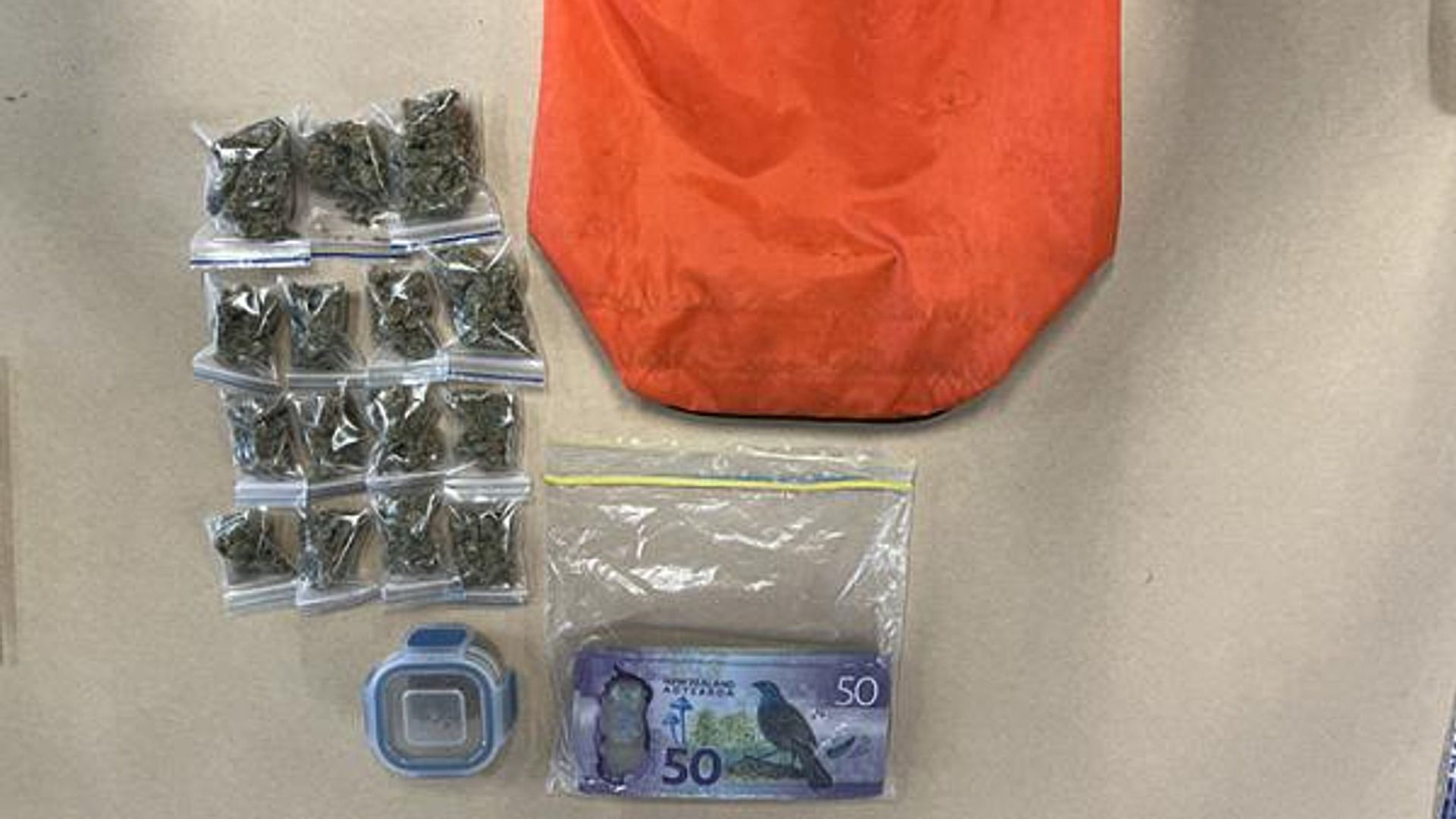
The discovery of illicit substances and undocumented currency within charity donation streams is not a random act of misfortune but a predictable failure of the "open-gate" intake model. When a bag containing cannabis and cash is abandoned at a donation point, it represents a breach in the operational perimeter of the organization. This incident exposes the structural vulnerability of charitable organizations that rely on high-volume, low-friction donor interfaces. To mitigate the legal, reputational, and physical risks associated with such events, organizations must transition from a passive receipt model to a controlled-access logistical framework.
The Structural Vulnerability of the Open-Gate Intake Model
Charity shops typically operate on a high-friction processing model but a low-friction intake model. This asymmetry is the primary driver of risk. The "open-gate" system—where donors can leave goods outside of business hours or in unsupervised bins—functions as an unmonitored drop point for third parties.
The mechanism of risk here follows three distinct trajectories:
- The Anonymity Loophole: Unlike commercial returns or pawn-shop transactions, charity donations rarely require identification. This lack of a "know your donor" (KYD) protocol allows the organization to be used as a de facto dead drop or a disposal site for high-risk materials.
- The Proximity Liability: Once a bag is placed on charity property, the organization enters a state of "constructive possession." Even if staff have not processed the item, the presence of illegal substances on the premises triggers a cascade of law enforcement protocols and potential insurance premium escalations.
- The Contamination Effect: A single bag of contraband can compromise an entire intake batch. If illicit substances are found, the safety of the volunteers is prioritized over the recovery of assets, leading to the disposal of legitimate donations and a direct hit to the cost-of-goods-sold (COGS) efficiency.
Deconstructing the Contraband Incident: A Logical Mapping
The specific case of leaving a significant quantity of cannabis and cash indicates a failure of intent or a catastrophic error in the donor’s private logistics. However, from the perspective of the charity's operations, the intent of the donor is irrelevant; the impact is a disruption of the secondary market supply chain.
The Cost of Discovery
When a volunteer encounters a bag containing drugs and cash, the immediate operational costs are quantifiable:
- Site Sterilization: The immediate cessation of all sorting activities to ensure no further hazardous materials (needles, chemicals, or additional drugs) are present.
- Labor Loss: The redirection of staff time toward police reporting, statement filing, and forensic handovers.
- Inventory Shrinkage: The loss of potential revenue from the legitimate items that were likely packaged alongside the contraband.
The Cash-Drug Paradox
The presence of cash alongside cannabis suggests one of two scenarios: a "clean-out" where a relative accidentally donated the contents of a hidden stash, or a botched hand-off. For the charity, the cash presents a unique accounting nightmare. While a donation of money is usually welcomed, cash found in proximity to illicit substances is legally classified as "proceeds of crime." This prevents the charity from simply banking the funds. Instead, they must navigate the complex interface of civil asset forfeiture laws.
The Three Pillars of a Hardened Intake Strategy
Charitable organizations must move away from the "hope-based" intake model toward a structured-security approach. The "Three Pillars" framework provides a roadmap for this transition.
1. The Human-Centric Intake Buffer (HCIB)
Eliminating the anonymity of the donor is the single most effective deterrent to contraband delivery. By requiring human-to-human interaction for every drop-off, the charity creates a psychological barrier.
- Active Screening: Staff or volunteers must perform a preliminary "visual assessment" of all bags before they are accepted.
- The Receipt Log: Recording a donor's basic details (even just a name or vehicle registration) transforms a random act into a formal transaction.
2. Physical Perimeter Fortification
Many charities suffer from "legacy donation bins" or accessible storefronts that invite after-hours dumping.
- The Bollard and Bin Strategy: Eliminating open bins and replacing them with time-locked, sensor-equipped chutes.
- CCTV Integration: Installing high-definition cameras specifically focused on the "point of drop." This does not just serve as a deterrent but provides the necessary forensic evidence for the police, should a "tainted" bag be left.
3. Operational Protocol for High-Risk Discoveries
Standard operating procedures (SOPs) for the discovery of illegal goods are frequently under-developed in the non-profit sector.
- The "Zero-Touch" Protocol: Once a bag is suspected of containing illicit substances, all sorting in that zone must cease. This prevents the accidental distribution of drugs into the retail stream.
- The Evidence Custody Chain: A logbook should record who found the bag, the time, the exact location, and the names of all people present until law enforcement arrives. This protects the organization from accusations of internal theft or complicity.
The Liability Gap: Understanding the Legal Mechanism
The discovery of cash and cannabis in a donation area triggers a legal mechanism known as the "Innocent Owner" defense in many jurisdictions. However, the burden of proof often lies with the charity to demonstrate that they have taken "reasonable steps" to prevent their property from being used for illegal activities.
The second limitation of a passive intake system is the insurance-claim bottleneck. If a volunteer is injured (e.g., via a needle stick or exposure to fentanyl) while processing an unvetted bag, the insurance provider may argue that the organization's lack of screening constitutes gross negligence. This creates a financial liability far exceeding the value of the donated goods.
Recalibrating the Value-to-Risk Ratio
Every donation is a transaction with a hidden cost. The "Value-to-Risk" ratio (VRR) for a charity shop is the potential resale value of a bag divided by the operational cost of processing it safely.
$$VRR = \frac{Resale Value}{Sorting Cost + Disposal Cost + Risk Premium}$$
When a bag contains cannabis and cash, the $Resale Value$ is effectively zero (as the goods must be seized), while the $Risk Premium$ and $Sorting Cost$ spike. This results in a negative VRR, a scenario that can bankrupt a small-scale operation if it occurs with any frequency. To maintain a positive VRR, charities must prioritize "clean" donation streams—such as corporate partnerships or scheduled home pickups—where the identity of the donor is known and the risk of contraband is statistically negligible.
Strategic Realignment of the Charity Retail Model
The incident of the "cannabis bag" is a symptom of a broader crisis in the charity retail sector: the "dumping ground" perception. To solve this, organizations must aggressively rebrand their intake points as "curated collection centers." This is not just a marketing change; it is a fundamental shift in the supply-chain philosophy.
The first limitation to overcome is the fear of "offending" donors. A donor who is offended by a request for a name or a visual check of their bag is likely a donor who is offloading low-value or high-risk items. The high-value donor—the person providing high-quality clothing or furniture—understands the need for security and professional standards.
The second limitation is the labor-shortage myth. While it is true that volunteers are hard to find, the labor spent managing "trash" or dealing with police reports for illicit substances is a massive waste of human capital. By streamlining the intake process and rejecting "junk" or "high-risk" bags at the door, the organization actually reduces its overall labor requirement.
The final strategic move for any charity shop facing this risk is the implementation of a "Donation Appointment" system. By forcing donors to book a slot, the organization gains three advantages:
- Identity Verification: The digital trail left by a booking is the ultimate deterrent for anyone looking to drop off illegal goods.
- Resource Leveling: Sorting staff can be scheduled to match the expected volume of incoming goods.
- Quality Control: The charity can specify exactly what it is looking for during the booking process, ensuring that the incoming inventory has a high VRR.
Organizations that continue to rely on anonymous, after-hours donation drops are essentially operating as unmonitored transfer stations. In an era of increasing legal scrutiny and volatile supply chains, this is no longer a sustainable business model. The "bag of cannabis and cash" is a warning shot; the organizations that survive will be those that treat their intake points with the same security and logistical rigor as a high-end commercial retailer.