The rain in East Kalimantan does not fall; it descends with the heavy, blunt force of a wet blanket dropped from the stratosphere.
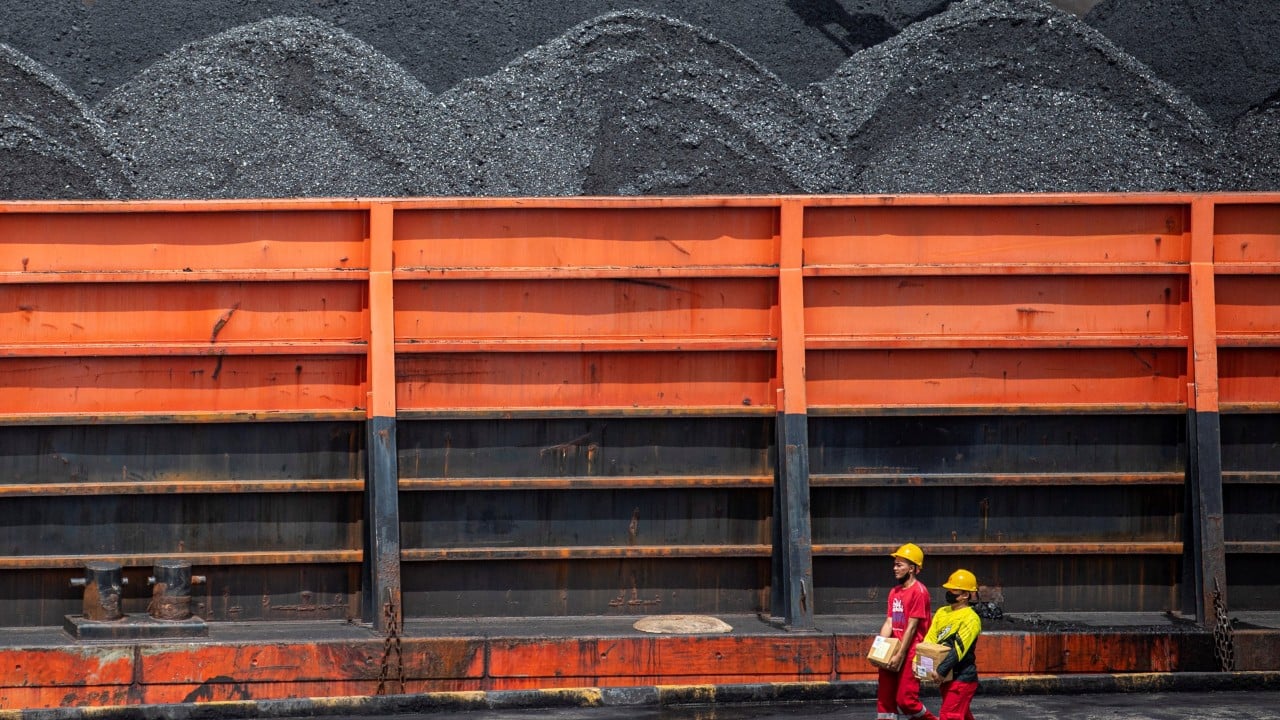
Stand on the edge of an open-pit mine outside Samarinda, and you will understand why ink on a Jakarta spreadsheet means very little to the earth. The air smells of sulfur, damp topsoil, and the distinct, oily tang of pulverized anthracite. Down in the pit, yellow excavators the size of two-story houses claw at black seams that have slept beneath the dipterocarp forest for forty million years. Those machines move with an unhurried, terrifying hunger. They do not care about production quotas. They do not care about bureaucratic paperwork. They only bite, lift, and dump. Meanwhile, you can find other events here: Why Panic Cashing Your Pension Is Actually Rational Self Defense.
Far away, in the air-conditioned towers of the capital, men in starched white shirts are drawing invisible lines around that hunger.
To understand why an Indonesian coal deal can suddenly send tremors through global energy markets, you have to look past the ticker symbols and the dry regulatory filings. You have to look at the paperwork—the thick, bureaucratic masonry known as the Rencana Kerja dan Anggaran Biaya, or RKAB. To explore the bigger picture, we recommend the recent report by The Wall Street Journal.
Imagine you are Budi.
Budi is a fictional mine manager, but his sweat is real enough. For thirty years, Budi has watched the hills bleed black gold to fuel the power plants of Java, China, and India. He knows every contour of his concession. He knows when the monsoon will turn his haul roads into treacherous rivers of soup. But lately, Budi spends less time watching the excavators and more time staring at a digital portal, waiting for a government stamp.
The Indonesian government, seeking to bring order to a chaotic, fragmented sector, decided that miners could no longer dig what they pleased. They needed three-year approval blocks for their production quotas. It sounded sensible on paper. It promised environmental oversight, price stabilization, and an end to the wildcat extraction that scars the archipelago.
Instead, it created a bottleneck the size of the Sunda Strait.
Consider what happens next when a government ministry slams the brakes on quota approvals. Hundreds of applications pile up in digital inboxes, waiting for overworked bureaucrats to verify coordinates, tax clearances, and environmental bonds. Meanwhile, supply contracts signed months ago loom like incoming freight trains.
When the Indonesian coal deal hit the headlines—sparked by doubts over whether those vital quotas would actually be approved in time—the global market did what markets always do when confronted with uncertainty. It panicked. Traders in Singapore and London squinted at shipping manifests and wondered if the steady pulse of black fuel from the world’s largest thermal coal exporter was about to skip a beat.
Here is the central irony of modern resource extraction: we live in an era of instant communication, yet our commodities move at the speed of government bureaucracy.
We forget that coal is not just a financial instrument. It is heat. It is electricity humming through high-voltage lines to light up millions of homes across Asia. When an administrative delay freezes a quota, it is not just a line item on a spreadsheet that changes. It is a freighter idling off the coast of Balikpapan, burning thousands of dollars of bunker fuel a day while its crew watches the horizon for clearance. It is a utility manager in Tokyo or Seoul sweating over winter stockpiles.
Let us be honest about the tension here. Jakarta is walking a tightrope. On one side lies environmental degradation—the scarred earth, the poisoned rivers, the ghosts of forests logged and burned. On the other side lies economic survival—the billions of dollars in export revenue that keep the national currency stable and fund schools and roads.
The RKAB quota system was designed to be the balancing pole. But when the pole wobbles, everyone feels the vertigo.
The doubts that plague these recent quota approvals are not born of malice; they are born of friction. The Ministry of Energy and Mineral Resources wants to ensure that miners are paying their royalties upfront, that environmental reclamation funds are locked away in real banks, and that production does not outpace national interest. But the transition from a yearly rubber-stamp system to a rigorous, multi-year evaluation process was clumsy. The machinery of state collided with the unrelenting appetite of the furnaces.
Talk to the brokers in Jakarta’s financial district, and they will speak in a language of risk premiums and supply deficits. Talk to the truck drivers parked along the haul roads outside Samarinda, and they will speak of idle engines and half-pay weeks. Both are telling the truth. The macroeconomic panic and the microeconomic stagnation are two sides of the same heavy coin.
What happens when the quotas finally clear?
The excavators roar back to life. The dust rises. The freighters weigh anchor and push out into the dark waters of the Makassar Strait, their holds brimming with compressed ancient sunlight, bound for distant shores where the lights must stay on.
Yet the doubt remains. It lingers in the margins of every contract, a quiet reminder that beneath the modern miracle of global trade lies something fragile: the stroke of a bureaucrat’s pen, the capacity of a government server, and the eternal, uneasy truce between the earth we dig and the rules we write to govern the digging.
The rain continues to fall over Kalimantan, washing the coal dust from the leaves, blurring the boundary between the pit and the forest, waiting for the next signature.