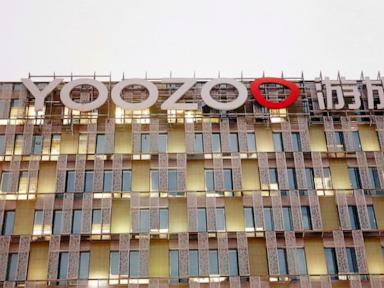
The ambition of Lin Qi was a heavy, physical presence in the offices of Yoozoo Games. He was 39 years old, a billionaire, and a man possessed by a singular obsession. He wanted to export Chinese culture to the entire globe, not through traditional porcelain or poetry, but through the sprawling, mind-bending canvas of sci-fi literature. He had bought the rights to The Three-Body Problem, Liu Cixin’s masterpiece about humanity’s first contact with an alien civilization. Lin didn't just want to make a television show. He wanted to build an empire.
In the high-stakes theater of corporate Shanghai, brilliance is often matched by ego. To realize his dream, Lin hired Xu Yao, a sharp, Western-educated lawyer with an impressive pedigree. Xu was given a massive salary and the mandate to head a subsidiary called The Three-Body Universe, tasked with managing the precious intellectual property.
For a moment, they were a formidable duo. The billionaire with the vision and the lawyer with the contract.
But corporations are fragile ecosystems. When billions of dollars and global prestige are on the line, the human heart often degrades under the pressure. It begins with a shifted glance in a boardroom. It escalates through a bypassed promotion.
Within a few years, the relationship between the two men soured. Lin, dissatisfied with Xu’s performance, began to sideline him. He stripped Xu of his executive duties. He cut his pay. He handed the prized projects to other executives. In the brutal meritocracy of tech and entertainment, Xu was being erased.
Most people update their resumes when they are pushed out. They rage-quit. They sue.
Xu Yao built a laboratory.
The Laboratory in the Suburbs
To understand what happened next, you have to look past the stock prices and the Netflix press releases. You have to look into a rented space in Shanghai’s remote Qingpu district. This was not an office. It was a makeshift chemical weapons factory.
Xu was not a desperate man acting on a sudden impulse. He was meticulous. He was obsessive. Over months, he invested modern capital into an ancient, terrifying art. Reports from the investigation revealed that he purchased over a hundred toxic chemicals off the dark web. He tested them. Not on spreadsheets, but on small animals. Dogs. Cats. He watched them die in the confines of his hidden room to find the perfect, agonizing cocktail.
Think of the sheer psychological detachment required to leave a corporate meeting, drive to a secret lab, and methodically drop lethal agents into food, tracking the exact dosage required to stop a heart. It is a level of malice that feels entirely divorced from the clean, glass-and-steel aesthetic of modern business.
He settled on a terrifying menu of poisons. Methylmercury. Arsenic. Tetrodotoxin—the deadly nerve agent found in pufferfish.
He didn't just want Lin Qi dead. He wanted to punish everyone he believed had wronged him.
A Bitter Cup of Tea
It is the winter of 2020. Netflix has just announced its massive adaptation of the book series, with the creators of Game of Thrones at the helm. Lin Qi is at the absolute peak of his worldly power. His name is about to be known by millions of viewers across the West.
Then came the ordinary moment that changed everything. A bottle of probiotics. A cup of tea.
Xu had managed to smuggle his concoctions into the office, disguising them as common health supplements. Lin drank them.
The human body is incredibly resilient, but against a cocktail of heavy metals and neurotoxins, it stands no chance. On December 16, Lin walked into a hospital. He was disoriented, in acute pain, but still conscious. Doctors initially thought he might recover. The human spirit fights hard. For nine days, the billionaire clung to life in an intensive care unit while police scrambled to understand what was melting his organs from the inside out.
On Christmas Day, the machinery of Lin Qi’s body finally failed. The billionaire was dead.
The panic within Yoozoo Games was immediate and total. But the poison had spread further than the CEO’s office. Four other employees had fallen mysteriously ill around the same time. They had drank contaminated water and tea in the office. They survived, but the toxins left their bodies permanently altered. Imagine going to work, grabbing a drink from the breakroom fridge, and ending up with chronic, life-altering poisoning because your colleague was fighting a turf war.
The corporate mask slipped entirely, revealing a gothic horror story hidden beneath the corporate synergy.
The Verdict in Shanghai
The wheels of justice in China move with a heavy, unyielding momentum. There are no dramatic American-style courtroom antics, no decades of endless appeals when the state decides a crime is an affront to public order.
Xu Yao thought he had designed the perfect, untraceable crime. He underestimated the digital footprint of the modern world and the determination of Shanghainese investigators. They found the lab. They tracked the shipments. They pieced together the corporate grudge that motivated the slaughter.
In March 2024, the Shanghai First Intermediate People’s Court handed down its judgment.
The court described Xu’s actions as "extremely malicious." They noted the premeditated nature of the crime, the cruelty of testing poisons on animals, and the collateral damage inflicted on innocent coworkers. The verdict was absolute.
Death.
Two years later, the sentence was carried out. The state executed Xu Yao.
The story closed in the most final way possible. Two brilliant, ambitious men in their late 30s and early 40s—men who had risen to the very top of one of the world's most competitive societies—were both gone. One buried in a cemetery, the other eliminated by a firing squad or a lethal injection.
The Ghost in the Credits
When the lights go down and the Netflix logo flashes on screens across the globe, the names roll by. The Three-Body Problem became a massive hit. It is a story about the grand scope of the universe, about civilizations destroying each other across light-years of space because they cannot trust one another's intentions.
If you look closely at the credits of the show, you will see Lin Qi listed posthumously as an executive producer.
It is a haunting irony. The book he loved so much argues that the universe is a "dark forest"—a silent, terrifying place where every civilization is a concealed hunter, and anyone who reveals their location will be instantly destroyed by predators waiting in the shadows.
Lin Qi thought he was conquering the global entertainment market. He didn't realize the most dangerous predator in the forest wasn't an alien armada or a foreign competitor.
It was sitting three doors down from him, quietly drafting legal contracts, and waiting for the kettle to boil.