Poland is quietly preparing for the unthinkable. You might think the war next door has settled into a predictable war of attrition, but Polish Prime Minister Donald Tusk just shattered that illusion. During a tense press conference in Warsaw, Tusk revealed that Western intelligence agencies are flashing red. The coming months are not just another phase of a long conflict. They are critical. They are dangerous.
People want to know if Russia is actually going to strike a NATO country. The short answer is yes, but probably not with a massive division of tanks rolling across the border. Instead, intelligence paints a picture of a sneaky, calculated series of provocations designed to see who blinks first.
The Intelligence Warning Shaking Warsaw
We are looking at a coordinated series of alerts from multiple intelligence agencies across the European Union and NATO. The United States recently handed Warsaw a specific, sobering warning. Moscow is actively planning an armed provocation on Polish soil.
Tusk was explicit about the timeline. He did not mince words. He noted that the changing nature of the war in Ukraine has accelerated Moscow's timeline for operations further west. The Baltic states feel this exact same dread. It is a shared anxiety along Europe's eastern edge.
Polish Foreign Minister Radosław Sikorski reminded everyone that the Kremlin relies on historical patterns. Before invading Ukraine, Russia tried to manufacture false-flag incidents to create a pretext for war. Dictatorships follow a predictable script. Warsaw knows the script, and they are refusing to be caught off guard.
Drone Attacks and Fake Incidents
What do these threatened provocations actually look like? Reports indicate that the scenarios range from annoying to catastrophic. We are talking about drone strikes targeting critical energy infrastructure. We are talking about GPS jamming that forces a civilian aircraft off course, which Russia can then claim as a regular technical failure.
The worst-case scenario involves a limited ground incursion. Unmarked troops or Belarusian forces could intentionally cross the Polish border. If caught, Moscow can easily dismiss it as an accidental navigation error. This is a classic resurrection of the little green men tactic used during the 2014 annexation of Crimea.
Consider the geography. Poland shares a long border with Belarus and a 210-kilometer border with Kaliningrad, Russia's heavily militarized Baltic exclave. Both spots are perfect staging grounds for a quick cross-border raid. Since Russian forces are heavily tied down in Ukraine, these low-cost, deniable operations are their best bet to create chaos.
Testing NATO While Washington Looks Away
The timing of this threat is not an accident. The Kremlin is looking directly at the shifting political winds in the West. With the current American administration reviewing its military presence in Europe, NATO looks slightly fractured. Russian planners see a window of opportunity.
If a Russian drone hits a Polish power plant and NATO responds with nothing but a strongly worded letter, the alliance is effectively dead. That is the ultimate goal. Vladimir Putin wants to prove that Article 5, the core promise that an attack on one is an attack on all, is a bluff.
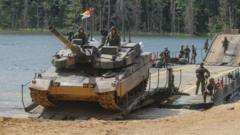
Poland is not waiting around to see if its allies will show up. Defense Minister Władysław Kosiniak-Kamysz confirmed that Poland is executing the largest rearmament program in its modern history. They are buying tanks, artillery, and air defense systems at a frantic pace. They are spending over 4% of their GDP on defense, outstripping almost every other member of the alliance.
What We Must Do Right Now
Panic is exactly what the Kremlin wants. Tusk explicitly told citizens to stay calm and avoid fear, but staying calm requires clear actions.
First, regional intelligence sharing must accelerate. Poland, Finland, and the Baltic states need a unified, instant response mechanism for hybrid threats. If a drone crosses the border, there cannot be a three-hour debate about whose jurisdiction it falls under.
Second, critical infrastructure needs physical and cyber hardening immediately. Energy grids and communication hubs are the primary targets for deniable Russian sabotage. Local governments must treat security as an active, daily defensive operation.
Finally, the public needs to understand the nature of hybrid warfare. If a weird border incident happens next week, don't believe the initial viral social media posts. Expect disinformation. Warsaw is bracing for a rough ride, and the rest of Europe needs to wake up to the reality on their doorstep.