The Silence of the Forest Floor
Venom is an executioner that needs no applause. In the damp undergrowth of the Asian forests, a single drop from a King Cobra or a Malayan pit viper is enough to liquefy flesh, shut down lungs, and end a life in minutes. It is a biological weapon refined by millions of years of brutal evolution. For almost every creature that crawls, slithers, or walks through these trees, a single bite means an irreversible countdown to zero.
Yet, something extraordinary moves through that exact same brush.
It does not flee. It hunts.
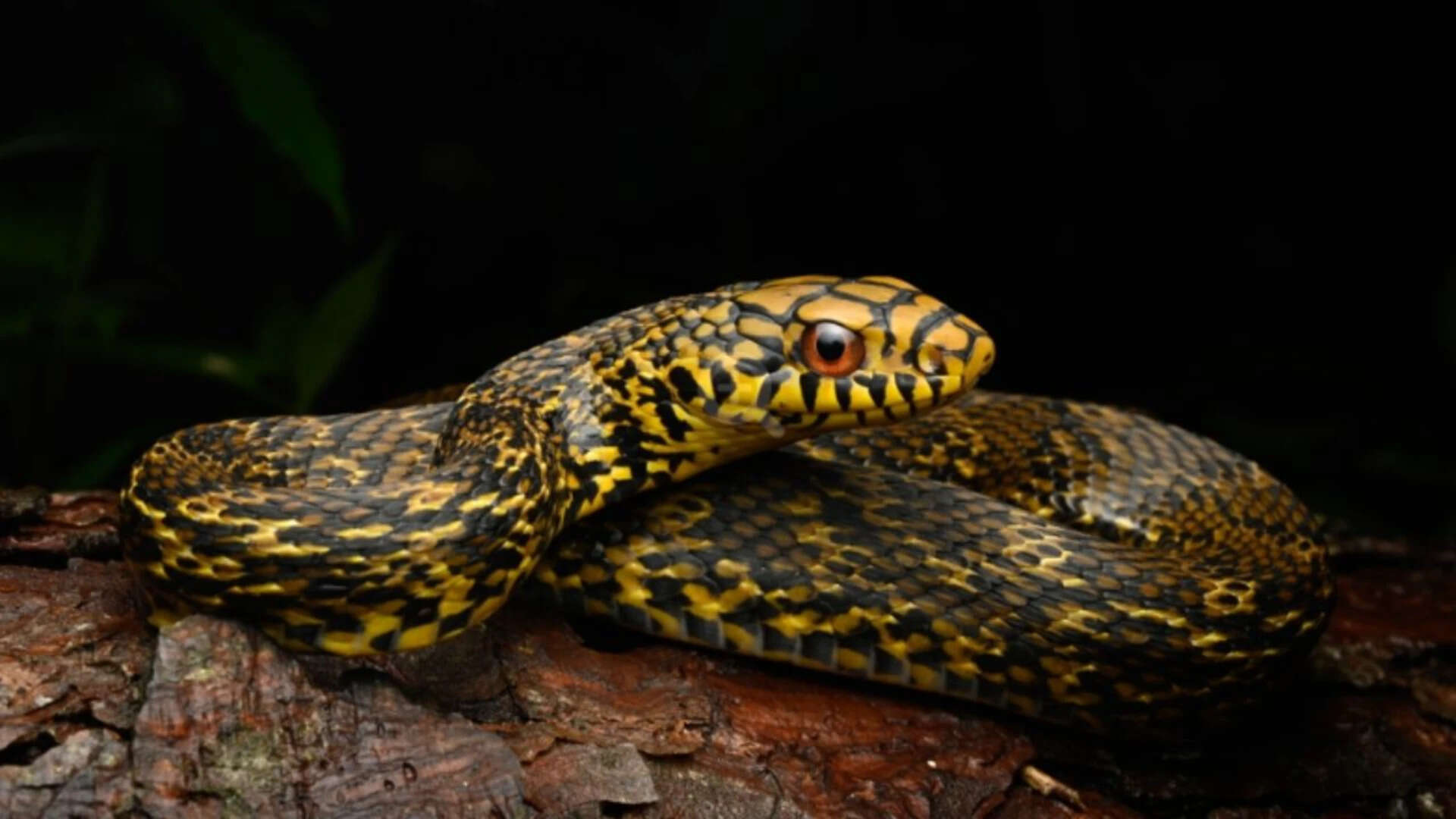
Meet the King Ratsnake. To look at it is to witness an ordinary-looking constrictor, long and slender, navigating the leaf litter with quiet intent. But this snake possesses an audacity that defies the rules of the wild. When it encounters the most lethal serpents on Earth, it does not hide. It strikes. It wraps its coils around creatures whose very breath carries death, sinking its teeth into scales that would cause agonizing necrosis in anything else.
How does it survive? For a long time, science had only guesses. The answer, recently unlocked through painstaking genetic mapping, rewrites what we thought we knew about the fragile truce between predator and prey.
Inside the Armor
Consider what happens when a venomous snake bites. Toxins flood the bloodstream, hunting specific molecular targets in the victim's body. They lock onto acetylcholine receptors in muscles, or they tear apart red blood cells with surgical cruelty. It is a lock-and-key mechanism. If the key fits your biological lock, you die.
For the King Ratsnake, the locks have been changed.
Researchers peering into the creature's genome discovered a masterclass in molecular defense. Evolution did not just give this snake a thick skin. It re-engineered its internal architecture. The neurotoxins and hemotoxins produced by vipers and cobras rely on precise docking sites to wreak havoc. Inside the King Ratsnake, those docking sites have mutated just enough to render incoming venom useless.
Imagine a key crafted to open a specific door, only to find that the tumbler inside has been swapped out for solid steel. The key slides in. It turns. Nothing happens.
That is the daily reality of the King Ratsnake. It eats venom like other animals eat grass. The lethal cocktails meant to paralyze and digest are neutralized before they can cause a single flicker of damage.
The Cost of Survival
Nothing in biology is free. Every adaptation carries a hidden price tag, a trade-off made in the unforgiving currency of survival.
Why aren't all snakes immune to venom? Because building resistance requires energy, genetic flexibility, and biological overhead. For most species, the evolutionary pressure simply isn't there. They avoid venomous snakes entirely, choosing to hunt rodents, frogs, or insects instead. They stay in their lane.
The King Ratsnake chose a different path. By unlocking the ability to prey on venomous snakes, it accessed an exclusive food source that few other predators could touch. But achieving this meant walking a genetic tightrope. One wrong mutation could have crippled its own nervous system or ruined its ability to process food.
Standing in a laboratory, looking at a computer screen scrolling through millions of base pairs, the reality sets in. This isn't just about snakes. It is a testament to the sheer stubbornness of life. When faced with an insurmountable wall of poison, evolution did not break. It adapted. It found a way through the barrier by rewriting the very code of existence.
The Broader Horizon
Look closer at what these genetic maps reveal. We are not just learning about a peculiar predator in a distant forest. We are staring at a blueprint.
Every time scientists decode how a resistance mechanism works in nature, a door opens in human medicine. The neurotoxins that paralyze muscle can sometimes be reverse-engineered to manage chronic pain. The hemotoxins that clot or thin blood offer clues for treating cardiovascular disease. By understanding how the King Ratsnake blocks these potent agents at the cellular level, researchers gain vital insights into how we might one day protect human cells from foreign toxins and neurological disorders.
The wild world remains the greatest pharmacy and laboratory ever built. We spend billions trying to synthesize molecules that can outsmart complex diseases, while a slender, non-venomous snake solved a similar puzzle millions of years ago through pure, relentless adaptation.
The forest floor is never truly quiet. Beneath the rustle of leaves and the hum of insects, a silent, ceaseless war of chemistry plays out every single day. And in the middle of it all, the King Ratsnake glides forward, carrying within its blood the quiet confidence of a creature that looked death in the eye, and changed the locks.