The glare of a television studio light does something strange to human skin. It strips away the nuance, leaving only sharp angles and flat surfaces. For years, the public viewed Hunter Biden through that exact lens—a caricature of a man, flattened into a political punchline, a weaponized symbol of familial weakness.
Then came the podcast microphone.
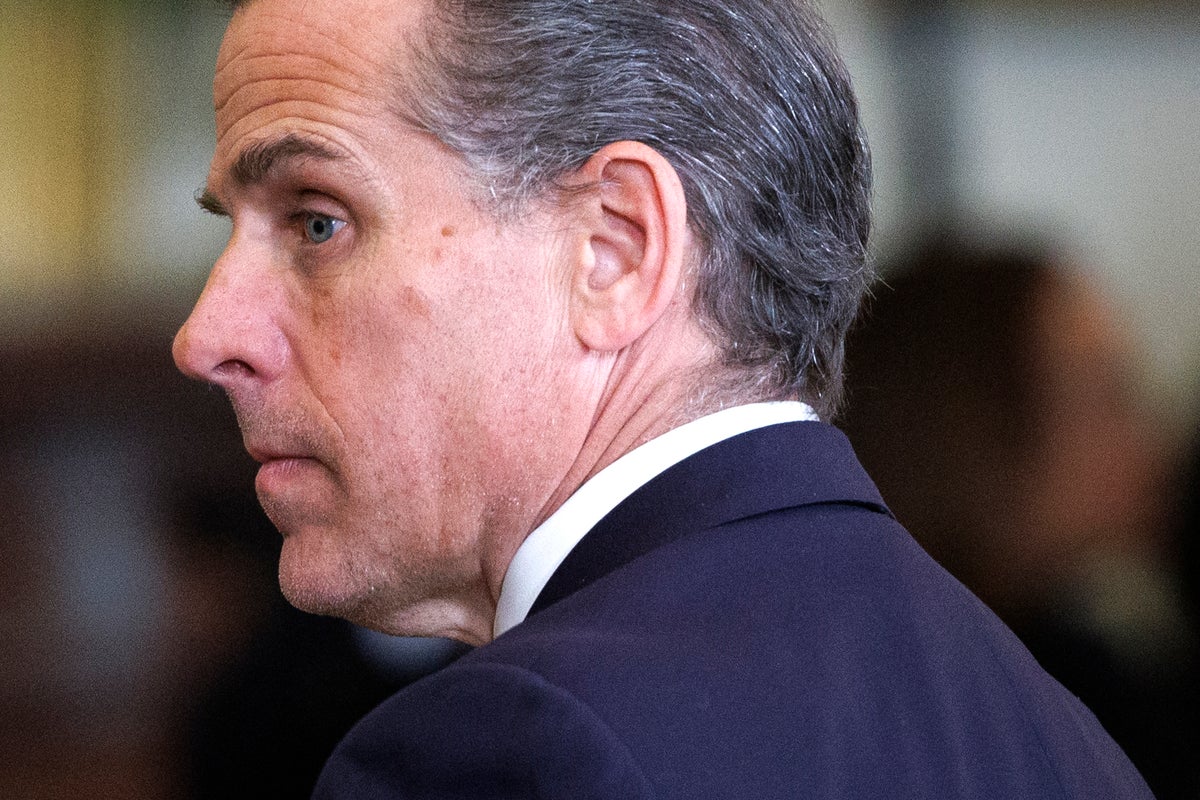
When the President's son sat down with musician Moby for an interview, the atmosphere shifted from the sterile courtroom of public opinion to something raw and deeply uncomfortable. The conversation drifted to July 2023. A small bag of cocaine had been discovered in a cubby near the White House’s West Executive entrance. The media went into a feeding frenzy. Late-night hosts sharpened their knives. Political opponents practically danced. The immediate, unspoken consensus across half the country was obvious: It had to be Hunter.
But sitting in that studio, Hunter didn’t offer a tearful confession or a defensive political pivot. He laughed. It was a sharp, dark sound born of a very specific kind of survival.
"I would never have forgotten my drugs," he said.
To the casual observer, it sounded like a reckless joke, a piece of dark humor whispered in the halls of rehab centers but forbidden in polite society. But to anyone who understands the brutal, meticulous reality of active addiction, it was a statement of absolute truth. It was an admission of a dark expertise. Addiction is many things—destructive, isolating, agonizing—but for the person trapped inside it, it is rarely careless about the supply.
This is the story of what happens when a man’s private demons become public property, and why the world got the White House cocaine mystery completely backward.
The Chemistry of Suspicion
Consider the geometry of the White House. It is not just a home; it is a fortress, a museum, and a bureaucratic machine. The West Executive entrance is a high-traffic artery. Hundreds of people pass through it daily: staff members, tour groups, military officials, and external contractors.
Yet, the moment the Secret Service announced the discovery of that small plastic bag, the vast web of daily White House visitors vanished from the public imagination. The collective gaze focused entirely on one man.
We love a predictable narrative. Human brains are wired to recognize patterns, and when we can't find one, we invent it. Hunter Biden had spent years under the microscope for his public battles with crack cocaine addiction. He had written a brutally honest memoir about it. He had been photographed in his darkest moments. Therefore, by the flawed logic of public scandal, any stray chemical substance within a five-mile radius of the Oval Office belonged to him.
But active addiction operates on a hyper-vigilant wavelength.
Speak to anyone who has clawed their way back from the edge of substance abuse, and they will tell you about the invisible inventory. You always know exactly what you have. You know where it is down to the milligram. You know how much time you have left before the panic sets in. The idea of carelessly dropping a stash in a highly secure, heavily guarded government cubby and simply walking away doesn't align with the desperate, calculated psychology of dependency.
The Secret Service eventually closed its investigation, citing a lack of physical evidence. No DNA. No usable fingerprints. The security footage yielded no definitive leads among the hundreds who had passed through that corridor. The official conclusion was a blank space.
Yet, the public had already written its own verdict.
The Weight of the Name
Imagine carrying a surname that doubles as a national lightning rod. Every mistake you make is no longer just a personal failing; it is a geopolitical event.
During the interview, Hunter spoke about the surreal experience of watching his private agony used as a proxy war. It wasn't just about the cocaine in the West Wing. It was about the relentless, daily commodification of his trauma. When a regular citizen relapses, it is a tragedy discussed in hushed tones over kitchen tables. When the President's son struggles, it becomes a fundraising email.
There is a profound isolation in that kind of visibility.
The political machinery thrived on making him the ultimate distraction. If the public was looking at Hunter’s past, they weren't looking at policy, or inflation, or foreign affairs. He became a human shield in reverse—a target painted on a son to hit the father.
But the dark humor he displayed in that interview reveals a strange kind of liberation. When you have already been stripped naked in the public square, when your worst moments have been displayed on billboards and debated on cable news, the power of the bully begins to wane. You stop trying to convince people who are committed to misunderstanding you. You start speaking the truth, even if it sounds ugly.
The Invisible Stakes of Recovery
The real danger of the political circus surrounding Hunter Biden isn't the damage done to a single political dynasty. The stakes are far higher, and far closer to home for millions of ordinary families.
According to national health statistics, tens of millions of Americans struggle with substance use disorders. It is a quiet crisis playing out in suburban basements, corporate boardrooms, and rural towns. And the loudest message sent by the obsession with Hunter’s past is a terrifying one: No matter how hard you work to get clean, you will always be defined by your worst day.
Shame is the oxygen of addiction. It thrives in secrecy. It tells the user that they are fundamentally broken, that recovery is an illusion, and that the world will never let them forget who they used to be.
When the media uses a public figure’s history of addiction as a cudgel to score cheap political points, it reinforces that shame for everyone watching at home. It tells the parent of a struggling teenager, or the executive secretly drinking before meetings, that seeking help is a liability. It turns a medical condition into a permanent moral stain.
Hunter’s refusal to play the victim during that podcast appearance was a rejection of that narrative. By pointing out the absurdity of the accusations against him with a piece of grim addict-logic, he took the weapon out of his critics' hands. He owned his past, its terrible math, and its grim realities, refusing to let it be weaponized by people who didn't understand it.
Beyond the Noise
The news cycle has long since moved on from the baggie in the West Wing. New scandals have emerged, new headlines have taken over the tickers, and the digital outrage machine has found fresh meat.
But the image of that studio interview remains.
It stands as a stark reminder of the massive gulf between political theater and human reality. On one side, you have the choreography of Washington—the press briefings, the carefully worded denials, the frantic spin rooms. On the other side, you have a man who looked into the abyss, survived it, and now looks back at the world’s judgment with a weary, knowing smile.
We may never know whose carelessness triggered that particular media firestorm in the summer of 2023. But we do know who paid the price for it in the court of public opinion.
In a culture that demands perfect victims and flawless redemption arcs, there is something quietly defiant about an imperfect survivor. Hunter Biden didn't ask to be the avatar for America's cultural wars, but by refusing to cower under the weight of an absurd accusation, he reminded us of a simple, uncomfortable truth.
Sometimes, the stories we are most eager to believe say far less about the accused than they do about our own desperate need for a villain.