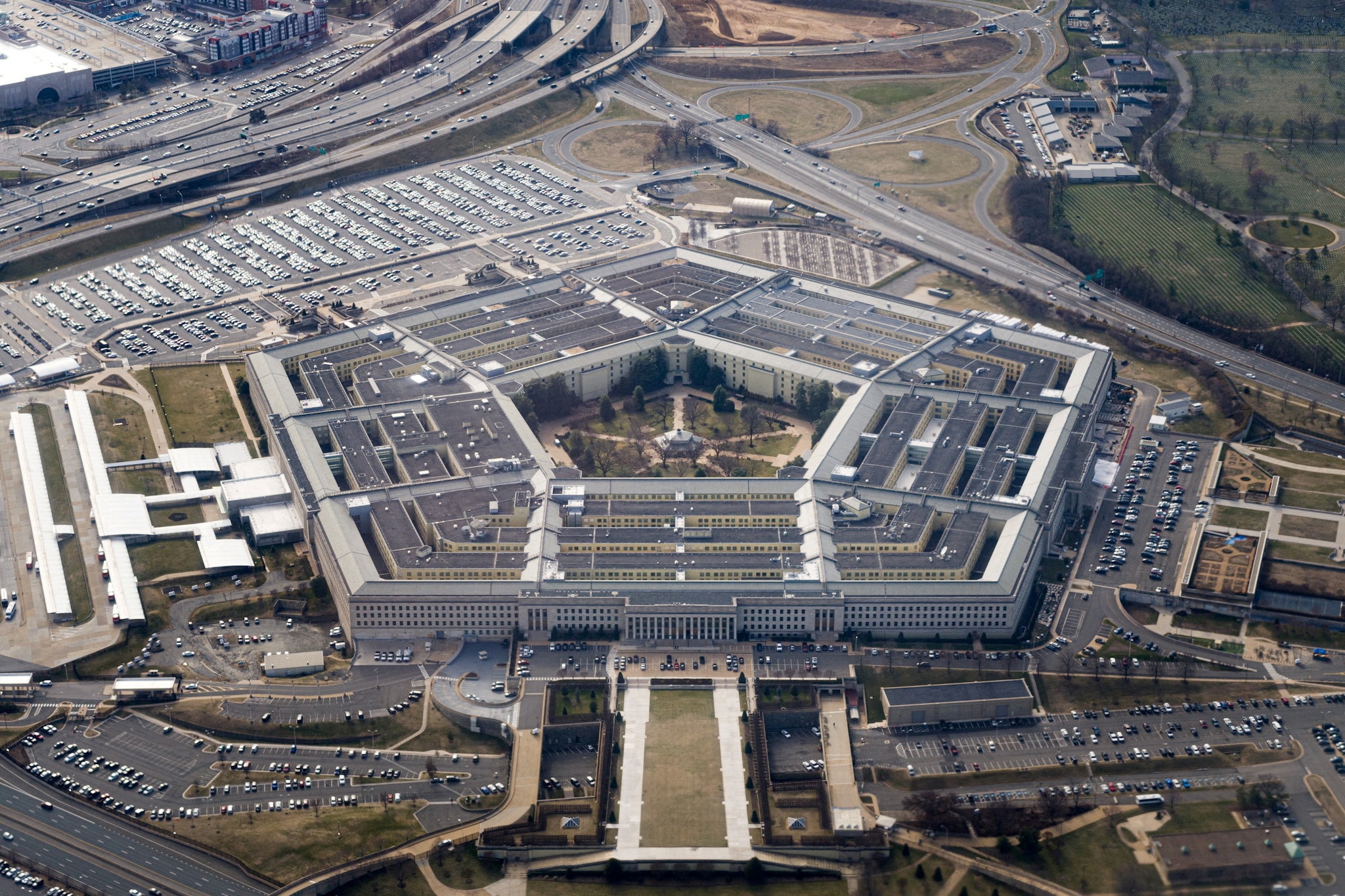
A stack of paper sits on a mahogany desk in Arlington, Virginia. It weighs exactly as much as any other stack of paper, but its density is measured in something other than grams. It is measured in the potential for a sky to turn a bruised, metallic purple. This is the Pentagon’s latest budget request: a staggering $200 billion earmarked specifically for the contingency of a war with Iran.
Two hundred billion dollars.
To a human mind, that number is a ghost. It is too large to see, too vast to hold. We tend to blink and move on, filed under "defense spending" or "geopolitics." But if you want to understand what $200 billion actually is, don't look at the spreadsheets. Look at a young logistics officer named Elias.
Elias is hypothetical, but his reality is repeated in every basement office and command center across the Potomac. He spends his Tuesday mornings calculating "attrition cycles." He isn't thinking about the grand strategy of the Middle East or the nuances of nuclear non-proliferation. He is thinking about tires. He is thinking about how many rubber tires a fleet of transport trucks will burn through in the high-heat, abrasive sand of the Iranian plateau. He is thinking about the caloric intake required for a soldier to maintain focus when the ambient temperature is 115 degrees.
When the Pentagon asks for $200 billion, they are buying Elias’s tires. They are buying the fuel for tankers that haven't been built yet. They are buying the silent, underwater persistence of submarines that will sit in the Strait of Hormuz, waiting for a signal that everyone hopes never comes. This isn't just a "report" or a "figure." It is the architectural blueprint for a catastrophe.
The Anatomy of an Invisible Invoice
The $200 billion figure didn't materialize from thin air. It is the result of cold, hard math applied to the most volatile region on earth. Unlike the insurgencies of the last two decades, a conflict with Iran wouldn't be a lopsided affair of drones versus hidden IEDs. It would be a collision of civilizations.
Iran is a fortress. Its geography is its primary weapon—a jagged, mountainous interior shielded by a coastline that acts like a jagged tooth. To even begin a campaign there, the United States must prepare for "Anti-Access/Area Denial." In plain English: Iran has spent thirty years building "cities" of missiles buried deep underground. They have thousands of fast-attack boats designed to swarm like hornets.
To counter a hornet, you don't just need a flyswatter. You need an entire ecosystem of defense.
The $200 billion covers the "Pre-Positioning of Materiel." This is the quiet part of the story. It involves moving millions of tons of equipment to bases in Qatar, Kuwait, and the UAE. It involves upgrading runways so they can handle the weight of B-21 Raiders. It involves the cyber-infrastructure needed to shut down a nation's power grid before a single boot touches the sand.
Consider the cost of a single Tomahawk cruise missile. It sits at roughly $2 million. In the first twenty-four hours of a full-scale conflict, the U.S. might launch five hundred of them. That is $1 billion gone before the sun sets on day one. When you multiply that by the weeks, months, or years a sustained conflict would require, the $200 billion starts to look less like a surplus and more like a down payment.
The Ghost in the Machine
Behind the hardware lies the software of human misery. There is an emotional tax to this budget that no CBO report will ever capture.
Imagine a mother in Isfahan. She is a teacher. She worries about the price of bread and her daughter’s upcoming exams. She has never met Elias. She has never seen the mahogany desk in Arlington. But the $200 billion budget determines whether her neighborhood becomes a "strategic waypoint" on a digital map.
War is often discussed as a series of movements—flanks, pincer maneuvers, and sorties. This language is a mask. It hides the fact that war is actually the systematic dismantling of a functioning society. When we talk about "crippling the Iranian military infrastructure," we are talking about destroying the bridges people use to get to work. We are talking about hitting the refineries that provide the heating oil for the elderly in winter.
The Pentagon’s request acknowledges this reality without saying it. The budget includes massive allocations for "medevac" and "reconstruction contingencies." They are planning for the wounded before they have even been hit. They are budgeting for the rubble before the buildings have fallen.
The Opportunity Cost of the Horizon
Every dollar has a shadow.
When a society decides to put $200 billion into the possibility of fire, it is simultaneously deciding not to put that money somewhere else. This is the "Opportunity Cost," a sterile economic term for a heartbreaking reality.
For $200 billion, we could modernize every failing electrical grid in the American Midwest. We could fund the eradication of three major pediatric diseases. We could build a high-speed rail system that connects the coastlines. Instead, the money is funneled into the "Just-In-Case."
It is the ultimate insurance policy, but the premiums are paid in the currency of our future. We are hedging against a nightmare by sacrificing the dream of what that capital could have built.
The logic of the Pentagon is simple: "Si vis pacem, para bellum." If you want peace, prepare for war. They argue that by showing Iran a $200 billion fist, the fist will never have to swing. Deterrence is the goal. They want the Iranian leadership to look at the sheer scale of the American war chest and decide that the cost of defiance is too high.
But history is a messy witness. Deterrence often looks like a challenge. One nation’s "defensive preparation" is another nation’s "existential threat." When the U.S. builds a $200 billion war machine, Iran doesn't simply shrug and go home. They dig their missiles deeper. They tighten their grip on the Strait of Hormuz. They seek their own $200 billion—or its equivalent in asymmetric desperation.
The Rhythm of the Escalation
The news cycle moves fast. Tomorrow, there will be a new scandal, a new sports score, a new viral video. The $200 billion report will drift to the bottom of the feed.
But the money will start to move.
Slowly, at first. A contract for more jet fuel. A purchase order for advanced radar arrays. Then, the movement of people. Thousands of young men and women, like Elias, will find their lives redirected by the gravity of this budget. They will be sent to the desert. They will sit in the heat. They will wait for the paper stack on the mahogany desk to turn into a reality of smoke and steel.
The real tragedy of the $200 billion isn't that it exists. The tragedy is that we have reached a point where it feels necessary. We have built a world where the most effective way to prevent a fire is to pour $200 billion worth of gasoline around our own house and hold a lighter, hoping the other side is intimidated by the fumes.
We are all living in the shadow of that stack of paper. Whether we live in a suburb in Ohio or a crowded street in Tehran, our futures are being bartered in a currency of "worst-case scenarios."
The horizon is currently clear. The sun is setting. But the budget is ready. The engines are idling. The tires are bought and paid for. All that remains is the wait—and the hope that the $200 billion remains nothing more than a very expensive, very heavy stack of paper that never has to be read aloud.
Somewhere, in a darkened room, a computer screen flickers with a simulation of the Persian Gulf. A cursor moves across the water. A digital ship is sunk. A digital city goes dark. The simulation ends, and the cost is calculated down to the cent.
It fits perfectly within the budget.
Would you like me to analyze the specific breakdown of where this $200 billion is being allocated across different military branches?