Flip a switch. The kitchen floods with light. The refrigerator hums. The coffee maker begins its morning drip. For most of us, this is a mindless interaction with the modern world, a baseline assumption of civilized life. We pay the monthly utility bill, grumble at the rising cost per kilowatt-hour, and move on with our day. We assume the transaction is simple. We pay for the power, and the power company provides it.
But in Ohio, that flip of a switch connected millions of citizens to a vast, invisible web of greed that reached from suburban living rooms all the way to the highest corridors of state power.
Money has a sound. In the halls of the Ohio Statehouse, it didn’t sound like rustling green paper. It sounded like the sharp click of a expensive leather shoes on marble floors, the murmur of men in tailored suits whispering in the alcoves of committee rooms, and the heavy thud of a judge’s gavel. For years, a quiet rot grew at the intersection of public utility and private avarice. When the veil was finally ripped away, it revealed a $60 million betrayal of the public trust, a corporate heist disguised as energy policy.
The fallout of that betrayal is still raining down.
The Architects of the Dark
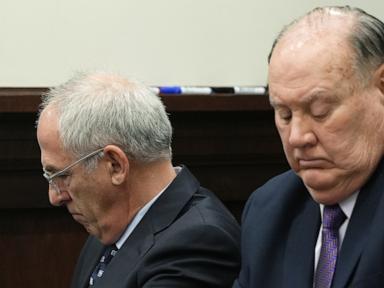
To understand how a community loses its grip on accountability, you have to look at the people who hold the keys to the grid. In early 2026, a grand jury issued a fresh set of state criminal charges against the men who once sat at the absolute apex of Ohio’s energy sector. Charles Jones, the former chief executive of FirstEnergy Corp., and Michael Dowling, a former top vice president, found themselves under the microscope once again.
They were not alone in the shadows. The state reindictment tied them directly to Sam Randazzo, the former chairman of the Public Utilities Commission of Ohio—the very man tasked with protecting consumers from corporate predation. Randazzo, facing a mountain of state and federal charges, took his own life just months before this latest legal chapter unfolded, leaving behind a legacy fractured by scandal and a tragic exclamation point on a narrative of absolute ruin.
Consider the profound irony of the mechanism at play here. A public utilities commission is supposed to be a firewall. It exists to ensure that monopoly corporations do not bleed the working class dry. Instead, prosecutors allege that the firewall became a funnel.
Imagine a neighborhood watch captain who takes a monthly briefcase of cash from the local burglars to look the other way while they clean out the basements on Elm Street. That is the essence of what occurred. Only the neighborhood was an entire state, and the cash totaled $60 million.
The state’s case paints a picture of corporate executives who viewed the democratic process not as a system of laws, but as a vending machine. You put the money in, you get the legislation you want out. The prize they sought was House Bill 6, a piece of legislation that became notorious as the worst, most corrupt energy bailout in American history.
The $1.3 Billion Ghost
House Bill 6 was a masterpiece of political engineering. Passed in 2019, its official surface-level goal sounded noble enough to the casual observer: it aimed to protect clean energy and preserve jobs by bailing out two struggling nuclear power plants owned by a FirstEnergy subsidiary.
But legislation is rarely about what is written on the cover page.
Deep within the guts of the bill was a provision that guaranteed FirstEnergy a steady, recession-proof stream of revenue, subsidized directly by the citizens of Ohio. It was a $1.3 billion bailout. Every time a grandmother turned on her space heater in the dead of an Ohio winter, a fraction of her fixed income was diverted to prop up a corporate balance sheet that had been mangled by bad business decisions.
The mechanism was simple, almost elegant in its cruelty. The company couldn't lose. If the weather was too warm and people used less power, the state would allow FirstEnergy to charge customers more to make up the difference. It was a decoupling mechanism that stripped away the fundamental rule of capitalism: risk. The corporation kept the profits; the public absorbed the losses.
But how do you get a democracy to pass a law that openly robs its own citizens?
You buy the speaker of the house.
Larry Householder was a towering figure in Ohio politics, a man who possessed an uncanny ability to read the room and manipulate the levers of legislative power. To the public, he was a champion of the regular guy. In reality, prosecutors proved he was the linchpin of a massive racketeering enterprise. FirstEnergy funneled tens of millions of dollars into a dark-money nonprofit controlled by Householder. That money was used to elect a slate of loyal politicians who would secure Householder’s grip on the speaker's gavel. Once he held the gavel, he delivered the bailout.
The scheme worked perfectly. Until the federal government walked through the door.
Householder is currently serving a 20-year prison sentence in a federal penitentiary. The corporate entity itself, FirstEnergy, signed a deferred prosecution agreement and agreed to pay a $230 million penalty, admitting to its role in the bribery plot. Yet, for the people who lived through it, that massive fine felt abstract. It was a corporate line item, a cost of doing business paid out of a mountain of cash that had already been extracted from the public. The real question remained: what about the men who made the calls?
The Shell Game of Accountability
The criminal justice system often looks like a slow-motion film where the ending is written in vanishing ink. The federal government took its pound of flesh from Householder and a handful of lobbyists. But Charles Jones and Michael Dowling managed to avoid federal criminal charges, maintaining their innocence and corporate exits with multi-million-dollar golden parachutes.
For a long time, it seemed like the men at the very top of the corporate ladder would watch the smoke clear from a safe distance.
Then the state of Ohio stepped in.
The reindictments issued by state prosecutors represent a refusal to let the narrative die. The new charges—ranging from corruption and telecommunications fraud to grand theft—are an attempt to answer a question that plagues the American psyche: can a corporate executive face the same cold steel of handcuffs as a man who robs a convenience store?
The legal maneuvering in this case is a masterclass in institutional friction. The defendants argue that the state charges constitute double jeopardy, an unfair second bite at the apple after the federal investigation concluded. The state counters that these are distinct violations of Ohio law, separate crimes against the citizens of the state that the federal government chose not to pursue.
This isn't just a technical legal debate. It is a battle over the definition of justice.
When a corporation bribes a politician, the victim isn't a rival business. The victim is the concept of a fair society. Every time an Ohioan opened their utility bill and saw an extra charge, they were paying a tax imposed by criminals. The state's prosecution is an effort to re-establish a boundary that had been entirely obliterated: the idea that public office and public utilities are not commodities for sale to the highest corporate bidder.
The Living Cost of Cold Facts
It is easy to get lost in the numbers. Sixty million dollars in bribes. One.three billion dollars in bailouts. Two hundred and thirty million dollars in fines. Twenty years in prison. The human brain isn't wired to feel the weight of these figures; they read like telephone numbers or distances between distant stars.
To feel the reality of this corruption, you have to leave the courtroom and the corporate boardrooms behind. You have to travel to the rust belt towns along Lake Erie, to the Appalachian foothills of southeastern Ohio, where the economy has been bleeding for decades.
In these neighborhoods, five dollars isn't an insignificant amount of change left in a cup holder. It is a gallon of milk. It is a pack of diapers. It is the difference between keeping the thermostat at sixty-five degrees or dropping it to fifty-eight and putting on another sweater.
During the years this conspiracy was active, thousands of families across Ohio were forced to make those exact choices. They cut back on groceries. They skipped medications. They worked extra shifts. And all the while, a portion of every hard-earned dollar they scraped together was being harvested to fund a luxurious lifestyle for executives and to line the pockets of politicians who gave speeches about family values.
The true cost of corruption is never financial. The true cost is the death of belief.
When a citizen realizes that the rules are rigged, that the regulators are in bed with the regulated, and that the laws of the land can be bought like a premium television package, something vital breaks within the community. Cynicism settles in like a heavy, toxic smog. People stop voting. They stop participating. They accept the idea that the powerful will always steal, and the powerless will always pay.
That cynicism is the ultimate victory for men like those indicted in Ohio. It ensures that no one looks too closely at the next bill, the next piece of legislation, or the next closed-door meeting.
The reindictments of the ex-FirstEnergy executives are a fragile, necessary antidote to that cynicism. They serve as a stark reminder that the paper trail doesn't disappear just because a corporate titan retires to a golf community. The wheels of justice may turn with an agonizing, infuriating slowness, but they are still capable of grinding down even the most fortified executive suites.
The trial ahead will not be short, and it will not be simple. High-priced defense attorneys will dissect every line of the indictment, looking for the procedural loophole or the semantic ambiguity that can rescue their clients from a cell. There will be motions, delays, and appeals that stretch across the calendar.
But the fundamental truth of the case has already been laid bare for anyone willing to look. The electricity that powers our lives is a shared resource, a common good managed by human hands. When those hands grow greedy, the system darkens long before the lights go out.
The kitchen light still turns on every morning. The refrigerator still hums. But the bill has finally come due for the people who thought they owned the switch.