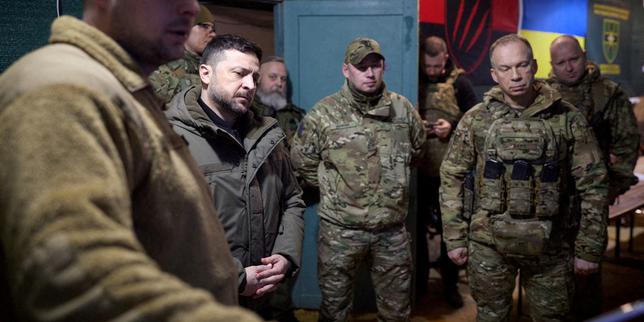
Volodymyr Zelenskyy is taking a victory lap over the smoke rising from Primorsk. The mainstream press is dutifully transcribing the narrative: Ukraine has finally hit Russia where it hurts—the oil veins. It looks like a strategic masterstroke on paper. If you choke the export of 30% of Russia’s seaborne crude, the war machine grinds to a halt, right?
Wrong. Discover more on a related topic: this related article.
This isn't a checkmate. It's a dangerous provocation that ignores the brutal physics of global energy markets and the cold reality of "shadow fleets." While the headlines scream about crippled infrastructure, the actual data suggests we are watching a performance that might end up bankrupting the West's remaining political will long before it empties Putin’s coffers.
The Myth of the Surgical Strike
The lazy consensus suggests that hitting a port like Primorsk is like cutting a wire to a lightbulb. You flip the switch, and the power goes out. In the real world, the global oil market is a hydra. When you cut off one head, two more sprout in the form of ship-to-ship transfers, dark-flagged tankers, and rerouted pipelines that the West simply chooses to ignore to keep gas prices from hitting $7 a gallon at the pump. Additional journalism by Al Jazeera highlights related perspectives on this issue.
Primorsk isn't just a Russian asset; it’s a global pressure valve. By targeting it, Ukraine isn't just fighting Russia. It is effectively "shorting" the global economy.
I have watched analysts for two years predict the imminent collapse of the Russian economy based on "crippling" sanctions. Every time, they forget that a barrel of oil doesn't have a soul or a flag. It follows the path of least resistance. When Ukraine hits the Baltic terminals, they don't stop the flow; they just increase the "risk premium." Who pays that premium? Not the Kremlin. They just pass the cost down the line to the intermediaries in India and China, who then sell the refined product back to—you guessed it—Europe.
The Shadow Fleet Factor
The media loves the image of a burning terminal. It's cinematic. It’s easy to understand. What they won't tell you is that Russia has spent the last 24 months building a "shadow fleet" of aging, uninsured tankers that operate entirely outside Western jurisdiction.
- Logic Check: If you damage the fixed infrastructure of a port, you don't stop the oil. You force the oil onto smaller, more dangerous vessels that load offshore.
- The Result: You increase the chance of a catastrophic oil spill in the Baltic Sea that would devastate NATO coastlines, while the crude still finds its way to market.
Zelenskyy’s celebration assumes that the physical destruction of a pier equals the financial destruction of a regime. It doesn't. Russia is currently moving roughly 3.5 million barrels of crude per day. A drone strike on a loading arm at Primorsk might delay a few tankers for 72 hours. In the world of commodity trading, that’s a "Tuesday." It’s not a defeat.
Why the White House is Quietly Panicking
While Kyiv celebrates, Washington is holding its breath. Why? Because the Biden administration knows something the average Twitter commentator doesn't: the global economy is balanced on a knife's edge.
If Ukraine successfully shuts down Primorsk for a month, Brent crude doesn't just go up a few dollars. It spikes. And when it spikes, the inflation that Western central banks have been desperately trying to curb comes roaring back. This creates a political paradox. The more "successful" Ukraine is at destroying Russian energy infrastructure, the more likely they are to trigger a recession in the very countries providing them with the HIMARS and Storm Shadows they need to survive.
It’s a classic case of tactical success leading to strategic suicide.
The "Vital Export" Lie
The competitor article calls Primorsk "vital." This is a fundamental misunderstanding of Russian geography. Is it important? Yes. Is it an Achilles' heel? Hardly.
Russia’s energy grid is the most redundant system on the planet, built during the Cold War to survive a nuclear exchange. They have the Druzhba pipeline. They have the Power of Siberia. They have the Novorossiysk terminal in the Black Sea (which, despite being in a war zone, is still pumping).
Targeting Primorsk is an attempt to fight a 21st-century economic war with 20th-century kinetic thinking. You cannot "bomb" your way out of a commodity-based surplus. To truly hurt Russia's oil revenue, you don't hit the port; you hit the demand. But the West can't hit the demand because the West is the demand, albeit through three layers of middle-men in Dubai and Singapore.
The Real Winner Isn't Kyiv
If Primorsk goes offline, the winner isn't the Ukrainian infantry in the Donbas. The winner is the oil trader in Geneva.
When you introduce volatility into a fixed supply chain, you create a windfall for the "gray market" players. These are the companies that own the 20-year-old rust-bucket tankers. They love these strikes. Every drone that hits a Russian port increases the "freight rate" for their ships.
Imagine a scenario where the destruction of Russian infrastructure actually makes the Russian oil trade more profitable for the people running it because the scarcity drives the price higher than the cost of the damage. This isn't a thought experiment; it’s exactly what happened in the wake of the initial 2022 sanctions.
Stop Asking if the Strike Worked
The question "did the strike hit the target?" is the wrong question. Of course it hit. Ukraine has proven they can fly drones past Russian air defenses with embarrassing ease.
The real question is: "Does this strike change the math of the war?"
The answer is a resounding no. Putin doesn't care about a burning oil tank. He cares about the balance sheet of his internal security forces. As long as he can sell oil to the "Global South," his internal economy remains insulated from these pinprick attacks.
Ukraine is trying to force an economic collapse through kinetic means. It is a desperate move by a country that knows its conventional military options are narrowing. But by attacking the global energy supply, they are testing the patience of their allies more than they are testing the resilience of their enemy.
The Actionable Truth
If you want to understand the war, stop looking at the fireballs and start looking at the "Urals-Brent spread."
When the gap between Russian crude (Urals) and global crude (Brent) widens, Russia loses. When it narrows, Russia wins. Ironically, physical attacks on ports often narrow the spread because they create global supply fears that lift the price of all oil, including Russia's.
Zelenskyy is playing to the cameras. Putin is playing to the markets. And the markets don't care about "vital ports" as much as they care about the total volume of atoms moving from East to West.
Ukraine's strategy at Primorsk isn't a new front in the war. It's a high-stakes gamble that assumes the West will choose Ukrainian victory over cheap gas. Historically, that is a losing bet.
You don't win a war of attrition by making your own patrons' lives more expensive. You win by making the enemy's existence impossible. A few charred tanks in a Baltic port doesn't make Russia's existence impossible; it just makes it more expensive for everyone else.
The celebration is premature. The smoke at Primorsk isn't the smell of victory. It's the smell of a global energy crisis being used as a PR stunt.
Stop cheering for the explosions and start wondering why the price of the war is being shifted onto your own shoulders.