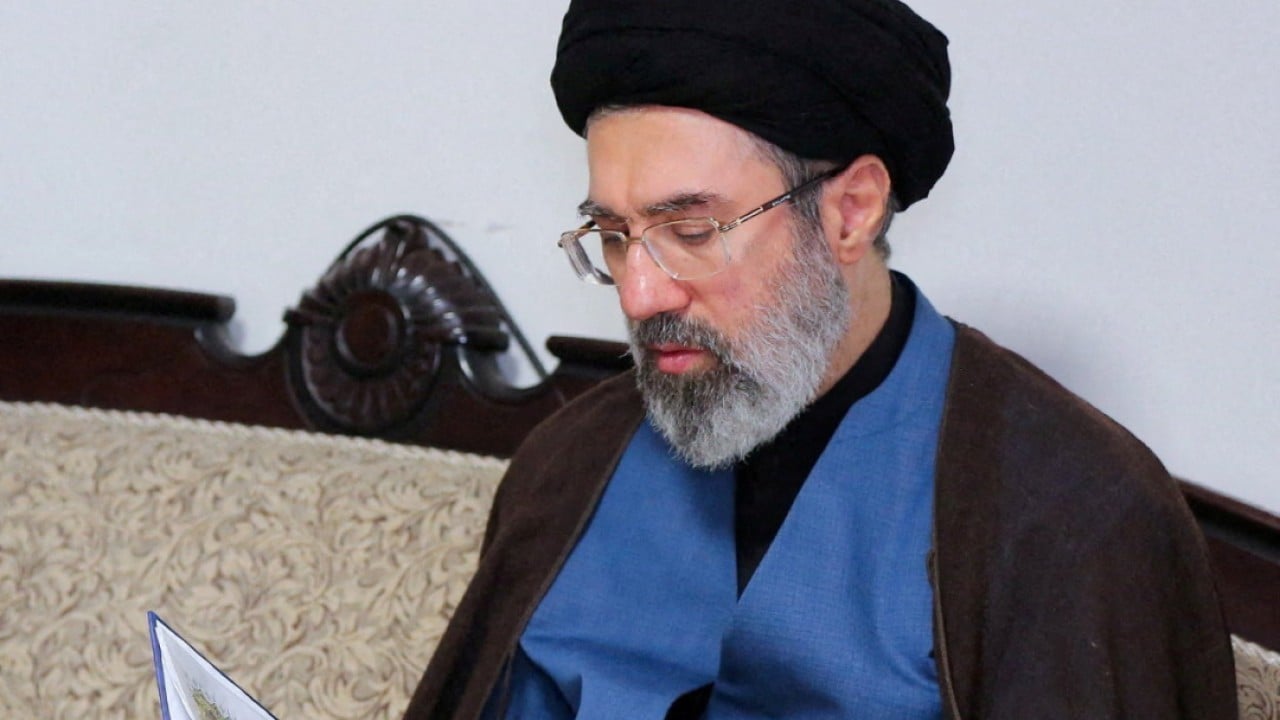
The vacuum at the center of the Islamic Republic has been filled by the one man who spent three decades making sure it was built specifically for him. On March 8, 2026, the Assembly of Experts officially named Mojtaba Khamenei as the third Supreme Leader of Iran, succeeding his father, Ali Khamenei, who was killed in a massive U.S.-Israeli air strike just days prior. The elevation of the 56-year-old cleric is not merely a change in personnel; it is the death of the 1979 Revolution’s founding myth. By installing the son to replace the father, the regime has shed its skin as a revolutionary republic and emerged as a hereditary Shia monarchy, albeit one draped in the robes of a mid-level cleric.
The Architect of His Own Succession
For years, Mojtaba was a ghost in the machine. He held no elected office, delivered no public sermons, and avoided the ceremonial ribbon-cutting that defines the public lives of the Iranian elite. Yet, those who have spent decades tracking the internal plumbing of the Office of the Supreme Leader (the Beit-e Rahbari) knew better. Mojtaba wasn't just a son; he was the gatekeeper.
He managed the "Special Intelligence" units that reported directly to his father, effectively creating a shadow intelligence service that bypassed the traditional Ministry of Intelligence. His power was derived from a simple, brutal reality: if you wanted to see the Leader, or if you wanted the Leader to see your proposal, you went through Mojtaba.
This was not a passive role. During the 2009 Green Movement protests, it was Mojtaba who reportedly took operational control of the Basij militia to crush the demonstrations. While his father provided the theological justification for the crackdown, the son provided the logistical steel. His relationships with the Islamic Revolutionary Guard Corps (IRGC) were forged in the 1980s during the Iran-Iraq War, specifically within the Habib Ibn Mazahir Battalion. The men he fought alongside then are the men who run the security apparatus today.
The Clerical Loophole
One of the greatest hurdles to Mojtaba's ascension was always his lack of religious "rank." In the complex hierarchy of Shia Islam, the Supreme Leader is traditionally a Marja (a source of emulation) or at least a high-ranking Ayatollah. Mojtaba is a mid-ranking cleric, a Hojjat al-Islam.
However, the regime has a history of theological flexibility when survival is at stake. In 1989, Ali Khamenei himself was not a top-tier cleric when he was chosen; the rules were adjusted to accommodate the political necessity of the moment. Reports from the recent secret sessions of the Assembly of Experts suggest a similar maneuver. By granting Mojtaba the title of "Ayatollah" virtually overnight, the Assembly signaled that institutional continuity—and the IRGC's preference—outweighs centuries of seminary tradition.
A Dynasty Forged in Fire
The timing of this succession could not be more volatile. The strikes on February 28 that killed Ali Khamenei also took the lives of Mojtaba’s wife, Zahra Adel, and one of his sons. This is no longer just a political struggle; for the new Supreme Leader, it is a blood feud.
The Western world is now dealing with a leader who has lost his family to the very missiles he is expected to counter. This personal trauma will likely harden an already hawkish stance. While pragmatists in the Iranian Foreign Ministry might have hoped for a transition that allowed for de-escalation, Mojtaba’s first acts have been to double down on the "Resistance" narrative.
The IRGC Alliance
The IRGC's immediate pledge of allegiance on March 9 was the final nail in the coffin for any potential rivals. Figures like Ali Larijani, who reportedly attempted to steer the country toward a more "pragmatic" path in the days following the assassination, have been sidelined.
The relationship between Mojtaba and the IRGC is a symbiotic loop:
- Legitimacy: The IRGC provides the muscle to enforce Mojtaba's rule and suppress internal dissent.
- Resources: In return, Mojtaba ensures the IRGC maintains its stranglehold on the Iranian economy, which accounts for roughly 30% to 50% of the country's GDP through various front companies and foundations.
The Risks of the Family Business
The decision to go "dynastic" is a massive gamble. The 1979 Revolution was built on the rejection of the Pahlavi monarchy. By establishing a Khamenei dynasty, the regime has handed its critics a potent ideological weapon. Even within the clerical establishment in Qom, there is a simmering resentment. Senior clerics view the move as a betrayal of the Velayat-e Faqih (Guardianship of the Jurist) in favor of simple nepotism.
Furthermore, Donald Trump’s administration has already signaled that it views Mojtaba as a "lightweight" and an unacceptable partner for any future stability. With oil prices surging past $100 a barrel and the Middle East in the midst of a regional war, the margin for error is non-existent.
Mojtaba Khamenei is now the commander-in-chief of a nation that is both a regional superpower and an economic wreck. He inherits a legacy of defiance, but he also inherits his father’s enemies. In the coming weeks, we will see if the man who ruled from the shadows can survive the harsh, unforgiving light of the world stage.
Would you like me to analyze the specific economic shifts in the Iranian market following the IRGC's pledge of allegiance to Mojtaba?