The foundation of the post-war global order is no longer just cracking; it is being dismantled by the very hands that built it. On Wednesday, President Donald Trump confirmed what many in Washington and Brussels had feared: he is "absolutely" considering a formal withdrawal of the United States from NATO. This isn't the rhetorical bluster of a campaign trail anymore. It is a calculated response to a deepening rift over the U.S.-led war in Iran and a decades-old resentment regarding European military spending that has finally reached a breaking point.
For the first time in the alliance's seventy-seven-year history, the primary threat to its existence is not a foreign adversary, but an internal collapse of will. While the public narrative focuses on Trump’s personality, the structural reality is far more clinical. The U.S. is increasingly viewing NATO not as a strategic asset, but as a legacy liability that restricts American kinetic freedom in the Middle East and East Asia.
The Iran Catalyst and the Death of Consensus
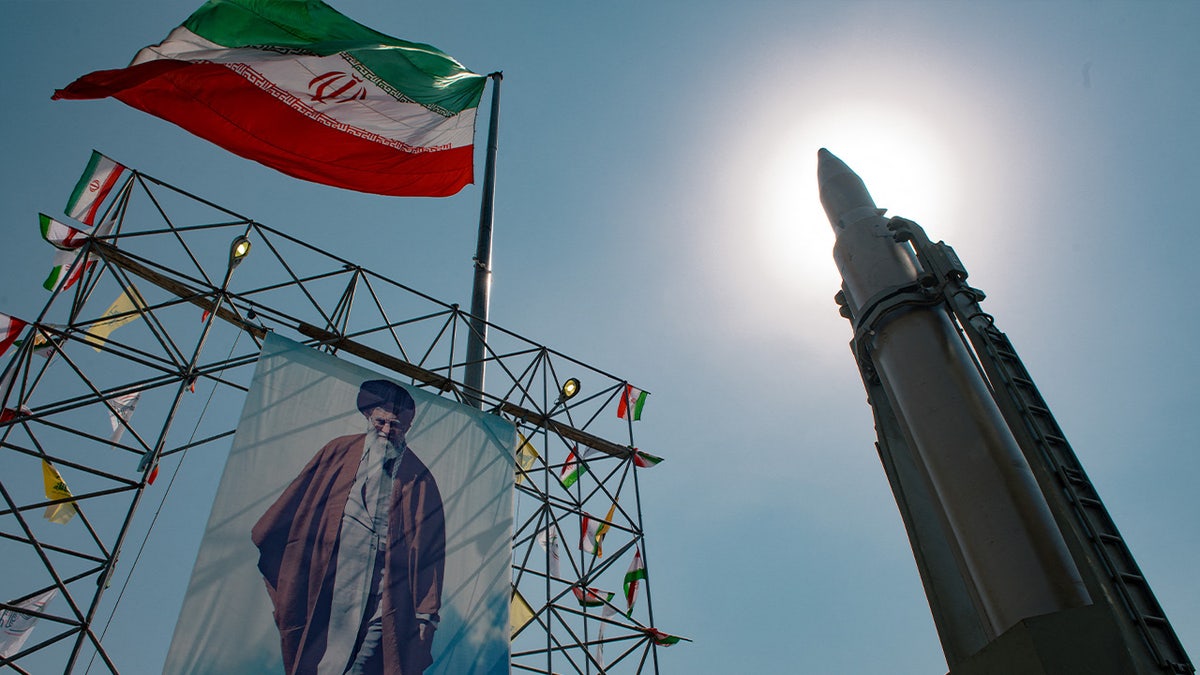
The immediate trigger for this current crisis is the escalating conflict in the Persian Gulf. As the U.S. scales up "Operation Epic Fury" against Iranian targets, European allies have largely refused to provide the naval assets and logistical support Trump demanded to secure the Strait of Hormuz. Spain has already closed its bases and airspace to U.S. missions related to the Iran conflict, a move that prompted Trump to tell allies like the United Kingdom to "go get your own oil" if they won't fight for the shipping lanes.
This disagreement exposes a fundamental flaw in the North Atlantic Treaty. The alliance was designed for a static, Euro-centric threat. It was never intended to force European nations into American-led adventures in the Middle East. By demanding NATO support for a war outside the alliance's traditional scope, the White House is essentially testing whether the "one for all" pact can be transformed into a global enforcement arm for U.S. policy. Europe's "no" has provided the perfect pretext for an exit.
The 5 Percent GDP Trap
For years, the 2 percent of GDP spending target was the benchmark for "fair" contribution. That goal has been eclipsed. At the recent NATO Summit in The Hague, the administration successfully pushed for a new, staggering target: 5 percent of GDP. While Secretary General Mark Rutte has praised the move as a necessary reaction to Russian and Chinese buildup, the figure is functionally impossible for most European economies to hit without dismantling their social safety nets.
Consider the math. For a country like Germany or Italy, jumping from 2 percent to 5 percent requires a sudden redirection of tens of billions of euros. It is a fiscal poison pill. By setting the bar at an unfeasible height, the U.S. creates a permanent state of "default" for its allies. This allows Washington to argue that the contract is already broken because the partners are not holding up their end of the bargain.
The Constitutional Crisis in Waiting
The exit is not as simple as a presidential tweet. In 2024, Congress passed the National Defense Authorization Act (NDAA) with a specific provision meant to "Trump-proof" the alliance. It prohibits any president from withdrawing the U.S. from NATO without a two-thirds Senate majority or an act of Congress.
However, legal experts and veteran analysts know the executive branch holds the "soft" keys to the kingdom. A president who wants out doesn't need to formally rescind a treaty to make it irrelevant. They can:
- Withdraw Troops: Effectively ending the "tripwire" deterrence in the Baltics.
- Defund Infrastructure: Cutting the federal dollars that maintain U.S. bases in Ramstein or Aviano.
- Appoint Non-Interventionists: Filling the NATO command structure with officials who will not authorize Article 5 actions.
A treaty is only as strong as the intent to honor it. If the Commander-in-Chief signals that the U.S. will not respond to a flare-up in Eastern Europe, the treaty becomes a dead letter, regardless of what the Senate says.
The Intelligence Blackout
The most immediate and dangerous consequence of this divorce isn't a tank invasion; it's the sudden blindness of the Western intelligence apparatus. For decades, the "Five Eyes" and NATO intelligence sharing have functioned as a single, massive nervous system.
The Atlantic Council and other security monitors have already noted a decline in reciprocity. European agencies, fearing they will be dragged into the Iran war or abandoned in a clash with Russia, are beginning to silo their data. They are prioritizing regional intelligence hubs over the U.S.-led framework. When the flow of signal intelligence and human assets stops, the risk of a miscalculation on the global stage increases exponentially.
Sovereignty or Protection
In Europe, the reaction is shifting from panic to a grim kind of pragmatism. Far-right and nationalist parties, such as Germany’s AfD, are already using the rift to argue for the total removal of U.S. bases. They frame it as a restoration of sovereignty. If the U.S. is going to use European soil to launch strikes that Europe doesn't support, the "protection" begins to look like an occupation.
This sentiment is no longer confined to the fringes. Moderate leaders like Keir Starmer and Emmanuel Macron are quietly accelerating the development of a "European Pillar" of defense—a security framework that functions independently of the Pentagon. It is an expensive, difficult, and potentially decades-long project, but many now see it as the only alternative to being left defenseless in a post-NATO world.
The era of the U.S. as the "indispensable nation" in Europe is ending. Whether the formal exit happens tomorrow or is dragged through the Supreme Court for years, the psychological break is complete. The alliance survived the Cold War, but it might not survive the diverging interests of a superpower that has decided it no longer wants to lead a club it has to pay for.