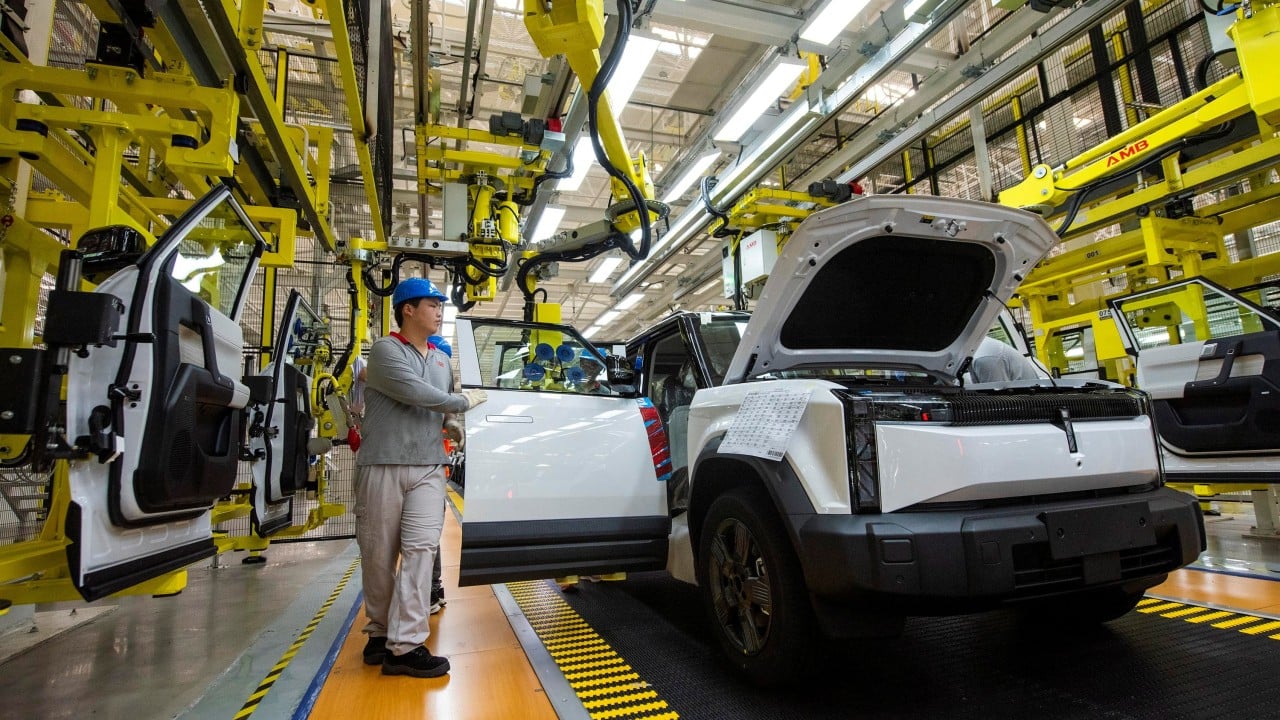
Chery Automobile intends to send more than one million electric and plug-in hybrid vehicles into global markets this year. Zhang Guibing, president of Chery International, recently laid bare this projection, anticipating that electrified models will suddenly make up 70% of the state-owned carmaker’s overseas deliveries.
This is an aggressive gamble for an industrial giant that has spent 23 consecutive years as China’s top passenger vehicle exporter by leaning primarily on cheap, internal combustion engines. But the rush toward a million overseas electric vehicle (EV) sales is not a simple victory lap. It is an operational necessity driven by an cutthroat domestic market slowdown, rising global oil prices, and escalating trade barriers.
The Margin Squeeze Behind the Export Surge
To understand why Chery is shoving its new energy vehicles (NEVs) out of China at this scale, one must look at the financial landscape of the domestic Chinese market. The home turf is a price-war meatgrinder. Profit margins for EVs in China have been compressed to razor-thin fractions, forcing legacy domestic brands to look across the border for financial survival.
Exporting is no longer just a way to grow. It is where the actual money is.
Chery Financial Performance (2025 Financial Year)
+-------------------------+---------------------+-------------------+
| Metric                  | Value (Yuan)        | Year-on-Year Growth|
+-------------------------+---------------------+-------------------+
| Total Revenue           | 300.29 Billion      | +11.3%            |
| Net Profit              | 19.51 Billion       | +36.1%            |
| Overall Profit Margin   | 6.5%                | Up from 5.3%      |
| NEV Gross Margin        | 8.8%                | Turning Profitable|
+-------------------------+---------------------+-------------------+
In the 2025 financial year, Chery’s revenue crested the 300 billion yuan mark for the first time, with net profits climbing 36.1% to 19.51 billion yuan. This lift happened because their NEV segment finally achieved economies of scale, pushing its gross margin up to 8.8%.
But that 8.8% margin is highly volatile inside China, where competitors cut prices every Tuesday. By shifting the sales mix toward international buyers, Chery can fetch premium pricing that would be laughed out of a showroom in Shanghai or Shenzhen.
The Dual Marque Offensive in High Regulation Markets
Chery is not attacking the global market under its budget-conscious domestic banner. Instead, it is treating Europe and the UK as the core growth engines for its premium export marques, Omoda and Jaecoo.
The strategy is working on paper. In the first quarter, Chery captured a 5.9% market share in the UK passenger car space. The Jaecoo 7 SUV topped individual model charts for Chinese imports, driven largely by local consumers fleeing high fuel costs. Europe currently absorbs over 41% of Omoda and Jaecoo’s total output.
Yet, this rapid Western expansion faces an expiration date if it relies solely on shipping cars from the factory docks in Anhui province.
European regulators are tightening tariff nets around direct Chinese vehicle imports. Chery knows a pure export model will eventually run aground on protectionist policies. To counter this, the automaker is moving away from basic product shipping toward deep industrial integration.
- Local Production Footprints: Chery is actively upgrading asset infrastructure in Spain and Brazil to assemble vehicles locally, circumventing direct import tariffs.
- Untapped Market Alliances: A newly inked joint venture with Japanese retail giant Autobacs Seven aims to introduce four electrified models into Japan by 2027, with local Japanese manufacturing slated to follow.
- Silicon Valley Technology Partnerships: A global agreement with Nvidia will embed the Drive Hyperion architecture into Chery's next-generation platforms, offering Level 3 autonomous capabilities designed to match Western tech expectations.
The Regional Friction of the Global Majority
While Europe provides the highest revenue per unit, the broader strategy relies heavily on the Global Majority markets across Latin America, the Middle East, and Africa. Here, the challenge shifts from regulatory hurdles to infrastructure gaps.
In Brazil, Chery registered a 36% month-on-month sales surge through early spring, supported by an aggressive rollout of 70 dedicated dealerships. The brand is targeting more than 100 open locations. However, selling an EV in São Paulo is radically different from selling one in London.
Developing economies lack the high-density fast-charging corridors of Western Europe. Recognizing this barrier, Chery is not abandoning internal combustion entirely. Their global push relies heavily on their Super Hybrid technology, allowing drivers to utilize gasoline backup where plug-in networks fail.
Furthermore, shifting geopolitics inject high volatility into these secondary strongholds. For instance, Chinese car exports to Russia plummeted by nearly 50% last year after Moscow introduced mandatory testing in local laboratories and enforced strict integration with their domestic satellite system. Relying too heavily on any single non-Western market carries immense operational risk.
The Long Road to Ten Million Customers
Chery has set a long-term goal to serve 10 million export customers by 2030. Reaching that volume means building 25 zero-carbon factories across the globe and shifting from an agile upstart to a deeply rooted local manufacturer wherever their wheels touch the asphalt.
The sheer speed of this expansion creates immense organizational strain. Traditional Japanese and European legacy carmakers took decades to build international supply networks, local parts warehouses, and trusted service networks. Chery is trying to do it in a fraction of that time while simultaneously managing a massive technological shift from pistons to lithium cells.
The headline target of one million overseas EV sales is an impressive milestone. But beneath the celebratory corporate press releases lies an aggressive, defensive maneuver designed to insulate the state-owned automaker from a cannibalistic domestic market back home.
Whether their international dealership networks and regional assembly plants can scale fast enough to outrun Western political pushback remains the defining question for China’s premier exporter.


