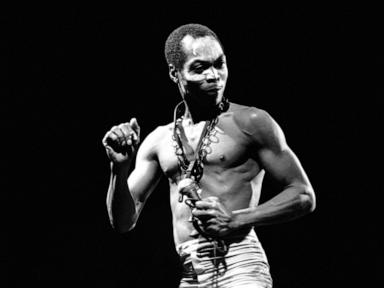
Fifty years after Afrobeat pioneer Fela Anikulapo-Kuti released Zombie, commentators still treat the masterpiece as a historical artifact of Nigeria's mid-1970s military dictatorship. They frame it as a preservation piece, a brilliant sonic middle finger to General Olusegun Obasanjo's junta that triggered the immediate, horrific destruction of Fela's Kalakuta Republic commune in February 1977.
This view misses the point. Zombie remains dangerous not because it captures Nigerian history, but because it accurately describes modern West African governance. The record is not a time capsule. It is a live diagnostic tool for a permanent structural crisis.
The track endures because the mindless, transactional obedience Fela mocked in 1976 has outlived the military barracks. It has mutated into the civilian bureaucracy, the police forces, and the corporate security state that govern modern Lagos and Abuja today.
The Mechanics of a Rhythmic Weapon
To understand why a piece of music provoked a nation's standing army to deploy a battalion of one thousand armed soldiers against a private residence, you must dissect the track's architecture. Fela did not just write a protest song. He engineered a psychological destabilization tactic.
The track opens with an aggressive, tightly wound horn arrangement backed by Tony Allen's relentless, military-style snare cadence. It mimics the very institution it seeks to dismantle. For more than five minutes, the instrumentation builds an unbearable tension, trapping the listener in a rigid, sonic march. When Fela finally opens his mouth, he uses West African Pidgin English to strip the military apparatus of its mystique.
"Zombie no go walk unless you tell am to walk.
Zombie no go think unless you tell am to think."
Fela speaks commands directly to the band and, by extension, to the rank-and-file soldiers. "Attention! Quick march! Slow march! Salute!" The Afrika 70 backing vocalists instantly reply with a mocking, high-pitched "Zombie!"
This was a devastating psychological blow. In 1976, the Nigerian military relied on absolute, terrifying authority to maintain control over an oil-rich population that was seeing none of the wealth. Fela took their feared uniforms, their discipline, and their rituals, and reduced them to a joke. He stripped the foot soldier of human agency, transforming the state's enforcers into mindless meat puppets who would "go and kill" or "go and die" simply because an unseen superior gave the word.
The State Defeat and the Price of Fire
The regime's reaction revealed their profound weakness. Unable to counter the ideas broadcast from Fela's Afro-Spot nightclub, the state resorted to raw, asymmetric violence.
The assault on the Kalakuta Republic on February 18, 1977, was designed to erase Fela completely. Soldiers did not just arrest the musician. They burned his recording studio, destroyed his master tapes, assaulted his band members, and threw his 77-year-old mother, activist Funmilayo Ransome-Kuti, out of a second-story window, inflicting injuries that would eventually kill her.
The state expected submission. Instead, they got a lifelong radical.
Fela took the ash and trauma of that raid and built a global legacy. He delivered a symbolic coffin to the gates of the army barracks and released tracks like "Coffin for Head of State" and "Sorrow, Tears and Blood." The military regime discovered a hard truth: you can burn magnetic tape, but you cannot shoot an audio track once it has entered the public consciousness. By using a thousand soldiers to silence a single saxophone player, the Nigerian state admitted it had lost the argument.
The Modern Corporate Zombie
The tragedy of contemporary Nigeria is that the targets of Fela's scorn have simply swapped their olive-drab fatigues for tailored agbadas and corporate suits. The institutional mindset remains identical.
Consider the events of October 2020 at the Lekki Toll Gate in Lagos during the End SARS protests. When peaceful youths gathered to demand an end to police brutality, state forces moved in under the cover of darkness. The subsequent shootings matched the exact behavioral patterns outlined in Fela's 1976 lyric sheet. Officers acted as automated extensions of political will, later shielding themselves behind the classic bureaucratic defense: we were only following orders.
The modern zombie is no longer just the private holding an assault rifle.
It is the civil servant who doctored the election sheets. It is the bank executive who freezes the accounts of political dissidents on an unwritten order from the central bank. It is the judicial officer who twists statutory logic to legitimize state overreach. The administrative apparatus of modern West Africa operates on the exact same lack of critical thought that Fela diagnosed half a century ago.
The Flaw in the Afrobeat Industrial Complex
Today, Afrobeat has morphed into "Afrobeats"—a global, multi-billion-dollar pop industry dominating Western streaming platforms. While this corporate success is celebrated across the continent, it has come at a massive cost to the genre's political soul.
| Feature | Fela's Afrobeat (1970s) | Contemporary Afrobeats (2020s) |
|---|---|---|
| Primary Theme | State corruption, neo-colonialism, class warfare | Wealth accumulation, luxury, escapism |
| Sonic Goal | Hypnotic agitation, extended political critique | Short, algorithm-friendly club loops |
| Relationship to Power | Direct, dangerous confrontation | Corporate sponsorship, state complacency |
Modern artists frequently sample Fela's horn lines and mimic his aesthetic, yet they studiously avoid his confrontational stance. They crave the prestige of his rebellion without wanting to risk their brand deals or international visas. They play the role of the rebel while performing at state-sponsored galas.
This toothless homage sanitizes Fela's legacy. It turns a fierce critique of structural oppression into background music for the elite. The original record was an act of class suicide; Fela abandoned his middle-class privileges to live in poverty and solidarity with the urban underclass. Current industry stars leverage his image to climb into the very upper classes that Fela spent his life fighting.
The true legacy of the album does not live in streaming numbers or Grammy nominations. It lives in the quiet, persistent refusal of everyday citizens to accept the absurdities of dysfunctional governance. Every time a young Nigerian questions an arbitrary law, refuses a bribe, or calls out administrative incompetence, the track plays again. The ruling class remains terrified of that record because they know the zombie might one day wake up.