Ottawa and Beijing no longer talk to each other the way they did when a dead thoracic surgeon from Ontario was the primary bridge between them. For half a century, the memory of Dr. Norman Bethune functioned as a Swiss Army knife for bilateral diplomacy, invoked by both Canadian premiers and Chinese cadres to smooth over ideological friction. But this historical shorthand has broken down completely under the weight of hostage diplomacy, corporate espionage trials, and competing trade networks. The standard diplomatic argument that Bethune’s legacy offers a clear roadmap for modern relations is wrong. The reality is far more transactional. Using a pre-Cold War humanitarian to manage a twenty-first-century geopolitical rivalry has exposed the deep limitations of nostalgia-based foreign policy.
The Construction of a Useful Ghost
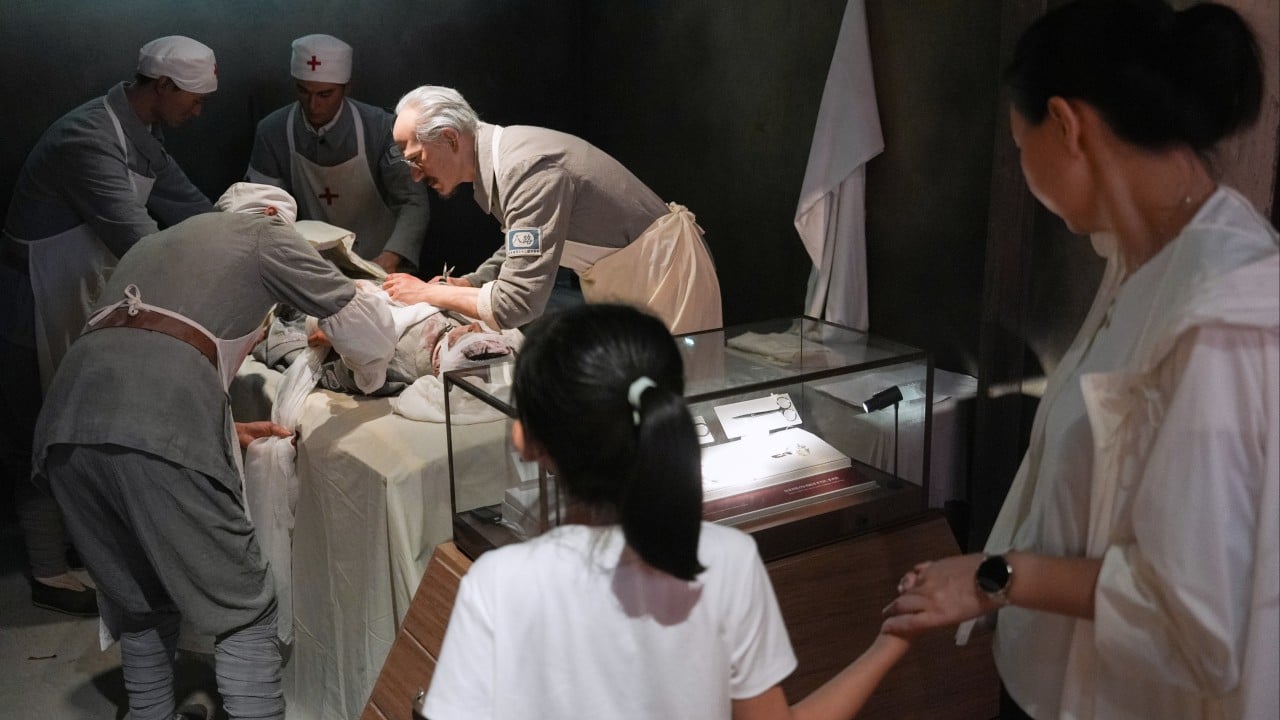
Norman Bethune was an erratic, fiercely brilliant, and deeply difficult man. He did not go to China in 1938 to build a diplomatic bridge for Canada; he went because he was a committed communist who had become disillusioned with Western medical systems and wanted to serve the revolution. He died of blood poisoning in 1939 after cutting his finger during a rushed battlefield operation, leaving behind a brief, chaotic legacy that Mao Zedong turned into mandatory reading for millions of Chinese citizens.
For decades, Ottawa ignored him. He was a radical Marxist who criticized Canadian medical professionals for running a system based on profit.
The pivot occurred in the early 1970s. When Prime Minister Pierre Trudeau moved to formally recognize the People's Republic of China, his government needed a cultural anchor to justify the alliance to a skeptical, Western-aligned public. Ottawa dug up Bethune’s ghost. They purchased his birthplace in Gravenhurst, Ontario, declared him a person of national historic significance, and transformed a fiery domestic critic into an official symbol of Canadian international benevolence.
Beijing accepted this rebranding because it served a specific purpose. In the years following the Cultural Revolution, China needed Western technology, investment, and diplomatic recognition to kickstart its economy. Accepting a Canadian hero who had been validated by Mao himself was an easy way to signal goodwill without compromising party ideology.
The Fragmentation of a Shared Narrative
This arrangement worked because both sides agreed to ignore the parts of Bethune’s life that did not fit the script. Canada ignored his explicit dedication to communism and armed revolution. China ignored his bourgeois Canadian background and his frequent clashes with authority.
That compromise has collapsed. Today, the two nations read entirely different histories into the same man.
- The Ottawa Perspective: To modern Canadian policymakers, Bethune represents an idealized version of middle-power internationalism—a humanitarian actor providing aid without seeking political control. This view assumes that good intentions can override deep structural differences in governance.
- The Beijing Perspective: To the current leadership in China, Bethune represents a concept known as proletarian internationalism. He is celebrated because he subordinated his Western identity to serve the party's cause. In this view, his value lies in his submission to the Chinese revolutionary collective, not his Canadian identity.
This ideological gap matters because it mirrors the wider breakdown in trade and security negotiations. When Canadian diplomats invoke Bethune today during trade disputes or human rights dialogues, Chinese state media often fires back, suggesting that modern Canada has lost the "Bethune spirit" by aligning too closely with Washington's security priorities. The symbol has transformed from a tool for negotiation into an instrument for mutual recrimination.
When Nostalgia Meets Hard Power
The breakdown of this historical narrative is not just an academic problem. It has tangible consequences for how both states conduct business and security policy in the Pacific.
Consider the raw economic realities. In 1970, Canada was an essential gateway for a closed Chinese economy seeking access to Western grain and industrial equipment. Today, China is the world's second-largest economy, a dominant force in green technology supply chains, and a major source of global capital. Beijing no longer requires cultural validation from an upper-middle power to secure international legitimacy.
The modern relationship is defined by structural economic conflicts that cannot be solved by appeals to historical friendship. Disputes over critical mineral mines in the Yukon, the implementation of tariffs on electric vehicles, and national security restrictions on telecommunications infrastructure cannot be smoothed over by a shared appreciation for a wartime surgeon.
Furthermore, the domestic political environment within Canada has shifted permanently. The detention of Canadian citizens in China during the Huawei executive extradition dispute fundamentally altered public opinion. For a generation of Canadian voters and lawmakers, foreign policy toward China is no longer viewed through the lens of humanitarian cooperation, but through the lens of risk mitigation and security architecture.
The Limit of Sentimentality
The structural tension between a liberal democracy and a centralized state cannot be managed by relying on a shared historical icon. Using a figure from the 1930s to address modern issues like data privacy, maritime law in the South China Sea, or intellectual property rights is fundamentally ineffective.
Relying on historical sentimentality creates a false sense of stability, encouraging diplomats to focus on symbolic gestures instead of doing the difficult work of negotiating clear, interest-based agreements. It allows both governments to avoid confronting their deep differences directly, substituting empty praise for clear-eyed crisis management protocols.
The era of using Norman Bethune as a diplomatic shield is over. The current relationship requires a strategy built on real-world capabilities, clear economic boundaries, and reciprocal security agreements, rather than the memory of an Ontario surgeon who died nearly a century ago.