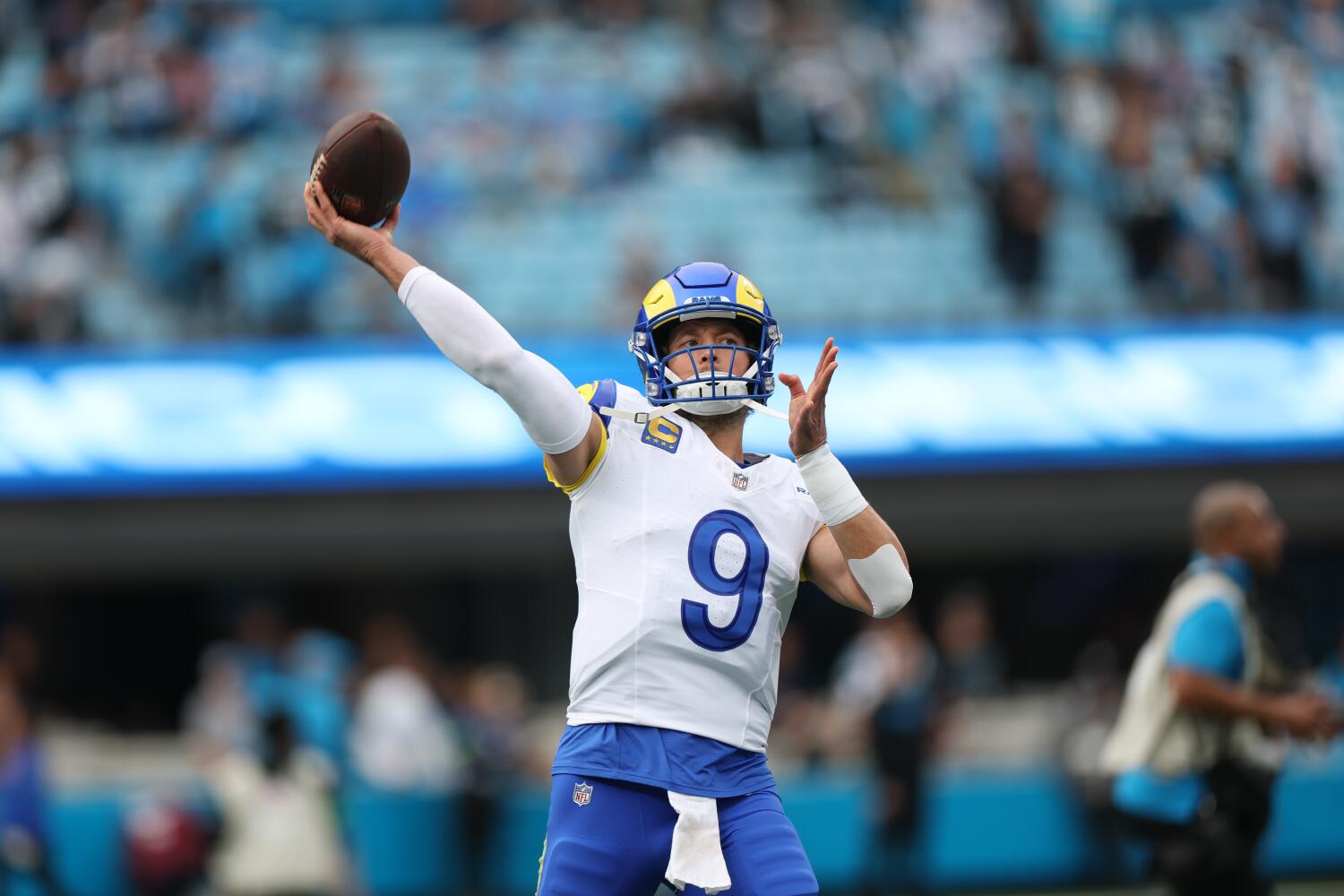
The Los Angeles Rams have agreed to a one-year, $55 million contract extension with reigning NFL Most Valuable Player Matthew Stafford, locking the 38-year-old quarterback into the franchise through the 2027 season. The agreement, which can reach up to $60 million through incentives, provides a massive financial bump and solidifies his immediate future in Los Angeles. This move resolves the sudden tension created just weeks ago when front office executives shocked the league by drafting Alabama quarterback Ty Simpson with the 13th overall pick. By securing Stafford through 2027, the organization ensures its championship window remains open while forcing its newly acquired rookie passer into a lengthy apprenticeship.
On the surface, handing a massive, high-dollar extension to a quarterback nearing his 40s sounds like standard NFL business for a team trying to satisfy an elite veteran. Look closer at the timeline, however, and the mechanics of this deal reveal a complex power struggle, financial maneuvering, and a masterclass in modern franchise management.
The MVP Leverage Play
Stafford holds all the cards in Los Angeles, and he knows it. Just a year ago, the veteran passer was exploring the open market, gaining permission from the Rams to gauge trade interest and evaluate his worth across the league. He ultimately returned on a restructured contract, but the underlying message was undeniable. Stafford was operating entirely on a year-to-year basis.
Then came the spectacular campaign that shifted the entire balance of power. Stafford tore through defenses, leading the NFL with 4,707 passing yards and throwing a career-high 46 touchdowns against only eight interceptions. That dominant performance earned him his first NFL MVP award and carried Los Angeles straight to the NFC Championship game.
When a player reaches that level of production, standard contract math goes out the window. Stafford was scheduled to play the 2026 season under an unsecured $40 million structure that carried heavy long-term salary cap implications if the Rams ever tried to use the franchise tag down the line. By stepping up with an additional year at $55 million in new money, general manager Les Snead eliminated the threat of a messy contract dispute while matching market value for an elite passer.
The Ty Simpson Tax
The true catalyst for this sudden extension was not just Stafford’s trophy room, but what happened inside the draft room. When Los Angeles selected Ty Simpson in the first round, the pick signaled the beginning of the end for the Stafford era. Historically, first-round quarterbacks do not sit on the bench for long. The financial reality of the rookie wage scale practically demands that teams find out what they have in a young signal-caller by year two.
Stafford’s camp viewed the selection as an existential challenge. If the organization was ready to look toward tomorrow, Stafford was going to make today prohibitively expensive.
Head coach Sean McVay moved quickly to neutralize any locker room awkwardness. He declared publicly that the team belonged entirely to Stafford and that Simpson’s eventual ascent would happen strictly on the veteran’s terms. Words are cheap in professional football, but a $55 million extension is concrete proof.
The Rams are essentially paying a premium to keep their roster from fracturing. By extending Stafford through 2027, the front office has built a mandatory two-year wall between the rookie and the starting lineup. Simpson has openly embraced the chance to learn behind a future Hall of Famer, but the reality is he has no other choice. His rookie contract will be half expired before he has a realistic chance to compete for meaningful snaps.
The High Stakes Roster Construction
Snead has never approached roster building like his peers. The franchise famously spent years trading away first-round draft picks in exchange for established, blue-chip veterans. While the rest of the league hoards draft capital, Los Angeles treats picks like currency to buy immediate wins.
That philosophy remains fully active. Consider the aggressive moves made just before this extension came together.
| Acquired Asset | Position | Compensation Sent |
|---|---|---|
| Trent McDuffie | Cornerback | 2026 First-Round Pick (No. 29), Two Day 3 Picks, 2027 Third-Round Pick |
| Davante Adams | Wide Receiver | Veteran Trade Package |
Adding McDuffie to a rising defense and pairing Adams with Puka Nacua and Kyren Williams created an offensive ecosystem that is ready to win right now. Leaving a roster this talented at the mercy of a year-to-year quarterback threat would be administrative malpractice. Stafford needed to be satisfied, secure, and focused entirely on the field.
The Franchise Tag Shield
The hidden genius of this one-year deal lies in how it protects the team from an astronomical financial hit in 2027. If the Rams had allowed Stafford to play out his previous contract, the cost of keeping him for an additional year via the franchise tag would have skyrocketed.
Under NFL collective bargaining rules, a quarterback franchise tag can be calculated based on 120 percent of the player's prior-year salary. For Stafford, that would have meant a one-year tag costing the Rams an estimated $57.92 million for the 2027 season alone.
Instead of letting a potential lame-duck season devolve into an offseason bidding war or a forced franchise tag scenario, the front office locked in a number that aligns with top-tier quarterback compensation without breaking the bank. It gives Stafford the security he demanded after the team drafted his eventual replacement, and it gives the front office absolute cost certainty as they manage a top-heavy salary cap.
The Rams are betting everything that Stafford's body can withstand two more years of professional football. In a league where elite quarterback play is the rarest commodity, spending $55 million to delay the future is the only choice a true contender could make.