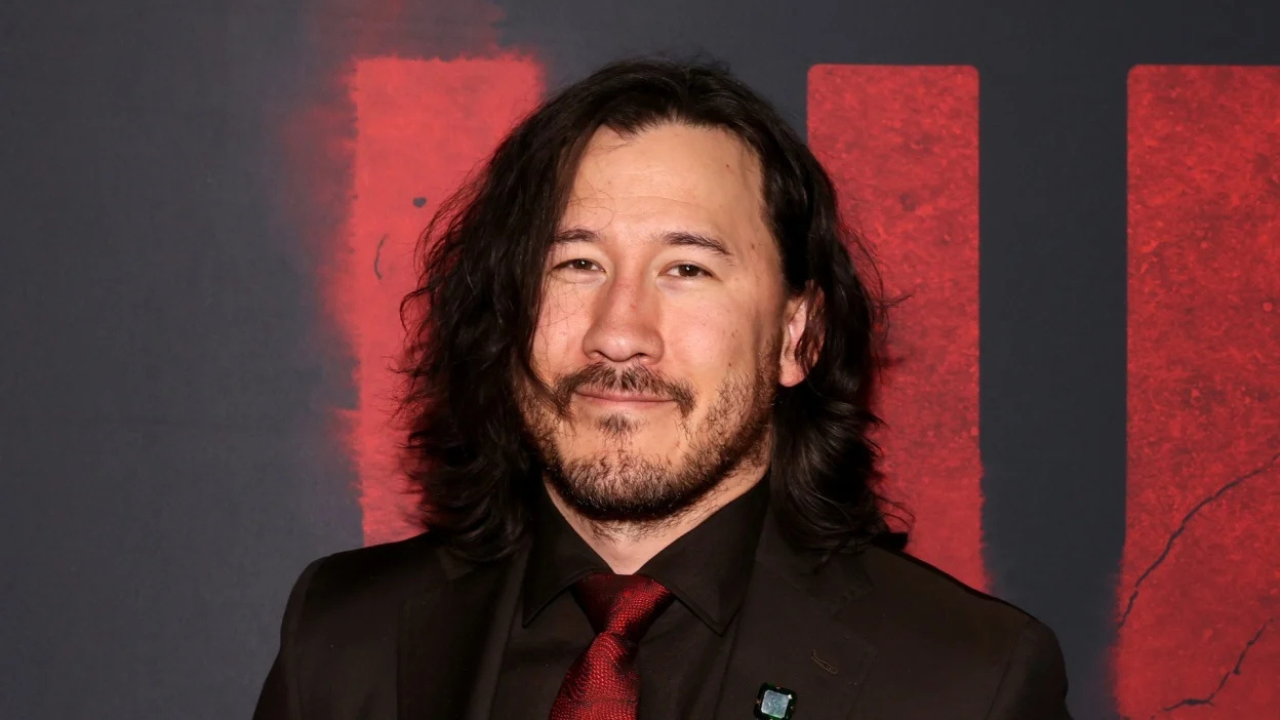
The media frenzy surrounding the 2026 Cannes Film Festival premiere of Cristian Mungiu’s Fjord has fixated almost entirely on a single aesthetic detail. Sebastian Stan is unrecognizable. To play Mihai Gheorghiu, a devout, tech-phobic Romanian IT worker living in a remote Norwegian village, the Marvel alumnus shed his trademark cinematic jawline, donned a receding hairline via a bald cap and prosthetics, and adopted an intentionally drab, ordinary posture.
This hyper-focus on physical mutability exposes a deeper flaw in contemporary film criticism. By treating an actor's physical erasure as the ultimate benchmark of dramatic excellence, the industry cheapens actual performance. The obsession with prosthetics reduces complex narrative art to a mere special effects exhibition. Stan’s transformation in Fjord is technically impressive, but the real triumph lies in how he operates within Mungiu’s notoriously rigid, long-take aesthetic.
The film itself follows the Gheorghiu family as they face state scrutiny when their eldest daughter arrives at school with mysterious bruises. Rather than an explosive thriller, Fjord functions as a chilly, clinical examination of the clash between traditionalist immigrant structures and the progressive, arguably invasive social systems of modern Scandinavia.
The Illusion of Premium Acting
Hollywood has a long-standing addiction to the aesthetics of disfigurement and aging. For decades, the fastest route to an Academy Award nomination has involved an otherwise glamorous star burying themselves beneath layers of silicone and paint. Stan himself recently rode this exact wave, earning an Oscar nomination for his physical mimicry of Donald Trump in The Apprentice.
The issue with this trend is that it confuses makeup engineering with actual dramatic subtext. When an audience spends the first twenty minutes of a film adjusting to a fake nose or an artificial hairline, a barrier forms between the spectator and the character. The performance becomes a magic trick. The viewer evaluates the seams of the bald cap rather than the internal life of the protagonist.
In Fjord, Mungiu attempts to subvert this dynamic by doing something radically different with his lead actor's altered appearance. He does not use prosthetics to make Stan look larger than life or uniquely monstrous. He uses them to make him aggressively boring.
The Anatomy of an Ordinary Man
Mihai is not a historical figure or a grotesque caricature. He is a deeply conservative, tech-literate family man who rules his home with an austere, religious code. Mungiu deliberately avoids close-ups throughout the 146-minute runtime, choosing instead to capture the family in wide, unbroken takes against the immense backdrop of Norwegian glaciers and frozen waters.
Because the camera stays at a clinical distance, Stan’s physical transformation loses its shock value almost immediately. It ceases to be a gimmick and becomes an architectural element of the frame. The bald head and the slumped shoulders serve to blend Mihai into the grey, sterile landscape of the village, stripping him of the natural charisma that usually anchors a Hollywood protagonist.
The power of the performance does not stem from the makeup chair. It comes from Stan’s mastery of physical restraint. He delivers his lines in a tense mixture of English, Norwegian, and his native Romanian, conveying a deep-seated, simmering resentment. When Child Protective Services isolates the five Gheorghiu children from their parents, Stan does not indulge in the grand, theatrical hysterics that Western dramas typically demand. He channels the quiet, suffocating panic of a man who genuinely believes his ancestral right to discipline his household is being criminalized by a secular state.
When Style Dilutes Substance
While the central performances from Stan and Renate Reinsve are masterfully understated, Fjord stumbles precisely where the physical gimmickry ends and the ideological debate begins. The narrative draws heavily from real-world international custody disputes, notably the 2016 Bodnariu case, where a cross-cultural family’s children were removed by Norway’s Barnevernet agency over allegations of physical chastisement.
Mungiu is a filmmaker celebrated for constructing intricate systems that slowly crush his characters. His 2007 masterpiece 4 Months, 3 Weeks and 2 Days treated the bureaucracy of illegal abortion under a communist regime with absolute, terrifying realism. In Fjord, however, the transition from rural paranoia to courtroom drama feels strangely hollow.
Once the narrative moves into the legal sphere, the film begins to sanitize its own central conflict. The script structures the arguments with a clinical symmetry that dampens the emotional stakes. On one side stands the liberal legal framework of the state, committed to the absolute protection of the child. On the other stands an immigrant father clinging to an ancient, patriarchal sovereignty.
By refusing to explore the psychological interior of the children themselves, the film leaves its audience at a distance. We watch an intellectual chess match rather than a human tragedy. The facts of the abuse are left murky, which is a legitimate artistic choice, but the film's refusal to sit with the actual ugliness of domestic friction causes the final act to feel bloodless and academic.
Beyond the Red Carpet Spectacle
The reception at Cannes highlights a widening gulf between film marketing and cinematic reality. Festival coverage thrives on the narrative of the unrecognizable star because it offers a clean, easily digestible talking point for social media feeds and red carpet interviews. It transforms a dense, multilingual exploration of European cultural friction into a simple narrative about an actor’s commitment to his craft.
True physical transformation in cinema is not achieved by the application of latex. It is achieved through the total surrender of an actor's vanity to the demands of a specific environment. Stan succeeds in Fjord not because he looks different, but because he allows himself to be small, unlikable, and entirely consumed by the grim landscape around him.
The industry will undoubtedly continue to reward the loudest transformations, confusing the work of the prosthetic department with the work of the soul. But as Fjord demonstrates, the moment the makeup becomes the main attraction, the cinema has already lost its grip on reality. The most terrifying monsters, and the most broken men, look exactly like the rest of us.