The air in Marrakech during the late spring doesn't just sit; it pulses. It carries the scent of roasted coffee, diesel exhaust, and the ancient dust of the High Atlas mountains. But in May 2026, a new frequency hums beneath the surface of the "Ochre City." It is the sound of thousands of cooling fans and the quiet clicking of keys.
GITEX Africa has arrived. You might also find this connected coverage useful: Newark Students Are Learning to Drive the AI Revolution Before They Can Even Drive a Car.
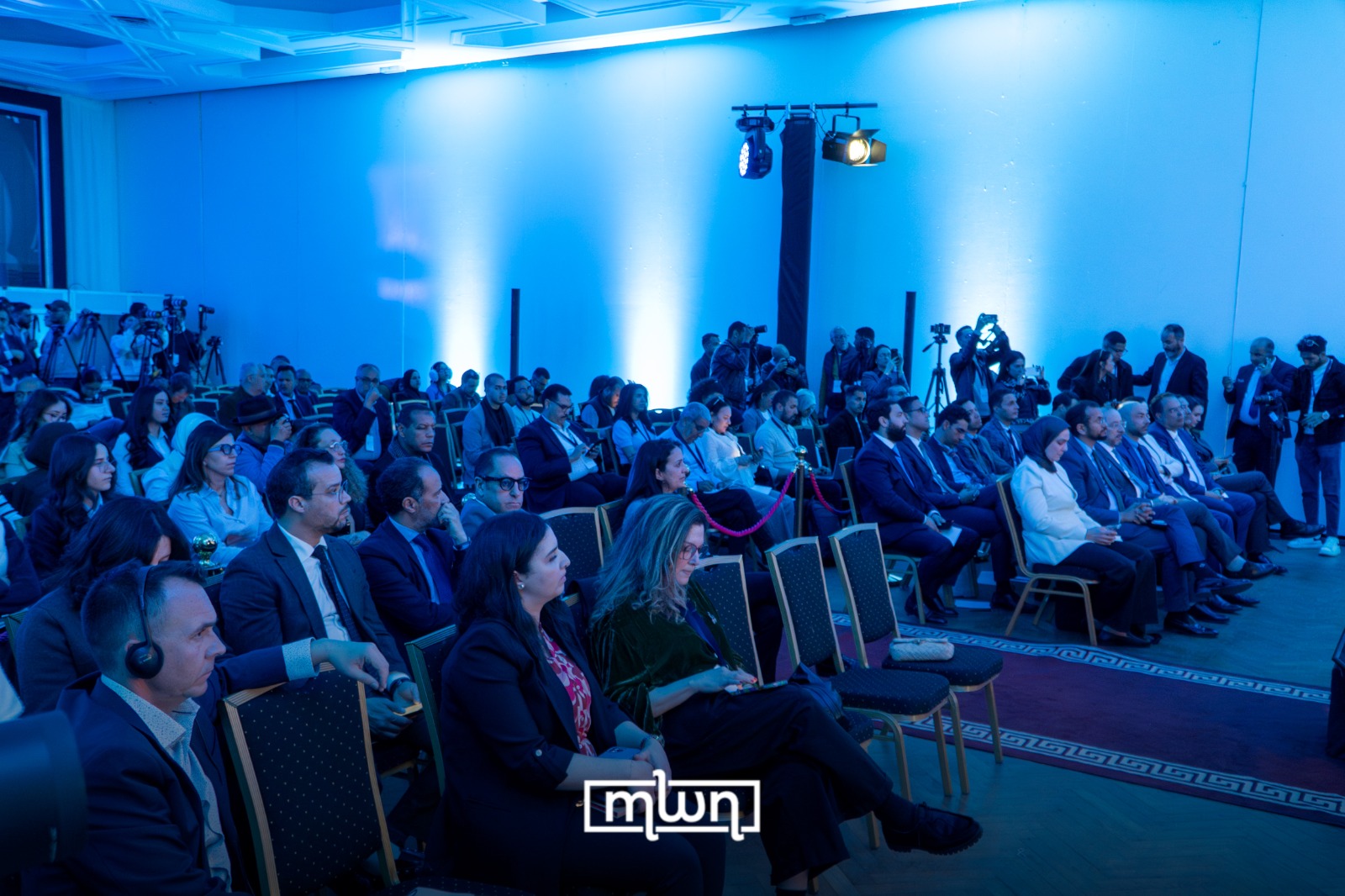
To a casual observer, this is just another tech trade show—a sea of navy blazers, lanyard-clad necklines, and gleaming booths. But look closer at the faces of the young Moroccan engineers leaning over tablets in the back rows. For them, this isn't a networking event. It is a border crossing.
Moroccan Minister Ghita Mezzour stands amidst this whirlwind, not just as a politician, but as a conductor trying to harmonize a thousand disparate instruments. When she speaks about the 2026 edition of the event, she isn't just reciting a brochure. She is describing a structural shift in the very floorboards of the North African economy. As reported in latest coverage by MIT Technology Review, the results are worth noting.
Morocco has spent decades being the world’s garden and its factory. Now, it wants to be its brain.
The Girl from Errachidia
Consider a hypothetical student—let’s call her Amina. Amina grew up in Errachidia, where the desert sun is unforgiving and the opportunities for a software developer once seemed as dry as the landscape. Ten years ago, a girl like Amina had one path: leave. She would head to Paris, Montreal, or Dubai, taking her talent and her future tax contributions with her.
That is the "invisible stake" Mezzour is fighting against. Every time a nation fails to build its own digital infrastructure, it exports its most valuable natural resource: human intelligence.
GITEX Africa 2026 serves as a physical rebuttal to that drain. By bringing the world’s venture capitalists and AI architects to Moroccan soil, the government is trying to flip the script. Instead of Amina going to the world, the world is coming to Amina’s doorstep.
The Minister emphasizes that this year’s focus on Artificial Intelligence isn't about chasing a trend. It’s about survival. In the global south, AI is often discussed with a hint of dread—a tool that will automate away the call center jobs and manufacturing roles that these economies rely on. But the Moroccan strategy views AI as a leapfrog technology.
Why build the copper wires of the 20th century when you can build the neural networks of the 21st?
The Weight of a Digital Identity
We often speak of "digitization" as if it’s a cloud—weightless and ethereal. In reality, it is heavy. It is the weight of a mother in a rural village no longer having to travel four hours by bus to sign a single piece of paper because her identity is now verified on a blockchain. It is the weight of a small farmer in the Souss-Massa region using AI-driven satellite imagery to reduce his water usage by thirty percent during a drought.
These are the "cold facts" translated into human heartbeats. When the Moroccan government discusses the "Digital Morocco 2030" vision at GITEX, they are talking about removing the friction from human life.
The Minister’s rhetoric focuses heavily on the "Made in Morocco" tag for digital solutions. This is a subtle but vital distinction. It’s the difference between being a consumer of technology and being a creator of it. If Morocco simply buys AI from Silicon Valley, it remains a vassal state in the digital empire. If it builds its own Large Language Models trained on Darija—the Moroccan Arabic dialect—it preserves its culture while modernizing its economy.
The Silicon Souk
Walking through the 2026 exhibition halls, you see the "Silicon Souk" in action. The energy is different from the sterile environments of Las Vegas or Berlin. There is a frantic, hungry edge to the deal-making here.
In one corner, a startup from Casablanca is demonstrating an AI tool that detects crop diseases specific to African soil. In another, a group from Dakar is scouting for Moroccan cloud hosting partners. This is the "inter-African cooperation" that Mezzour highlights. It is a realization that the continent has been divided by geography and colonial history for too long, but it can be united by fiber optic cables.
Money is the oxygen of this fire. The 2026 event has seen a record influx of investment funds, but the Minister is careful to steer the conversation toward more than just cash. She talks about the "ecosystem."
An ecosystem is a fragile thing. It requires talent, which Morocco is producing at a rate of thousands of engineers per year. It requires regulation, which the government is trying to make "startup-friendly." And it requires a stage.
GITEX is that stage.
The Doubt in the Room
It is easy to get swept up in the optimism of a high-tech gala. But the reality is often messy. Many skeptics ask: Can a country with significant wealth inequality really find its salvation in an algorithm?
The Minister doesn't shy away from the difficulty. Digitization is a double-edged sword. If handled poorly, it creates a "digital divide" where the urban elite move at the speed of light while the rural poor remain in the dark. This is why the 2026 discussions have shifted toward "inclusive AI."
It’s not enough to have a smart city in Rabat if the schools in the mountains don't have tablets. The goal isn't just to increase the GDP; it’s to increase the "digital dignity" of every citizen.
This involves a massive, grinding effort to retrain the workforce. It means convincing a 50-year-old bureaucrat that a digital ledger is more secure than his physical filing cabinet. It means teaching a generation of kids that coding is as essential as reading.
The Invisible Infrastructure
The most important parts of GITEX Africa aren't the things you can see. It isn't the VR headsets or the humanoid robots. It’s the handshakes.
Behind the closed doors of the VIP lounges, the "invisible infrastructure" of the next decade is being negotiated. Agreements are being signed that will determine who owns the data of millions of Africans. Decisions are being made about where the next massive data centers will be built—structures that require immense amounts of energy and cooling, an irony not lost on a country increasingly feeling the heat of climate change.
Morocco’s bet is that its massive investments in renewable energy—like the Noor Ouarzazate solar complex—will make it the logical home for the "green" data centers of the future.
Beyond the Horizon
As the sun sets over the Koutoubia Mosque, casting long shadows across the GITEX pavilions, the minister’s message becomes clear. This isn't about one week in May. It isn't about 2026.
It is about 2040.
It is about a future where a kid in a small town in the Atlas Mountains can open a laptop and compete with a developer in San Francisco without ever having to buy a plane ticket. It is about a Morocco that exports code instead of just phosphates.
The Minister knows that the window of opportunity for AI is narrow. The world is moving fast, and those who don't set the pace are quickly trampled.
The lanyards will eventually be tucked into suitcases. The booths will be dismantled. The navy blazers will head back to the airport. But if the Minister’s vision holds, something will remain in the red soil of Marrakech. A seed has been planted—not of a plant, but of a process.
Amina is back in her room now, the glow of her screen the only light in the house. She isn't just browsing. She is building. The world is no longer somewhere else; it is right there, flashing in lines of Python and C++, waiting for her to hit enter.
The silicon brain is waking up, and it speaks with a Moroccan accent.