The smell of a forest fire is not the cozy, nostalgic scent of a backyard cedar pit. It is metallic. It is heavy. It carries the molecular ghosts of decades-old pines and, occasionally, the melted remains of a vinyl siding panel or a family photo album. For those living along the Eastern Slopes of the Canadian Rockies, that scent has become a recurring seasonal guest—one that stays too long and asks for too much.
For years, the defense against this encroaching heat has relied on a aging fleet of mechanical veterans. But the math of the wilderness is changing. The fires are moving faster. They are burning deeper. And the province of Alberta has finally decided that the only way to fight a monster of this scale is to change the way we take to the skies.
The Weight of Two Thousand Gallons
Consider a pilot named Sarah. She isn’t real, but she represents every person currently sitting in a cockpit over the boreal forest, staring into a wall of gray-white smoke. In her current aircraft, she has to navigate a delicate dance between fuel weight, atmospheric pressure, and the terrifying physics of dropping tons of liquid onto a moving target.
When a wildfire "crowns"—jumping from the forest floor to the tops of the trees—it creates its own weather system. It breathes. It sucks oxygen from the surrounding air, creating downdrafts that can swat a small plane out of the sky like a fly. To stop that, you don't need a scalpel. You need a hammer.
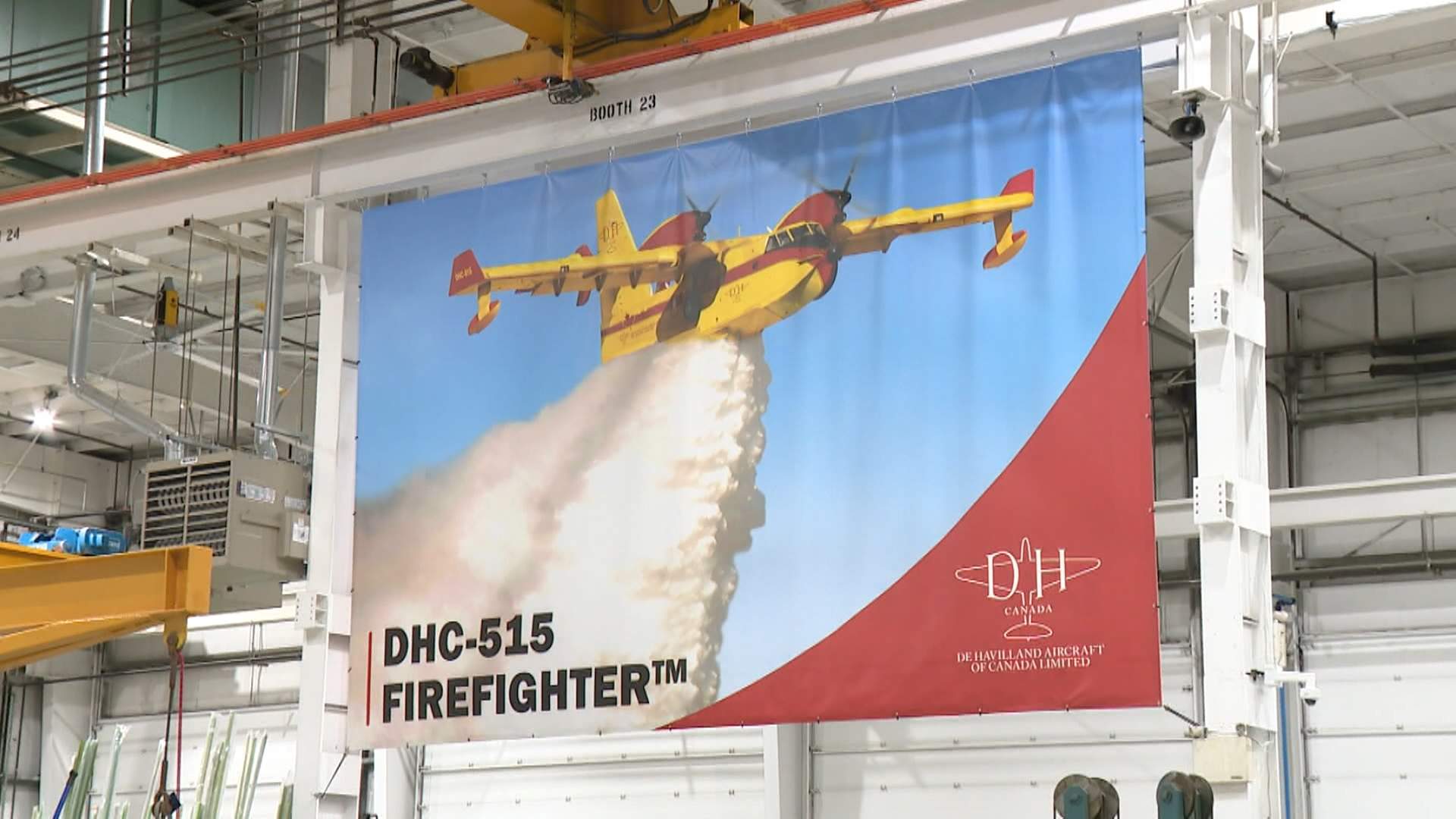
The Alberta government recently confirmed the purchase of 10 new De Havilland DHC-515 Firefighters. This isn't just a procurement order. It is a multibillion-dollar bet on the survival of towns like High Level, Drayton Valley, and Edson.
The DHC-515 is the evolution of the iconic "Canadair" line, those yellow-and-red amphibians that have defined aerial firefighting for generations. To understand why this matters, you have to understand the "scoop." While traditional tankers have to fly back to an airbase, land, hook up to a hose, refill, and take off again, the 515 is built for the water. It skims the surface of a lake at 70 knots, gulping up 6,000 liters of water in about 12 seconds.
Twelve seconds. In the time it takes to read this paragraph, a single plane can reset its entire arsenal and turn back toward the smoke.
The Logistics of a Warming Border
The purchase of these planes is a recognition of a harsh reality: the "fire season" is a term that no longer fits. We are entering the era of the fire year. In 2023, Alberta saw more than 2.2 million hectares burn. That is roughly the size of Belize, reduced to charcoal in a single season.
The old fleet was tired. Maintenance was becoming a game of finding parts for machines that were built when rotary phones were still standard. By investing in the DHC-515, the province is moving toward a platform that can drop nearly 700,000 liters of water per day if the water source is close enough.
But machines don't put out fires. They buy time.
The real purpose of a waterbomber is to provide a window of opportunity for the "boots on the ground"—the crews with pulaskis and chainsaws who have to crawl through the muskeg to put out the hotspots. Without the planes, the heat is too intense for humans to get within a mile of the line. The planes provide the cooling "knockdown" that allows the human element to do its job.
The Cost of the Invisible Stake
There is a tendency to look at the price tag of these aircraft—which runs into the hundreds of millions—and see a massive capital expenditure. It’s a line item in a budget. It’s a talking point in a legislature.
However, the cost of the plane is dwarfed by the cost of the absence of the plane. When a fire reaches the "interface"—the point where the forest meets a subdivision—the math becomes personal. A single waterbomber sortie can be the difference between a neighborhood that remains a place of memories and a neighborhood that becomes a grid of concrete foundations and scorched washing machines.
The DHC-515 is designed specifically for this high-stakes environment. Unlike converted airliners that were never meant to fly low and slow over uneven terrain, the 515 is a purpose-built bush plane on steroids. It can handle the high-density altitudes of the Rockies and the unpredictable "burps" of hot air that come off a raging wildfire.
It is also a matter of provincial sovereignty. For decades, provinces have traded resources, borrowing planes from neighbors in a frantic game of musical chairs. But when the entire West is on fire at once, there are no chairs left. By building its own dedicated, modern fleet, Alberta is ensuring that its defense doesn't depend on whether a neighbor can spare a wing.
The Human Geometry of the Cockpit
We often talk about "the government" buying planes, as if the Premier is personally flying them. But the real story lives in the ergonomics of the new flight deck.
The 515 features digital avionics that reduce the "cognitive load" on the pilot. Imagine trying to drive a bus through a thick fog while someone is throwing rocks at the windshield and the road is moving. That is what flying a fire line feels like. By automating the more tedious aspects of flight management, the new technology allows the pilot to focus on the one thing that matters: the drop.
A drop that is 20 feet too high is useless; the water turns to mist before it hits the flames. A drop that is 20 feet too low is a death wish. The precision offered by these new machines isn't about luxury. It’s about survival.
There is a specific sound that a waterbomber makes as it passes overhead. It is a deep, thrumming roar that vibrates in your chest. For people in evacuated communities, that sound is the only thing that brings sleep. It is the sound of a counter-attack.
The first of these new planes won't arrive tomorrow. Manufacturing a specialized aircraft of this caliber takes years, and the global demand is soaring as Europe and Australia grapple with their own versions of the fire monster. But the commitment signals a shift in philosophy. We are moving from a reactive posture—scrambling to find whatever old planes are available—to a proactive stance.
We are acknowledging that the forest is no longer a static background to our lives. It is a living, changing, and occasionally dangerous neighbor. To live alongside it, we need more than just hope and a garden hose.
As the sun sets over the Rockies, casting a long, orange glow that is often filtered through a haze of distant smoke, the arrival of a new fleet represents a promise. It is a promise to the families in the small towns and the firefighters in the trenches. It is the realization that while we cannot always control the lightning or the wind, we can choose how we meet the heat.
The red-and-white planes are coming. And not a moment too soon.


