Sarah stands in the pharmacy aisle, her thumb tracing the edge of a crumpled insurance card. She isn't looking at bandages or cough drops. She is staring at the empty space on a shelf where a promise used to live. For Sarah, and millions like her, the battle with weight hasn't been a lack of willpower; it has been a physiological civil war.
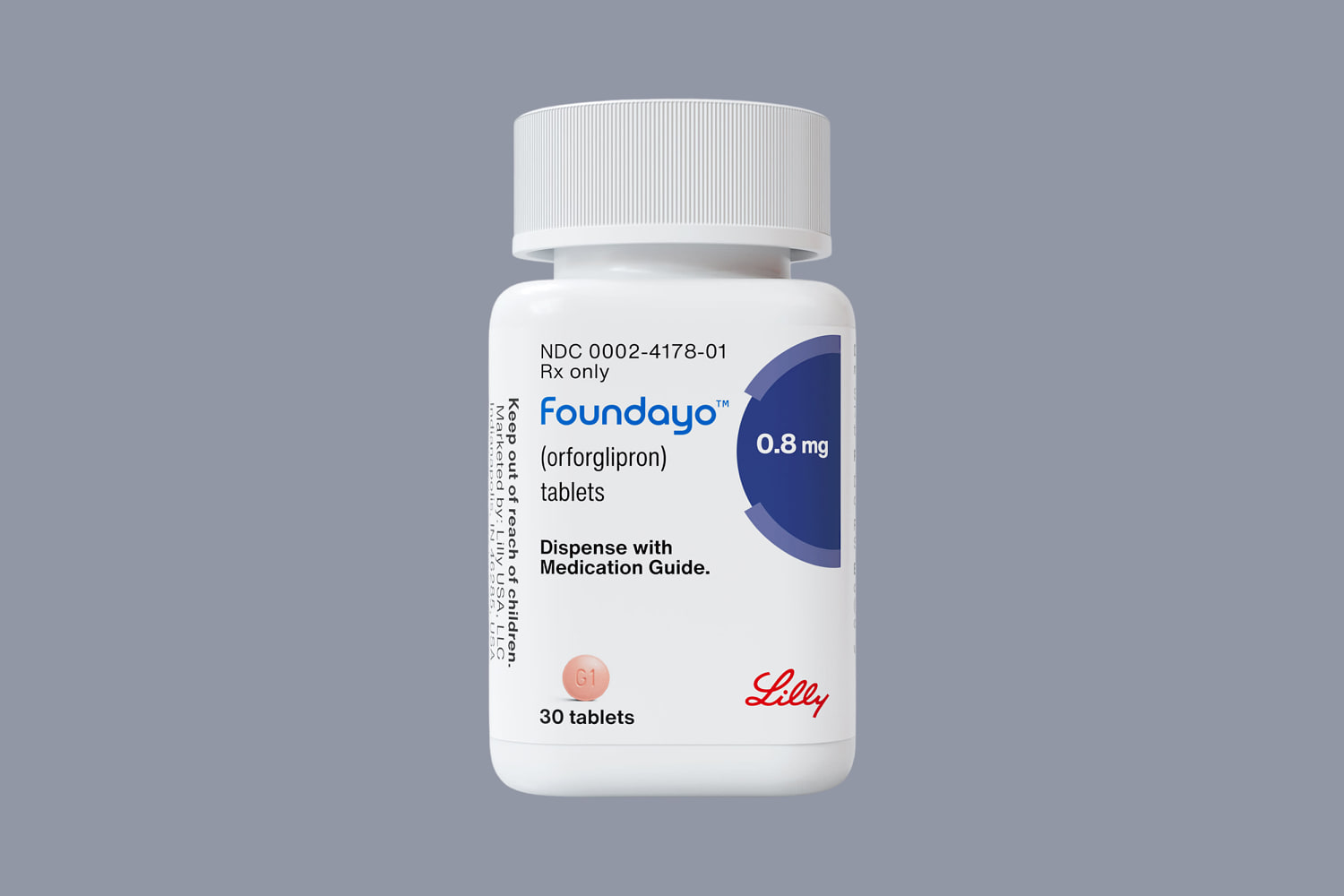
For a few months, the headlines whispered that the war was ending. Eli Lilly’s Foundayo was supposed to be the liberation—a simple weight-loss pill that did away with the cold sting of needles and the logistical nightmare of refrigerated pens. It promised the power of a blockbuster injection with the ease of a morning vitamin.
But the FDA just pulled the emergency brake.
The agency’s request for more safety data isn't just a bureaucratic speed bump. It is a deafening silence for those who were counting the days until they could stop "managing" their lives and start living them. The news sent a shiver through the stock market, sure, but the real tremors are felt in kitchens across the country where people are tired of being told to wait.
The Chemistry of Hope
To understand why the FDA is hesitant, we have to look at what Foundayo actually is. It isn't a metabolism booster or a simple appetite suppressant from the 1990s. It is an oral orforglipron—a non-peptide GLP-1 receptor agonist. In simpler terms, it’s a key designed to fit into the lock of your metabolic system, telling your brain you’re full and your stomach to slow down.
[Image of GLP-1 receptor mechanism]
The magic of the injectable versions, like Zepbound, lies in their stability. When you inject a drug, it bypasses the violent, acidic cauldron of the stomach. It enters the bloodstream like a VIP through a side door. A pill, however, has to survive the gauntlet. To make a pill effective, you often have to increase the dosage or alter the chemistry to ensure enough of the active ingredient survives the journey to the gut.
The FDA's concern centers on the liver. When you swallow a potent metabolic regulator, the liver is the first line of defense, processing the drug before it reaches the rest of the body. The agency is looking for a ghost in the machine: a specific pattern of enzyme elevation that might signal long-term distress. They aren't saying Foundayo is dangerous. They are saying they don't know if it’s safe enough yet.
The Invisible Stakes of the Waiting Room
Consider a hypothetical patient we’ll call Mark. Mark is fifty-two, pre-diabetic, and carries two decades of weight that his knees can no longer support. For Mark, "more safety data" sounds like a polite way of saying "stay stuck."
He watches the news and sees the clinical trial results. He knows that in Phase 2 trials, participants on the highest dose of orforglipron lost nearly 15% of their body weight over thirty-six weeks. That isn't a cosmetic change for Mark. That is the difference between playing catch with his grandson and watching from a lawn chair.
The frustration lies in the gap between clinical caution and human desperation. The FDA operates on the principle of primum non nocere—first, do no harm. They remember the ghosts of diet pills past, the ones that caused heart valve issues or primary pulmonary hypertension. They are the designated skeptics in a room full of believers.
Lilly, for its part, remains confident. They are sitting on a gold mine, and they know it. The global demand for these drugs has outstripped supply so violently that pharmacies have had to turn away patients with prescriptions in hand. A pill would solve the manufacturing bottlenecks that plague the injectables. You don't need specialized glass syringes or complex "cold chain" shipping for a tablet. You just need a bottle.
The Price of Precision
But there is a darker side to the delay that has nothing to do with biology. It’s about the economy of access.
Injectable GLP-1s are expensive—often north of $1,000 a month without insurance. They are a luxury good masquerading as a medical necessity. The hope for Foundayo was that a pill would be cheaper to produce and easier to distribute, potentially lowering the barrier to entry for the working class.
By demanding more data, the FDA is inadvertently extending the era of the "Weight Loss Divide." While the wealthy continue to access high-end boutiques and off-label injections, the people waiting for a more affordable, accessible option are left in limbo.
The data the FDA wants likely involves longer-term cardiovascular and hepatic monitoring. They want to see what happens at the twelve-month mark, not just the six-month mark. They want to ensure that in our rush to cure the epidemic of obesity, we don't accidentally trigger an epidemic of liver failure.
The Long Road to the Medicine Cabinet
The road to drug approval is paved with the bones of promising molecules. For every drug that makes it to your nightstand, thousands died in a petri dish or a controlled trial.
This delay is a reminder that biology is messy. We like to think of our bodies as machines where we can just swap out a part or add an additive to make it run better. The reality is more like an ecosystem. You pull one string in the gut, and a bell rings in the brain, while the liver starts looking for a way to neutralize the intruder.
Lilly isn't backing down. They’ve already signaled that they are prepared to provide the necessary clarity. But for the person standing in the pharmacy aisle, for the Sarahs and the Marks, the timeline has shifted from "soon" to "someday."
We live in an age of instant gratification, where we can summon food, transport, and entertainment with a tap on a glass screen. But the FDA is a stubborn relic of a slower time, a gatekeeper that refuses to be rushed by quarterly earnings or public outcry.
It is a frustrating, necessary friction.
The shadow of the "pill" continues to loom over the medical community. It represents the ultimate goal: the democratization of metabolic health. Until that data arrives, however, the miracle remains locked in a lab, and the struggle remains on the scale.
Sarah puts her insurance card back in her wallet. She walks out of the pharmacy and into the bright, unforgiving sun. She will wait. She has been waiting for twenty years; she can wait another few months. But as she walks, she can't help but wonder if the safety the government is protecting is worth the life she is currently losing to the weight.
The answer to that question isn't found in a clinical trial. It is found in the quiet, heavy moments of a Tuesday afternoon, in the space between who we are and who we are told we could be if only the science would hurry up.