A cold wind rattles the windowpanes of a nondescript office in Pyongyang, while thousands of miles away, the desert heat of Iran shimmers over charred remains and twisted metal. On the surface, these two geographies share nothing but a mutual resentment of the West. But in the high-stakes theater of global brinkmanship, they are connected by an invisible thread—a nervous system of survival, ambition, and the terrifying logic of the nuclear age.
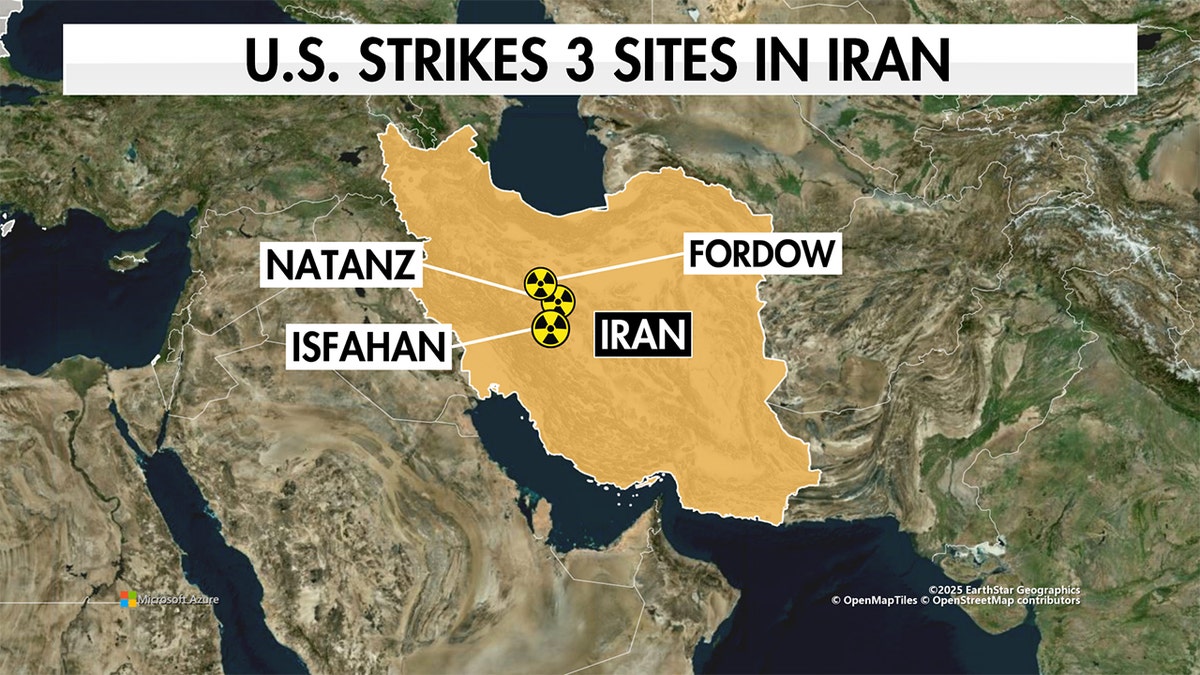
Recent strikes on Iranian soil have done more than just shift the balance of power in the Middle East. They have sent a pulse through that thread, reaching the desk of Kim Jong Un and, perhaps more significantly, the campaign trail of Donald Trump.
History is rarely a straight line. It is a series of reactions. When one domino falls in Tehran, the sound echoes in the bunkers of North Korea. We are witnessing the beginning of a desperate, high-velocity feedback loop that could bring the world’s most unpredictable leaders back to the same table.
The Lesson of the Open Sky
Consider a hypothetical scientist in a lab coat—let’s call him Dr. Park. He has spent thirty years perfecting the telemetry of a long-range missile. He watches the news from Iran not as a political observer, but as a technician. When he sees sophisticated air defenses bypassed or "untouchable" facilities turned to rubble by precision strikes, his heart sinks. He realizes that a "deterrent" is only as good as its ability to survive a first strike.
This is the psychological reality facing North Korea today. For decades, the Kim regime has operated under a single, ironclad belief: if you have the bomb, you are safe. They watched Muammar Gaddafi give up his nuclear ambitions only to end his life in a drainage pipe. they watched Saddam Hussein fall because he lacked the very weapons he was accused of hiding.
But Iran is different. Iran has a massive military, a complex proxy network, and a sophisticated technological base. Yet, it remains vulnerable to the overwhelming kinetic power of a modern superpower. To Kim Jong Un, the strikes on Iran are a flashing red light. They suggest that "strategic patience" has expired and that even a near-nuclear state can be touched.
Fear is a powerful catalyst for conversation.
When the threat of total destruction becomes tangible rather than theoretical, the incentive to negotiate—or at least to stall for time—skyrockets. This isn't about peace in the idealistic sense. It is about the cold, hard math of staying alive.
The Art of the Re-Entry
While the shockwaves travel east, they also travel west, landing in the palm of a man who prides himself on being the ultimate closer. Donald Trump has always viewed the North Korean problem not as a bureaucratic puzzle for the State Department, but as a personal challenge. A gold trophy waiting to be claimed.
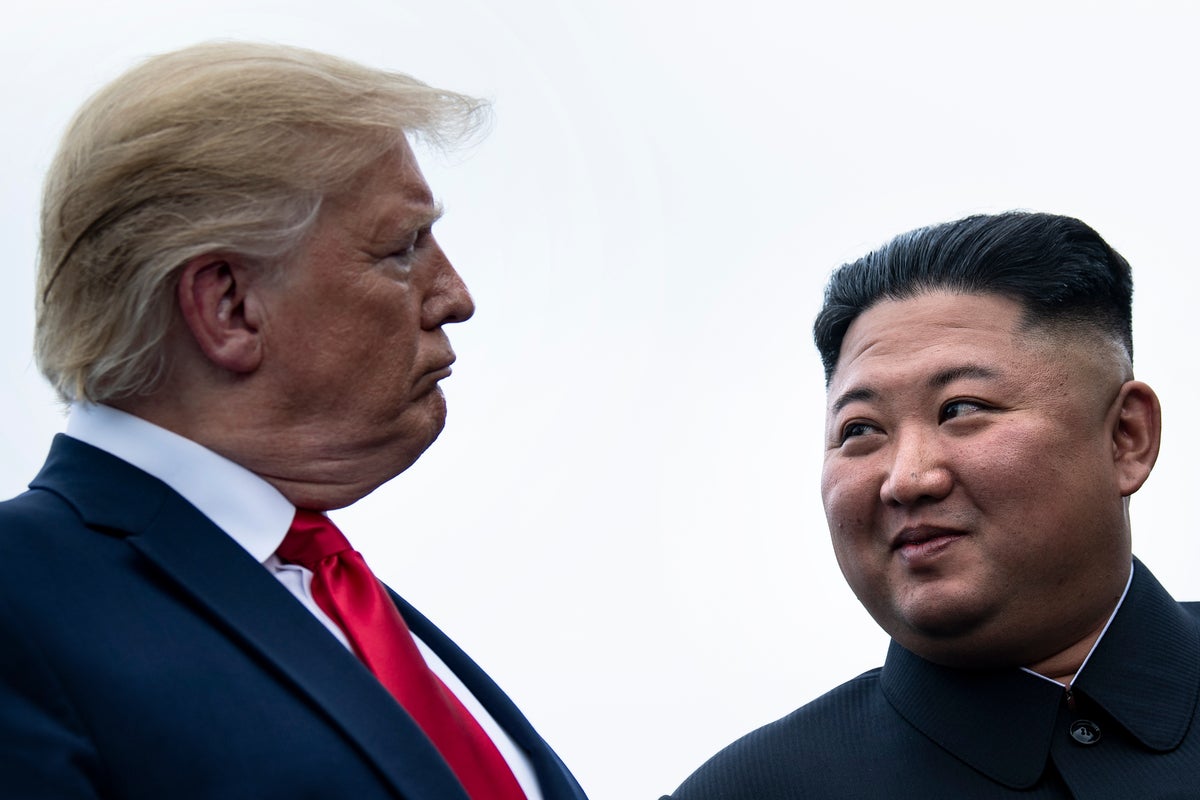
The timing of the Iran strikes creates a vacuum. In the world of geopolitics, nature abhors a vacuum, and so does a political campaign. If the Middle East is on fire, the "strongman" archetype gains currency. Trump’s previous flirtation with "Little Rocket Man"—the summit in Singapore, the walks across the DMZ—was criticized by many as a photo-op devoid of substance.
To the voters, however, those images represented a world where the unthinkable was being discussed calmly over tea.
The strikes on Iran provide Trump with a new narrative. He can point to the chaos and say, "I kept the world quiet." By reopening the door to Pyongyang, he offers a counterpoint to the smoke rising over the Persian Gulf. It is a chance to prove that his brand of personal diplomacy can succeed where traditional military pressure creates only more friction.
The Invisible Architecture of the Deal
Behind the handshakes and the televised spectacles, there is a complex architecture of physics and finance. This is where the story gets gritty. A nuclear program isn't just a political statement; it is a massive industrial undertaking that requires constant maintenance, fuel, and specialized components.
- The Uranium Ledger: North Korea has the ore, but they need the currency to keep the lights on.
- The Missile Trade: Pyongyang and Tehran have a long history of "trading notes" on ballistic technology. When Iran’s infrastructure is hit, North Korea loses a primary testing ground and a key customer.
- The Cyber Frontier: Both nations have turned to digital warfare to bypass sanctions. If one is under direct military pressure, the other becomes the primary hub for these illicit networks.
This interdependence means that North Korea cannot ignore Iran’s plight. If Iran is forced to the table—or forced into a corner—Kim loses his most valuable partner in defiance. To prevent being the next target on the list, Kim may decide that a preemptive "thaw" with a potential Trump administration is his best move.
It is a game of musical chairs played with plutonium.
The Human Cost of the Silence
We often talk about these events in the abstract—sanctions, yields, trajectories. But there is a human element that gets lost in the noise. There is the North Korean citizen who sees the intensified military drills and wonders if this is the day the sky falls. There is the American soldier on the DMZ, peering through binoculars at a landscape that has been "frozen" since 1953, yet feels more volatile than ever.
The silence between Washington and Pyongyang is not a vacuum. It is a pressurized chamber. When communication stops, every movement is misinterpreted. A routine test becomes a declaration of war. A shifted troop placement becomes an invasion force.
The strikes on Iran have increased the pressure in that chamber.
If talks restart, it won’t be because of a sudden onset of goodwill. It will be because both sides are exhausted by the tension. For Kim, a deal means the possibility of internal stability and a legacy that isn't defined solely by famine and fear. For Trump, it means the ultimate validation of his "outsider" status.
The Ghost in the Machine
We must also reckon with the technology that has changed since the last time these two men met. We are no longer just dealing with gravity bombs and basic rockets. We are in the era of hypersonic gliders, AI-driven drone swarms, and cyber-attacks that can shut down a city without firing a shot.
The Iran strikes utilized some of this high-end tech, showing the world that the "old" ways of defending a border are obsolete.
Imagine a command center deep under a mountain. The screens flicker with data points that the human eye can't even process. This is the "Ghost in the Machine." The more advanced the weaponry becomes, the less time humans have to make a decision. If a missile is launched, the window for a diplomatic phone call has shrunk from thirty minutes to three.
This shrinking window is the real reason why talks are no longer an option, but a necessity. The tech has outpaced the politics. We are driving a Formula 1 car on a dirt road, and the brakes are failing.
The Shadow of the Past
To understand where we are going, we have to look at the scars we already carry. The Korean War never truly ended. It just went into a long, cold hibernation. The families split by the 38th parallel are mostly gone now, their stories fading into history books. But the trauma remains in the national DNA of both countries.
North Korea’s entire identity is built on the "Great Victory" against "American Imperialism." To negotiate with the "Great Satan" is to risk the very foundation of the Kim family’s legitimacy. They don't do it lightly. They do it when the alternative is extinction.
Iran’s current situation is a mirror held up to Pyongyang’s face. It shows a regime that thought it was untouchable, suddenly finding out that the world has moved on. The "Resistance" is being tested, and it is failing the stress test.
Kim Jong Un is a student of history. He knows that when empires start striking their rivals with impunity, the smaller players have two choices: get big or get busy talking. Since he can't get much "bigger" without triggering a global catastrophe, he is choosing to get busy.
The Long Game of the Dealmaker
If the red telephone rings in Mar-a-Lago, it won’t be a surprise. It will be the result of a calculated gamble. Trump knows that the threat of Iran gives him leverage. He can say to Kim, "Look at what happened there. Do you want that here? Or do you want to build hotels on your beaches?"
It sounds simplistic. It sounds like a business pitch. And that is exactly why it might work.
Traditional diplomacy is a language of "notwithstandings" and "heretofores." It is designed to move at the speed of a glacier. But Kim and Trump speak the language of ego, power, and visual impact. They are both performers on a world stage, and they both know that the audience is getting restless.
The strikes in Iran have provided the perfect "inciting incident" for the next act of this play. The stage is being set. The lights are dimming. The world is holding its breath, waiting to see if the two most unpredictable men in history can find a way to stop the clock.
The stakes are not found in the headlines or the white papers. They are found in the quiet moments of a soldier on guard duty, or a mother in Seoul looking at the horizon, or a child in Pyongyang who knows nothing of the world except what they are told.
The mushroom cloud is a shadow that has hung over us for eighty years. Every time we hear the roar of a missile or the explosion of a targeted strike, that shadow grows a little darker. We are searching for a way to turn the lights back on.
A single phone call. A hand extended across a line in the dirt. A conversation that starts not with "how do we defeat you," but with "how do we both survive."
The fire in Iran has lit the path back to the table. It is a path paved with fear, lined with ego, and driven by the most basic human instinct of all: the desire to see tomorrow morning.
The red telephone is vibrating. The only question is who will pick it up first.
Would you like me to research the specific technological advancements in North Korea’s latest missile tests to see how they compare to the systems used in the Iran strikes?