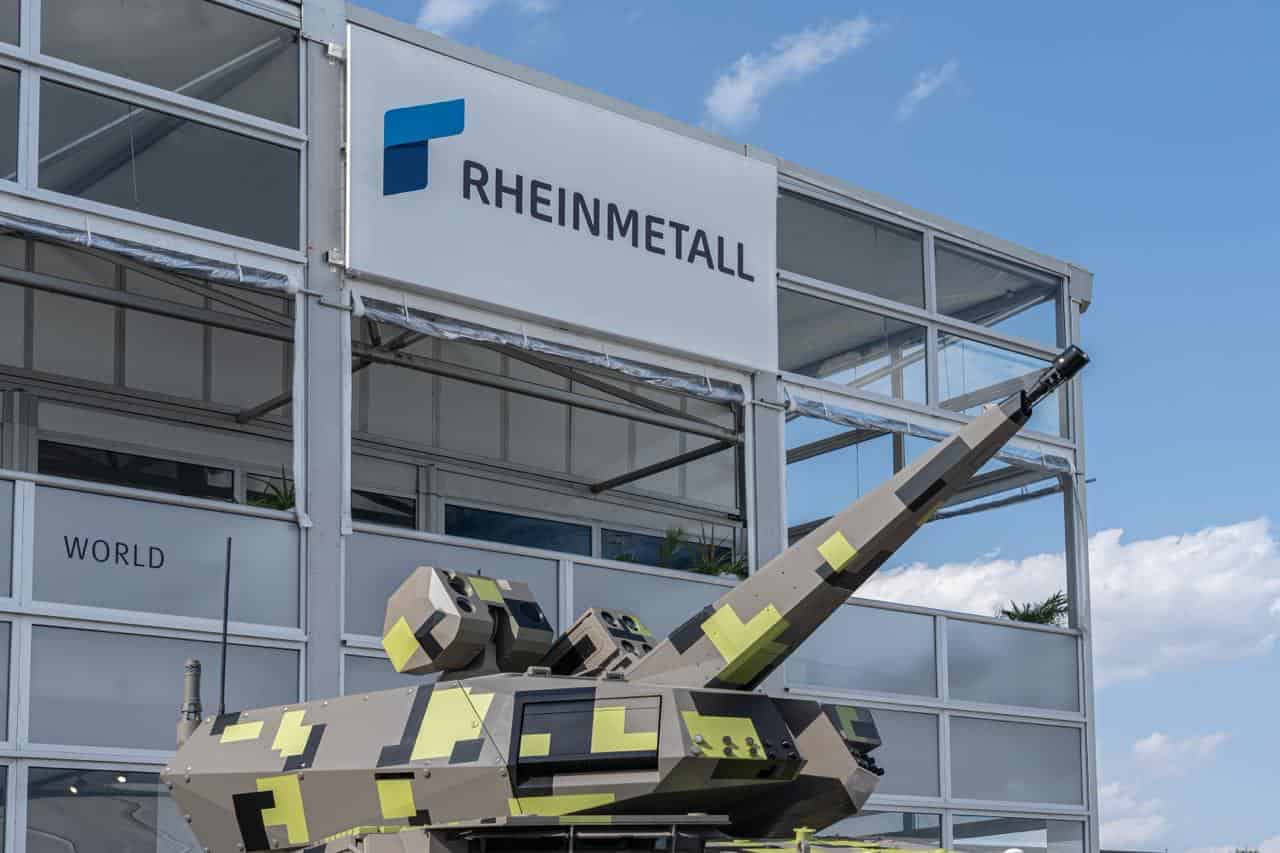
Rheinmetall’s €12 billion offer for the F127 frigate program and associated naval assets represents a fundamental shift in the European defense industrial complex, moving from fragmented subcontracting to vertical integration. The bid is not a simple purchase of hardware; it is a strategic attempt to solve the "German Naval Paradox"—the systemic inability of the Bundeswehr to convert massive capital outlays into operational readiness within a decade-long procurement cycle. By targeting the TKMS (ThyssenKrupp Marine Systems) naval unit, Rheinmetall seeks to consolidate the sensor-to-shooter loop, effectively internalizing the profit margins currently lost to coordination friction between hull builders and systems integrators.
The Structural Drivers of the Rheinmetall Bid
The German naval procurement system is currently burdened by three distinct failure points that Rheinmetall’s proposal intends to arbitrage.
1. The Integration Gap
Historically, German naval projects involve a clean split between the shipbuilder (the platform provider) and the electronics provider (the mission system). This decoupling creates a principal-agent problem. When a project like the F125 frigate faces years of delay due to software-hardware misalignment, the government lacks a single point of accountability. Rheinmetall’s bid for the F127 program suggests a move toward the "Lead Systems Integrator" (LSI) model used by US defense primes. By owning both the platform and the mission logic, the firm can minimize the technical debt accumulated during the design phase.
2. The Capital Efficiency Mandate
The Zeitenwende—the €100 billion special fund for the German military—is finite. The F127 program, intended to provide next-generation air defense and ballistic missile capabilities, is estimated to cost upwards of €12 billion for five to six vessels. ThyssenKrupp, the current parent of TKMS, has struggled with the capital intensity of naval construction, which ties up billions in working capital over 15-year lifecycles. Rheinmetall’s balance sheet, bolstered by record-breaking land system orders and ammunition sales, provides the liquidity required to de-risk the program for the German Ministry of Defense.
3. The Shift from Steel to Silicon
Modern naval warfare is increasingly defined by the AEGIS-equivalent capability—the ability to track and intercept hypersonic threats. The value of a modern warship is no longer in the hull; approximately 60% to 70% of the cost of an F127 frigate resides in its sensors, combat management systems (CMS), and effectors. Rheinmetall already dominates the effector and sensor space. Acquiring the shipyard allows them to capture the remaining 30% of the value chain while ensuring their proprietary systems are the default architecture for the next forty years of German naval evolution.
The Economic Mechanics of the €12 Billion Valuation
The valuation of this deal is predicated on the projected lifetime value of the F127 program and the export potential of the MEKO-class frigates. To understand the €12 billion figure, one must look at the Cost-Plus vs. Fixed-Price dynamics of European procurement.
- Risk Premium Compression: Historically, TKMS has had to bake high risk premiums into their bids to account for potential integration delays with third-party weapon systems. Rheinmetall can compress these premiums because they are the third party.
- Operating Leverage: By folding naval production into its existing supply chain for steel and electronics, Rheinmetall can achieve economies of scale that a standalone naval unit cannot. This is particularly relevant in the procurement of high-grade military steel and specialized microelectronics.
- The Maintenance Tail: Defense contracts are structured such that the initial sale is often a low-margin event, while the 30-year Maintenance, Repair, and Overhaul (MRO) cycle carries margins exceeding 20%. Rheinmetall’s bid is a play for the "Installed Base" of the German Navy.
Barriers to Consolidation: The Geopolitical and Domestic Friction
While the logic of the merger is sound from a corporate finance perspective, three specific bottlenecks threaten its execution.
The Competition Bottleneck
The German government is wary of creating a "National Champion" that lacks domestic competition. If Rheinmetall absorbs TKMS, the only other significant player is Lürssen (NVL Group). This duopoly could lead to higher prices for the taxpayer. However, Rheinmetall argues that the true competition is not domestic, but international—specifically against France’s Naval Group and Italy’s Fincantieri. To compete globally, German naval industry must reach a scale that only a Rheinmetall-TKMS entity can provide.
The IP and NATO Interoperability Problem
The F127 is designed to be a "Super-Frigate" capable of integrating with the US Navy’s Cooperative Engagement Capability (CEC). This requires access to sensitive American Aegis technology. The US government is often hesitant to share this IP with diversified conglomerates that have extensive export ties to non-NATO countries. Rheinmetall must prove that its corporate firewalling is sufficient to protect US-derived sensor data while simultaneously exporting hulls to global markets.
The Labor and Regional Politics Variable
Shipbuilding in Germany is a heavily unionized, politically sensitive sector concentrated in Northern Germany (Kiel and Hamburg). Rheinmetall is headquartered in Düsseldorf (North Rhine-Westphalia). The transfer of control involves not just a change in shareholders, but a potential shift in where engineering talent and high-value jobs are located. Any deal will require a "Job Guarantee" framework that could erode the very efficiency gains Rheinmetall is chasing.
Comparative Advantage: Rheinmetall vs. ThyssenKrupp
The following table outlines the fundamental mismatch in the current TKMS ownership structure compared to the proposed Rheinmetall integration.
| Metric | ThyssenKrupp (Current) | Rheinmetall (Proposed) |
|---|---|---|
| Core Competency | Industrial Materials/Steel | Defense Systems/Electronics |
| Capital Allocation | Divesting non-core assets | Aggressive expansion in defense |
| Synergy Potential | Low (Cyclical steel vs. steady naval) | High (Ammunition, sensors, hulls) |
| R&D Focus | Decarbonization of steel | Autonomous systems & high-energy lasers |
| Political Influence | Weakened by financial instability | Peak influence due to Ukraine conflict |
Tactical Implications for the F127 Program
If the bid succeeds, the F127 program will transition from a traditional shipbuilding project into a "System-of-Systems" development. This change has three immediate tactical consequences:
- Standardization of Effectors: We will likely see a move toward the universal integration of Rheinmetall’s Oerlikon Millennium guns and future directed-energy weapons (lasers) as standard CIWS (Close-In Weapon Systems) across the fleet, removing the need for separate procurement cycles.
- Accelerated Digital Twin Development: Rheinmetall’s expertise in simulation and training allows for the creation of a digital twin for the F127 before the first steel is cut. This reduces the "Integration Hell" typically seen in the final 20% of naval builds.
- Modular Mission Modules: The bid includes the ability to design ships with interchangeable mission bays. By controlling the interface standards, Rheinmetall ensures that any future upgrades (drones, mine-hunting robots) must be compatible with their proprietary CMS.
The Strategic Play: Toward a European "Lockheed Martin"
The end-state of this transaction is the creation of a European defense prime with the breadth to rival US giants. The €12 billion offer for the naval project is the final piece of the puzzle for Rheinmetall. They already dominate the land (Leopard and Panther tanks) and the air (via F-35 center fuselage production and munitions). Naval dominance completes the triad.
The German government faces a choice: maintain a fragmented, inefficient naval industry that prioritizes regional jobs, or approve a consolidation that creates a globally competitive powerhouse. The data suggests that the status quo of "Troubled Warship Projects" is no longer fiscally or militarily sustainable.
The strategic recommendation for the German Ministry of Defense is to approve the acquisition contingent on a "Price-Cap and Performance" framework. This ensures that Rheinmetall’s newfound monopoly does not lead to rent-seeking, while allowing the firm to apply its superior systems-integration logic to the F127. The success of the Zeitenwende depends on moving away from being a "buyer of platforms" to a "manager of capabilities." Rheinmetall’s bid is the first real opportunity to operationalize that shift. Ownership of the shipyard is the tactical requirement; ownership of the naval combat logic is the strategic prize.