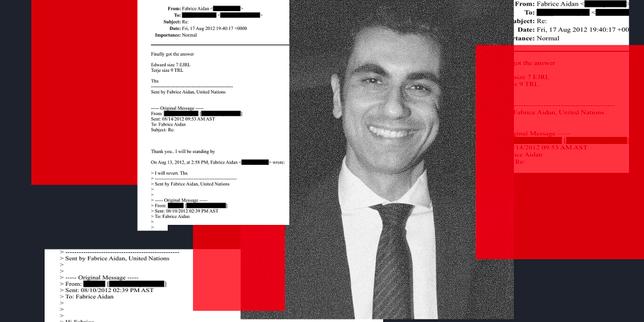
The police didn’t just knock on the doors of Edmond de Rothschild in Geneva and Paris because of a clerical error. They came because the financial industry’s favorite shield—the "rogue employee" narrative—is finally melting under the heat of the Epstein fallout. While the mainstream press treats the recent raids as a shocking development in the Fabrice Aidan investigation, they are missing the systemic rot. This isn't a story about one diplomat or one bank. It is a story about how the global elite use "private banking" as a euphemism for high-level plausible deniability.
The Architect of Managed Ignorance
When authorities investigate Fabrice Aidan, the former French diplomat turned Rothschild executive, they focus on his proximity to Jeffrey Epstein. They want to know how much he knew and when he knew it. But that is the wrong question. In the world of ultra-high-net-worth (UHNW) management, knowing is the job. Not knowing is a strategy.
I have spent decades watching how these institutions operate. When a client like Epstein—already a convicted sex offender by 2008—seeks to move capital through a prestigious house like Edmond de Rothschild, the "Know Your Customer" (KYC) protocols aren't failing. They are being bypassed by design. To suggest that a bank of this stature "overlooked" the reputation of a man who was persona non grata in every reputable boardroom is a fantasy.
The competitor reports focus on Aidan’s role as the bridge. They paint him as the singular point of failure. This is the "Lone Wolf" fallacy of high finance. No single executive, no matter how well-connected, moves the gears of a private bank without the tacit approval of the risk committees and the board. The raid on Edmond de Rothschild is a raid on the culture of the "Golden Handshake," where the pedigree of the intermediary matters more than the source of the funds.
Compliance as Performance Art
Standard reporting asks: "How did Epstein bypass the compliance department?"
The brutal truth: He didn’t. The compliance department is often a department of "How To."
In these institutions, compliance isn't a gatekeeper; it’s a GPS. Its job is to find the legal route through the swamp. When we look at the ties between Aidan, Epstein, and the bank, we aren't looking at a breakdown of the system. We are looking at the system functioning at peak efficiency. The goal of a private bank is to provide "frictionless" service. Friction is what happens when you ask too many questions about why a client is paying millions to "consultants" with no track record.
If you think these raids will result in a total collapse of the institution, you don’t understand the resilience of Swiss-style banking. They are built to absorb these hits. They pay the fine, they sacrifice the executive, and they move the assets to a new ledger. The "contrarian" take isn't just that they knew—it's that they were paid to know and then legally forget.
The Diplomatic Immunity of Capital
Fabrice Aidan wasn't just an employee; he was a walking bridge between the Quai d’Orsay and the counting house. This is the nuance the "consensus" media misses. The intersection of diplomacy and private banking creates a zone of absolute opacity. When a diplomat enters the private sector, they don't leave their Rolodex behind. They bring the protection of the state with them.
The investigation into Aidan's role in the "Epstein Galaxy" is significant because it threatens to expose how state power is used to facilitate private depravity. We are talking about "Special Purpose Vehicles" and offshore structures that are legally invisible to standard auditors. If the French authorities are actually seizing servers, they aren't just looking for emails about Epstein. They are looking for the map of how the French elite laundered their reputations through the bank’s prestige.
The Myth of the "Clean" Ledger
Every time a story like this breaks, the industry reacts with a collective gasp of manufactured horror. "We have zero tolerance for such behavior," the press releases scream.
Let's dismantle that. If these banks had zero tolerance for "such behavior," their assets under management would shrink by 30% overnight. The business model of elite private banking relies on the existence of the "Grey Market." This isn't just about Epstein; it’s about the dictators, the oligarchs, and the "philanthropists" whose wealth is built on exploitation.
The mistake investigators make is looking for a "smoking gun" email that says, "Let's help this criminal." You won't find it. What you will find is a series of "No Objection" memos. You will find a culture where "Relationship Managers" are incentivized by the size of the deposit, not the morality of the depositor.
Why the Aidan Case is Different
Usually, these things die in a quiet settlement. Why is the Aidan/Rothschild case different? Because the Epstein brand is radioactive in a way that standard money laundering is not.
In the past, you could hide a billion dollars of stolen oil money and the public wouldn't care. But the public cares about Epstein. The pressure on the French judiciary is immense. For the first time, the "prestige" of the Rothschild name is not acting as a shield; it’s acting as a target.
The authorities aren't just looking for Aidan’s correspondence. They are looking for the internal risk assessments. If it can be proven that the bank’s internal risk team flagged Epstein and was overruled by senior management to please Aidan, the corporate veil doesn't just tear—it vaporizes. This is the "Battle of the Memos."
The Industry’s Dirty Secret: The "Fixer" Role
The role of the "Fixer"—which Aidan is accused of playing—is the most vital and least discussed position in the global economy. A Fixer doesn't just manage money. They manage problems.
- They find the apartments.
- They facilitate the visas.
- They ensure the "consultancy fees" are paid to the right shell companies.
When a bank hires a man with Aidan’s background, they aren't hiring him for his expertise in compound interest. They are hiring him because he knows how to navigate the corridors of power without leaving a trail. The raid on the bank is a signal that the trail was left anyway.
Stop Asking if They Knew
Stop asking "Did Edmond de Rothschild know Jeffrey Epstein was a monster?"
Start asking "Why did they think they could get away with it?"
The answer is simple: Because for a hundred years, they did. They operated on the assumption that the law stops at the mahogany doors of a private bank. They assumed that a French diplomat is a permanent get-out-of-jail-free card.
The downside to my perspective is that it suggests a level of cynicism that most people find uncomfortable. It’s easier to believe in "one bad apple" like Aidan. It’s harder to accept that the entire orchard is engineered to produce that fruit. But the data doesn't lie. Look at the history of HSBC, Credit Suisse, and now the ripples touching the Rothschild name. These aren't glitches. They are the product.
If you are a client at a firm like this, you aren't paying for the 2% return on your bonds. You are paying for the wall of silence. The raid on Edmond de Rothschild is the first major crack in that wall.
Don’t look at what the police took out of the building. Look at who they didn't arrest yet. The real story isn't Aidan; it's the list of names that Aidan was tasked with protecting. If the French authorities have the courage to follow the money through the Rothschild ledgers, Epstein will be the least of their worries. They will find the blueprint for how the modern aristocracy operates above the law.
Fire the compliance officer. Burn the "Risk Management" handbook. If you want to know what’s really happening in the Aidan investigation, follow the trail of "administrative fees" that led from New York to Paris to Geneva. That is where the bodies are buried.
Go look at the bank's last three annual reports. Notice the increase in "legal reserves." They aren't preparing for a misunderstanding. They are preparing for a war.